Me almost every year for a while now: “Patty, one day I really want to go to Guatemala with you on your medical mission trip.” Patty is my daughter.
Me a few months ago: “Patty, I am going with you this year!”
And finally, me a few weeks ago: “Sorry Patty, but I have this other trip planned with Lieke, Aleeza and your mom so I can’t go this year, maybe next year.”
Well, it took about 3 days of rolling around in guilt before I decided that was a bad decision. I needed to keep my word and go to Guatemala with Patty. Mirka had gone the previous year and was moved by her experience.
I signed up with Refuge International for the mission and started to research the regional endemic birds of Guatemala. Before long I had a plan, Mirka and I would go to Guatemala about 12 days before the mission started. After the mission, Patty suggested we stay three extra nights in Antigua which was music (bird song) to my ear.
Lake Atitlan offered lots of opportunity for new birds. The mountains and volcanos that surround the lake are an extension of the Sierra Madre de Chiapas; more precisely known in Guatemala as the Sierra Madre de Guatemala. This range is well known for biodiversity. I could not miss birding Guatemala in this region.
We arrived in Guatemala in the afternoon. The trip to Lake Atitlan would be about 5 hours of heavy traffic and winding mountain roads in a small taxi. Before leaving the airport, I recorded my first, second and third bird at the pick-up spot: Rock Pigeon, Great-tailed Grackle and White-winged Dove, no lifers yet, but a start. How many birds could I get birding Guatemala?
Our first accommodation would be at the Reserva Natural de Atitlan, a private reserve with trails, ziplines and rustic, but nice, accommodations. The reserve was walking distance from the town of Panajachal.
Birding Guatemala – Lake Atitlan
Panajachal
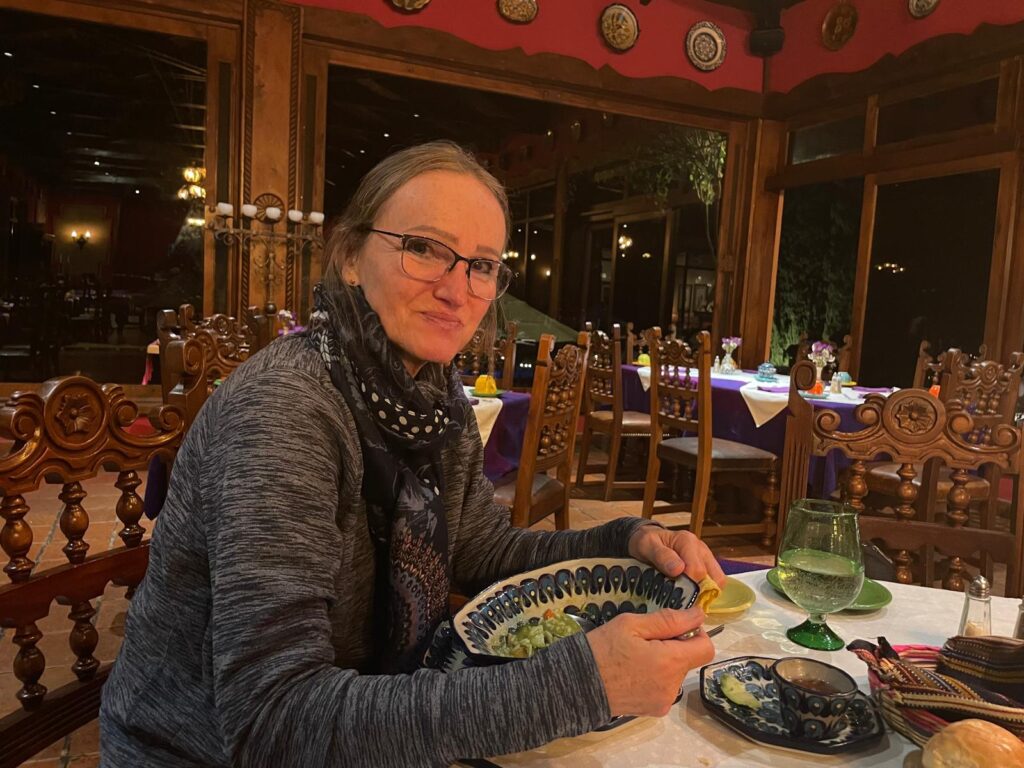
We arrived after dark, checked in and immediately went to a nearby restaurant at the luxury property called Hotel Atitlan. It was fine dining to be sure, and the cuisine was Guatemalan. I had braised beef rib Pepian. Pepian is a classic Guatemalan dish. It is a hearty stew with a perfectly seasoned broth, meat and local root veggies. It was the beginning of a food love affair.
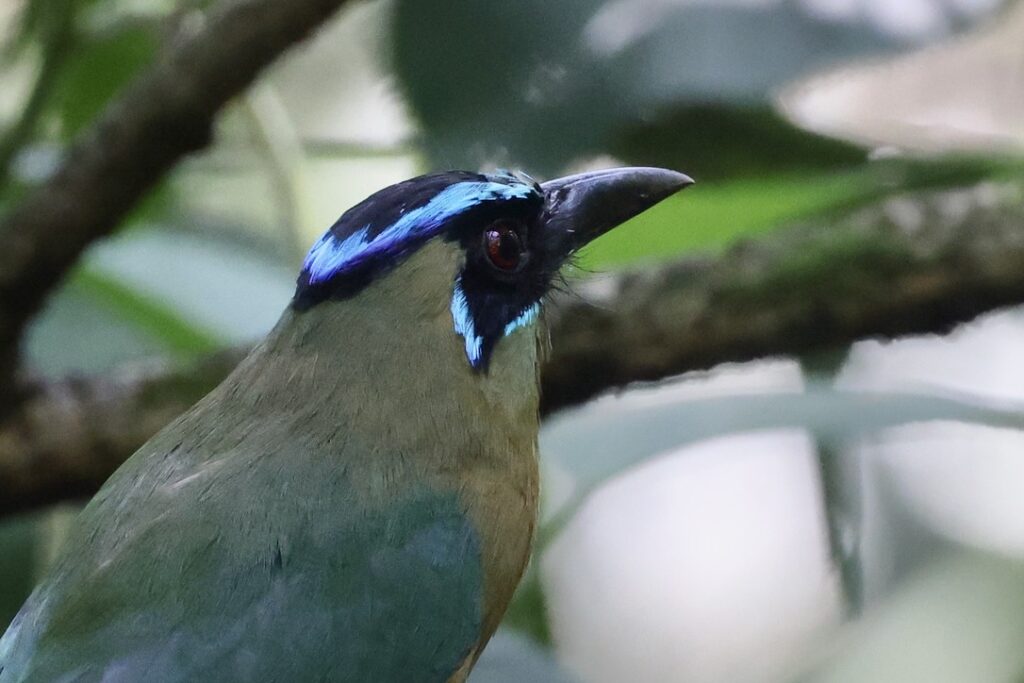
Bellies full, we went to our room and crashed. We were up well before breakfast was served and decided to walk the grounds to see what we could find. We managed five lifers before breakfast. The most exciting bird being Blue-throated Motmot which I had a brief but very good look and no photo. I would get a terrible photo later in the week.
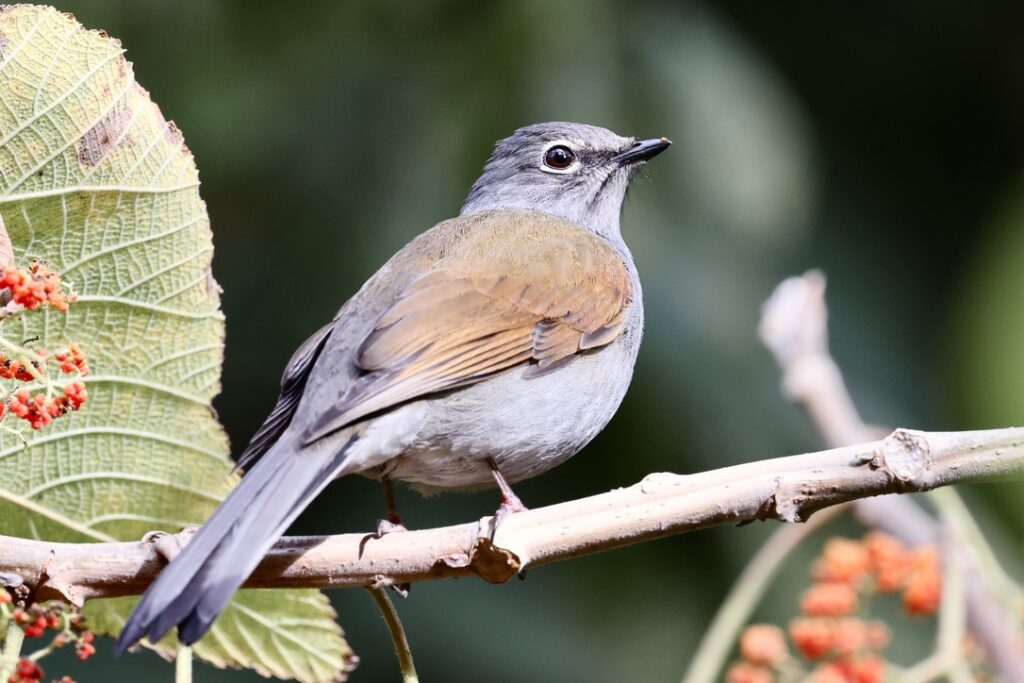
Another cool bird on the morning was the vocal and common Brown-backed Solitaire. A thrush species with a most unexpected non-bird like song. Great photos were taken of this bird.
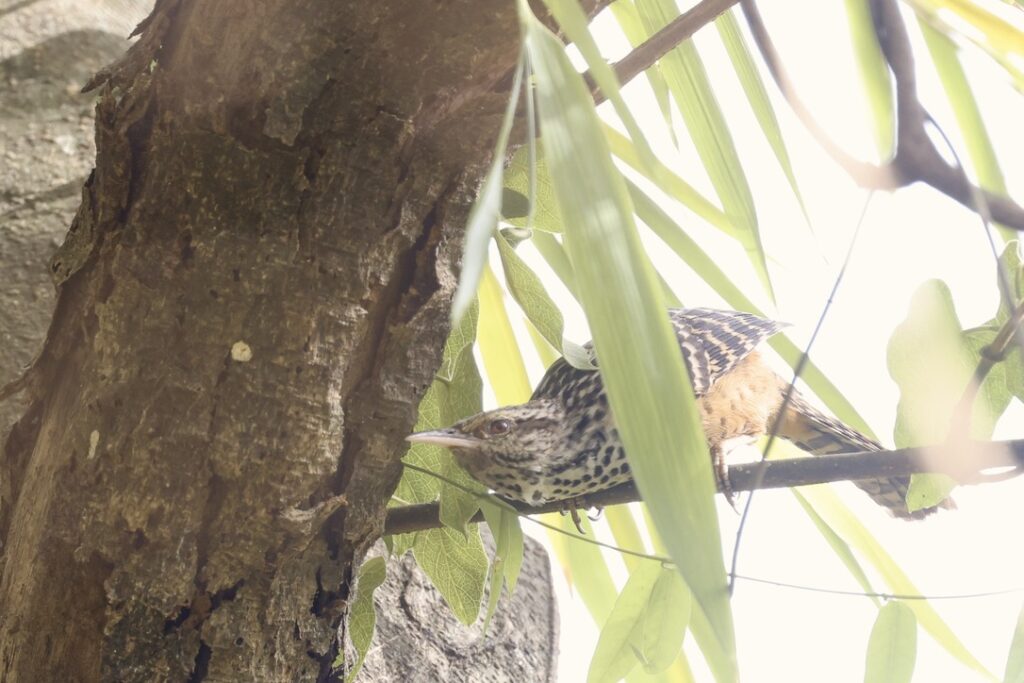
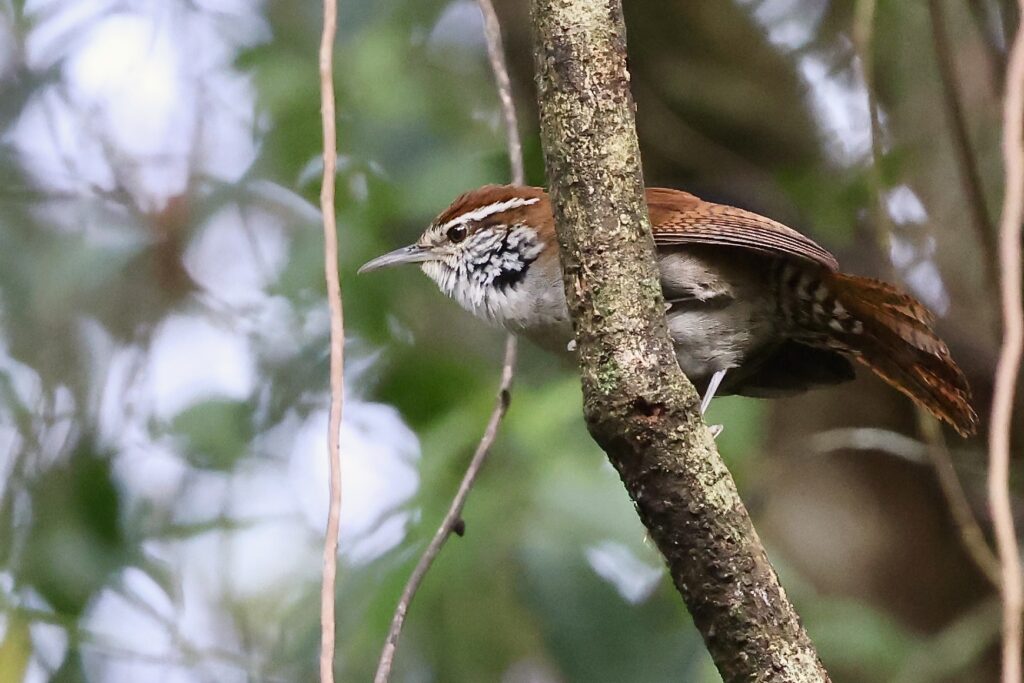
Band-backed Wren
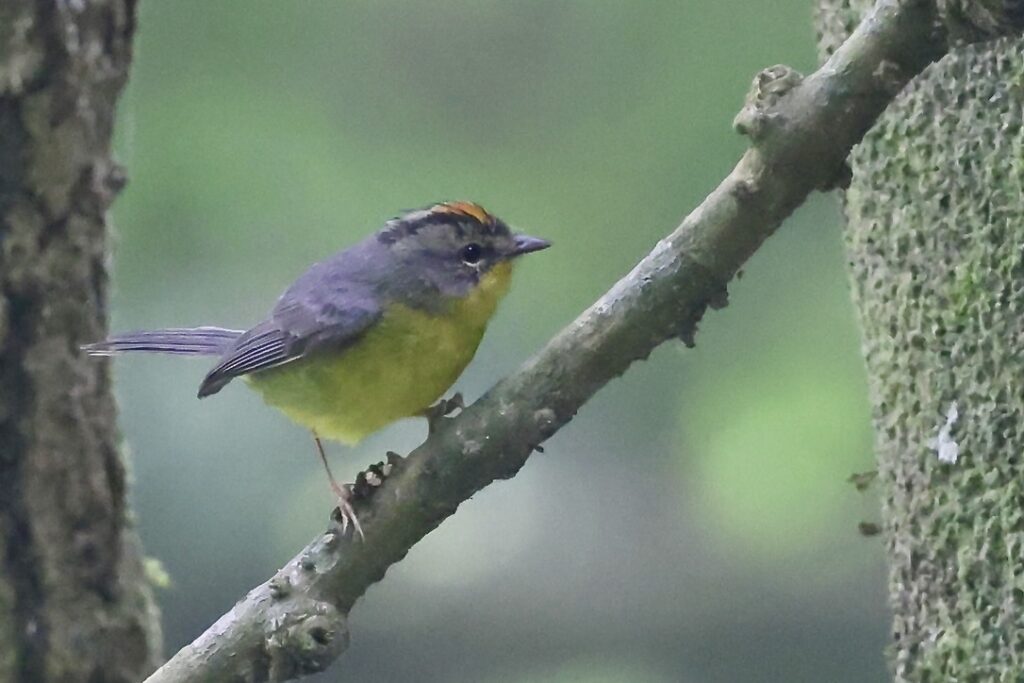
Rufous-crowned Warbler
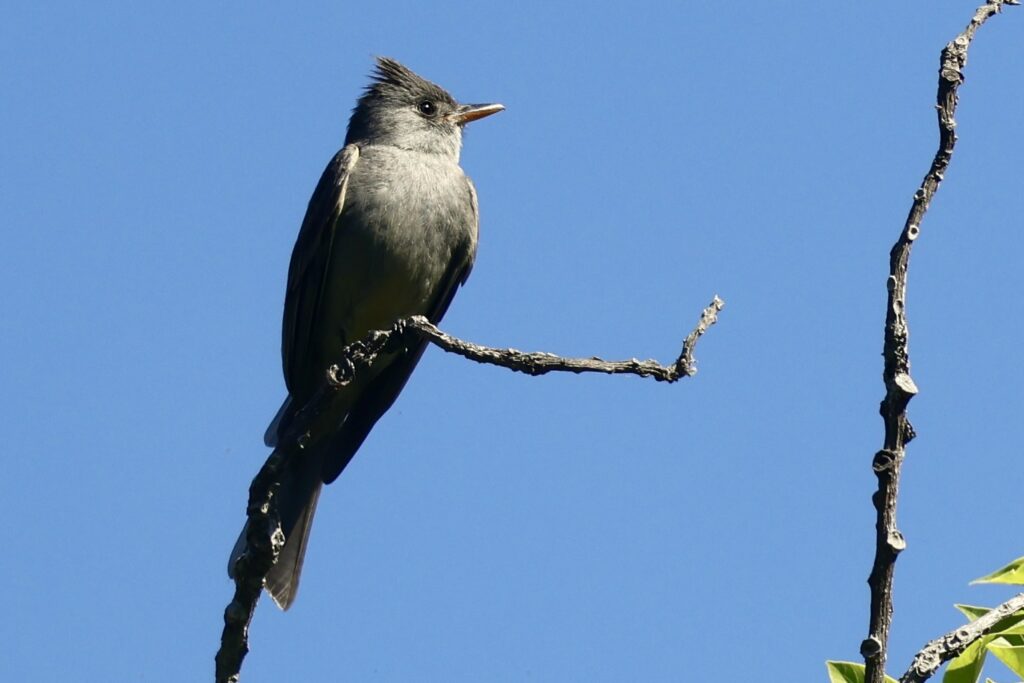
Greater Pewee
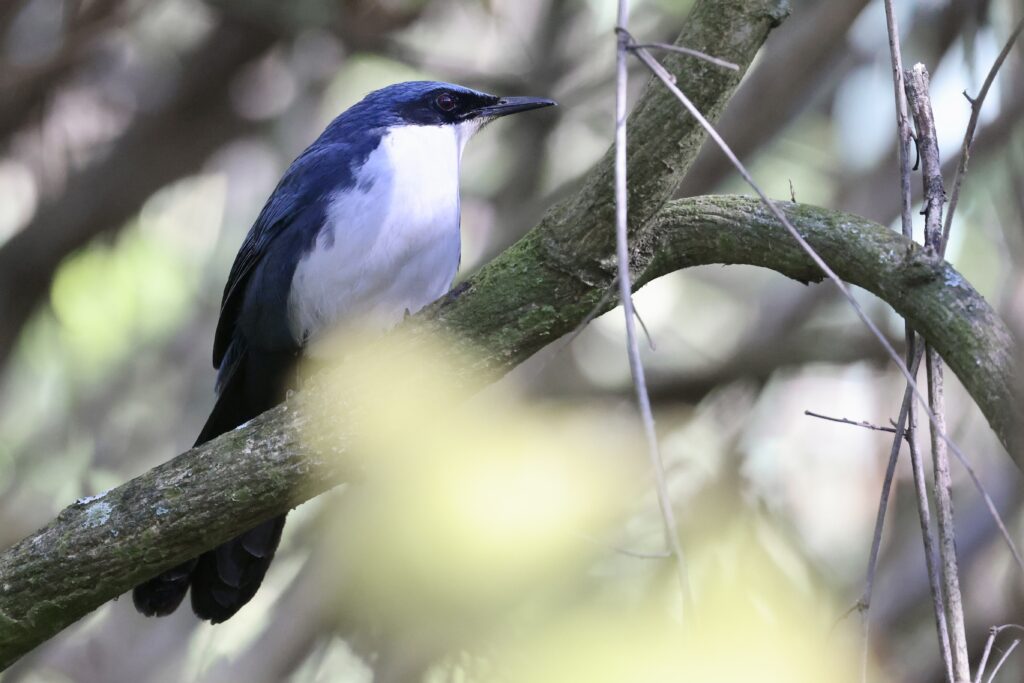
Blue-and-White Mockingbird
Brown-backed Solitaire
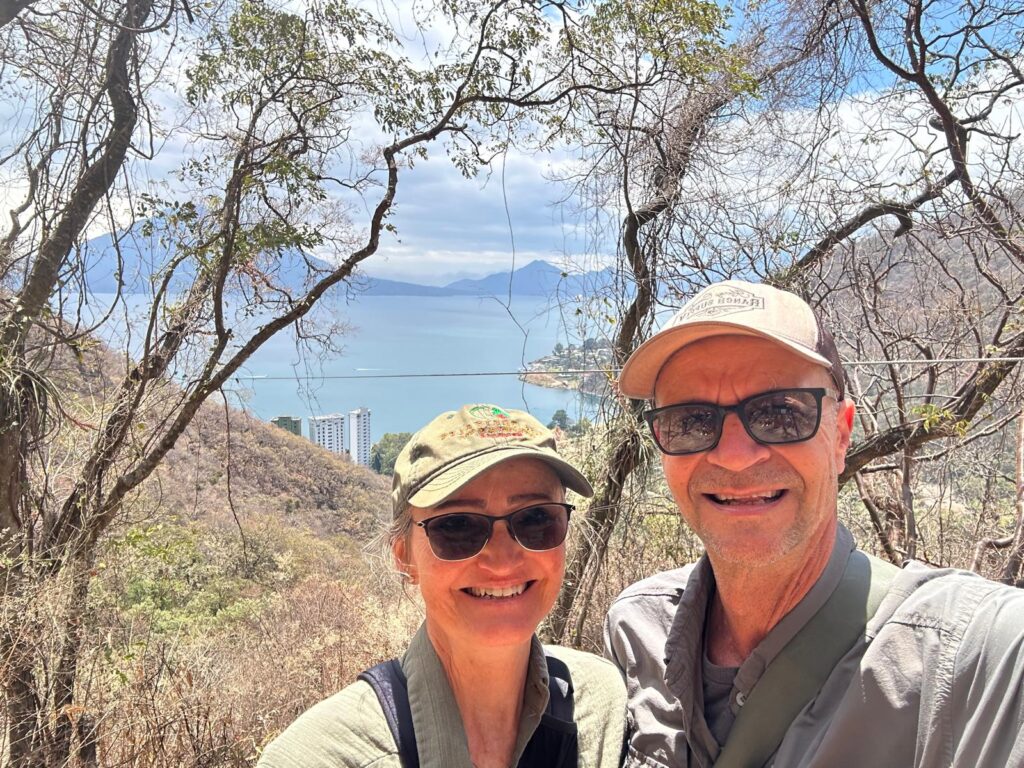
After breakfast we decided to head up the mountain trail to the top, perhaps 500 meters vertical along a 3 km trail. Now, I know I am not in any kind of competitive physical condition, but I do like to imagine that I am top 10% in my age category. Mirka and I were both huffing and puffing and stopping frequently on the hike up the hill. We were feeling the altitude change. Lake Atitlan is at about 1600 meters above sea level, and the base of the reserve is 100 meters above lake level.
The hike gave some beautiful views of the lake and of the bird life.
We played tourist in the lovely town of Panajachal one day, enjoying a nice local meal at a tiny family run hole-in-the-wall restaurant recommended by some backpackers we met while walking trails in the reserve.
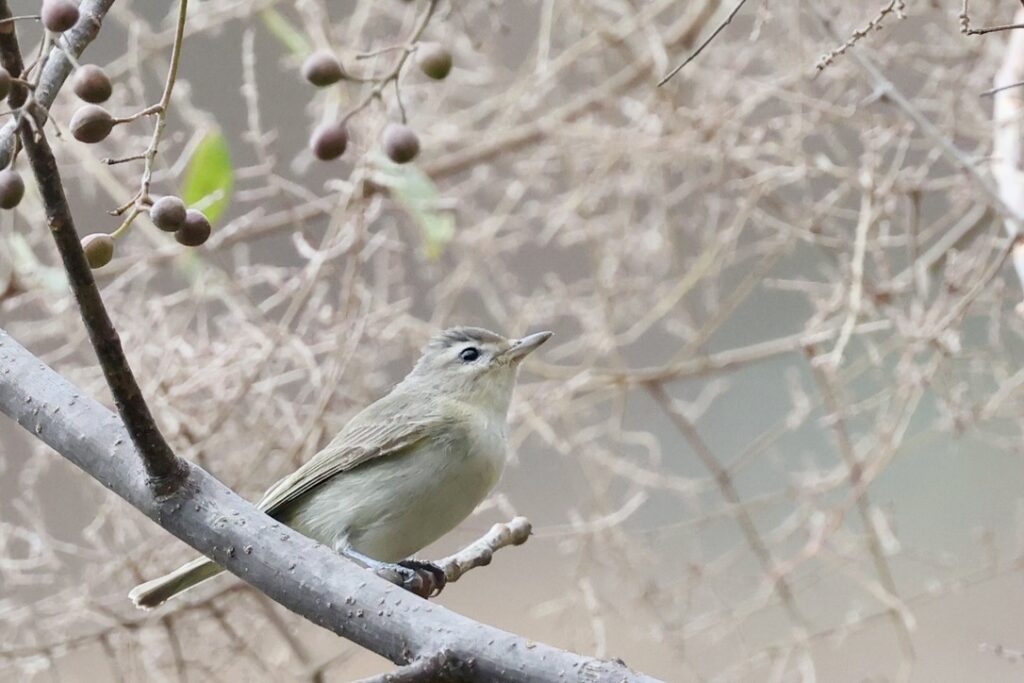
Eastern Warbling Vireo
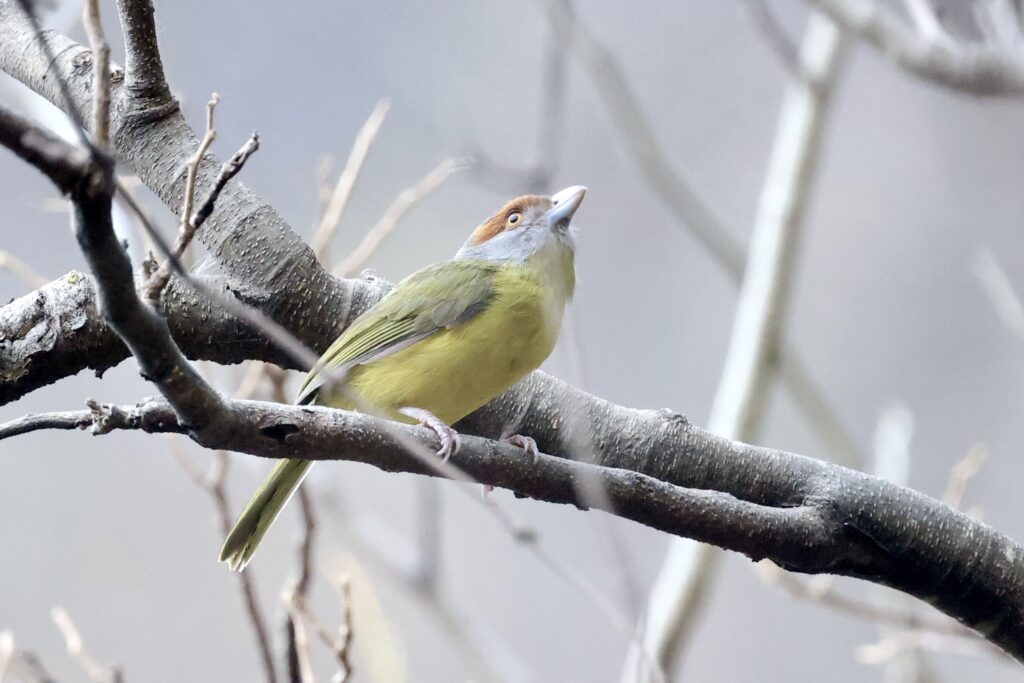
Rufous-browed Peppershitke
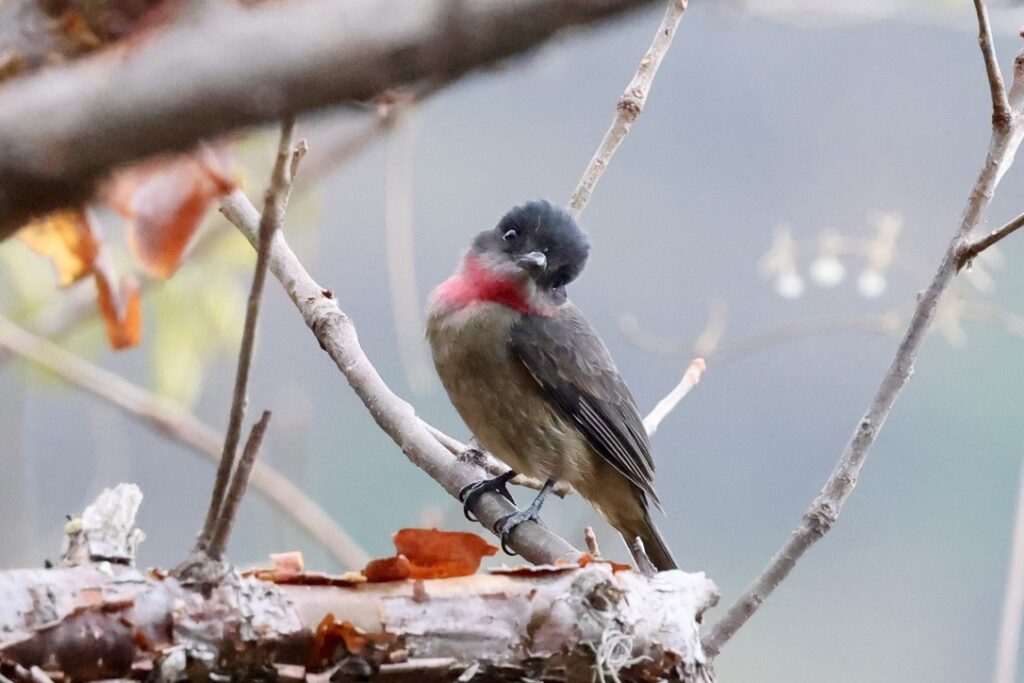
Rose-throated Becard
Dinner at Hotel Atitlan
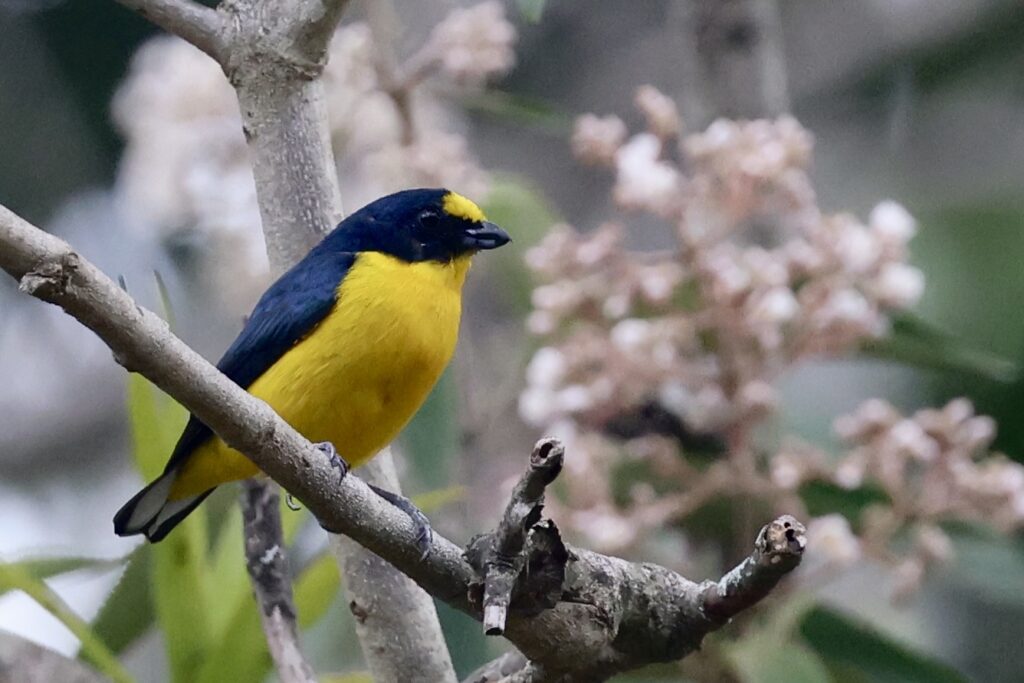
In total I got 17 lifers in three days. Other lifer bird highlights were the Elegant Euphonia, Blue-and-White Mockingbird, Chestnut-sided Shrike-Vireo, Bushy-crested Jay and Rufous Sabrewing.
Santiago de Atitlan
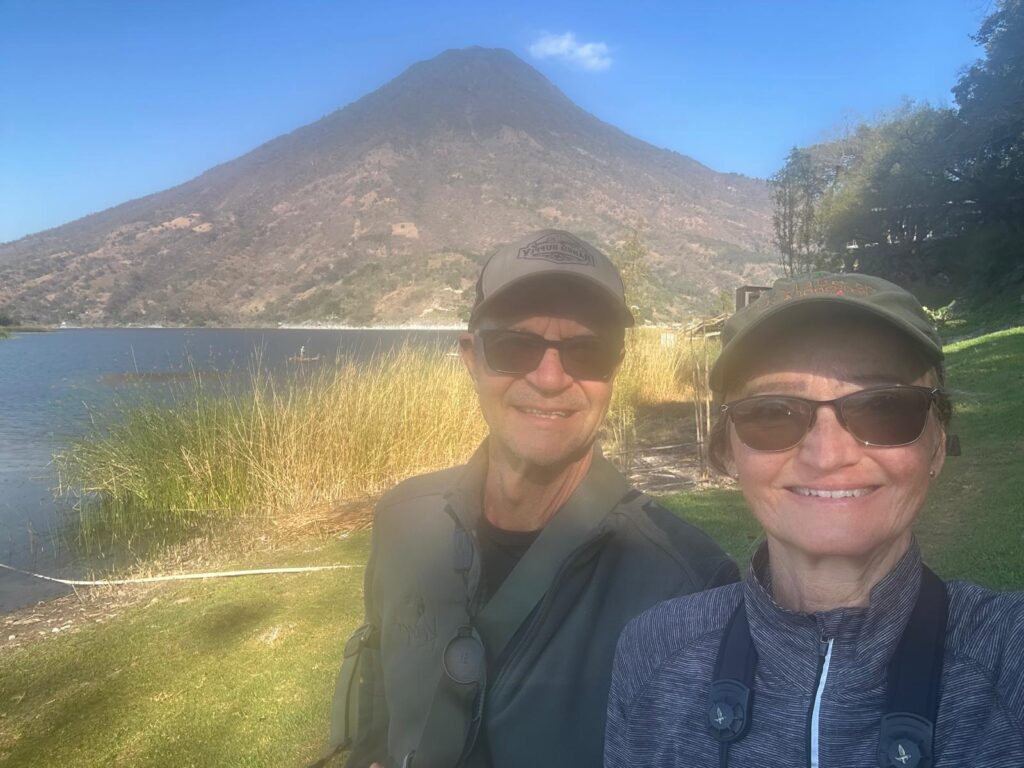
We checked out, taxi’d to the dock and took the water taxi across the lake to the town of Santiago de Atitlan. The town is the most populated of the many lake-front towns but sees far fewer tourists than most other towns. I chose this based on access to some higher elevation trails and the exciting birds that could be found there.
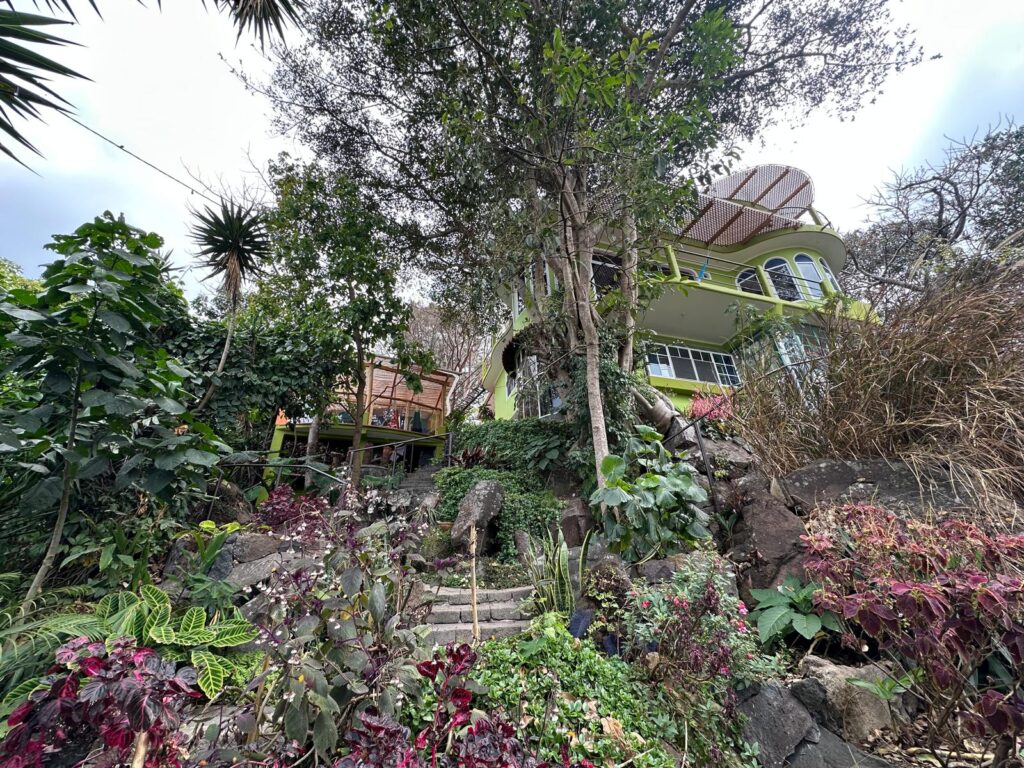
Casa Amatea
A Lovely View
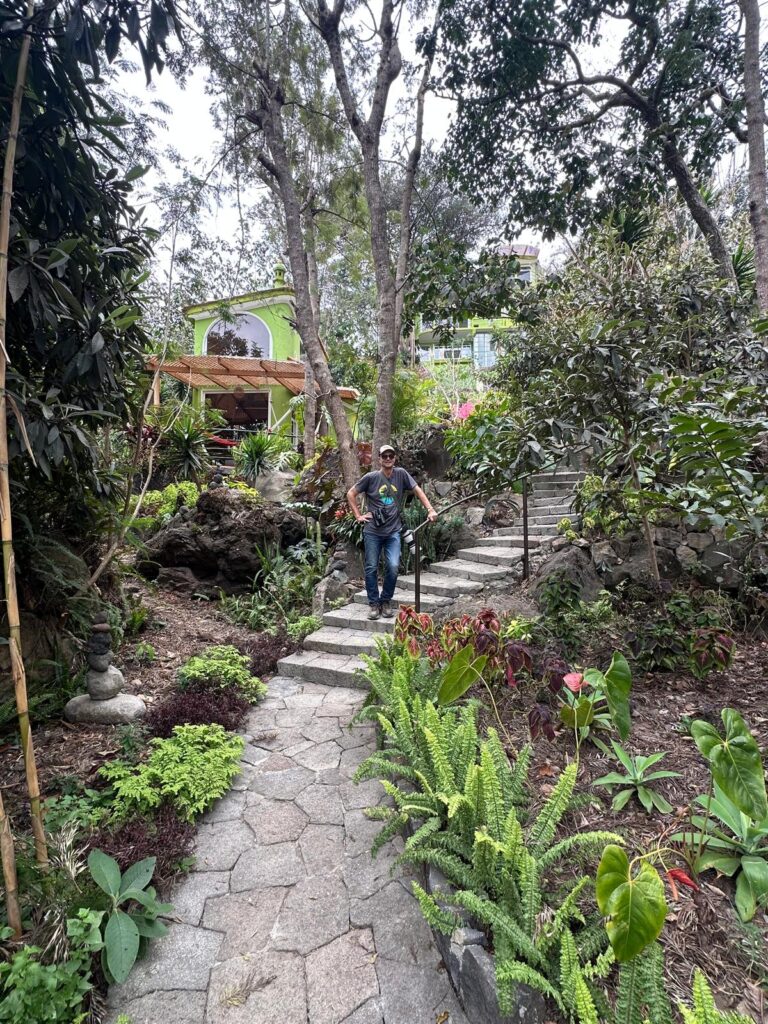
I found a place on google maps that had no website, just a WhatsApp number. The property was on the lake, just out of town and seemed surrounded by trees. I made the reservation not really knowing what to expect. Casa Amatea turned out to be a great place. The proprietors, Pierre (French) and Simona (Italian) we very friendly, interesting, interested and accommodating. They are new to this property, but I am sure they will have great success.
Pierre is the creative design mind behind the property. His design integrates nicely with the landscape and is pleasing to the eye.
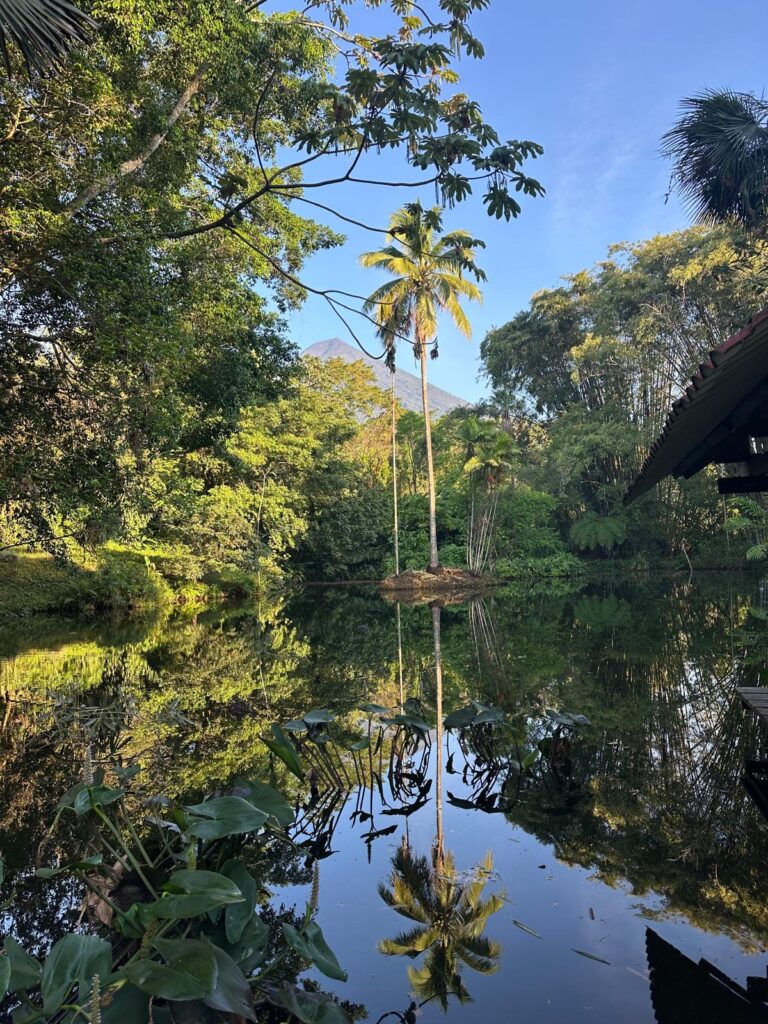
Their accommodations, grounds and hospitality far exceeded our expectations. The place is a great value, and I would recommend it to anyone. We recorded over 50 bird species on their property.
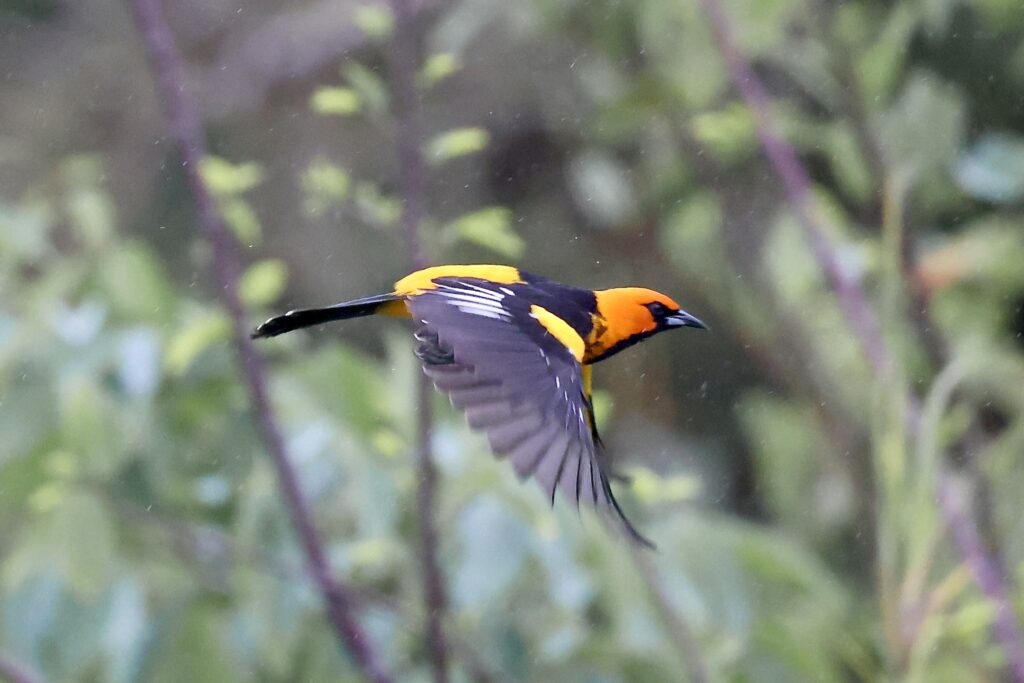
Spot-breasted Oriole
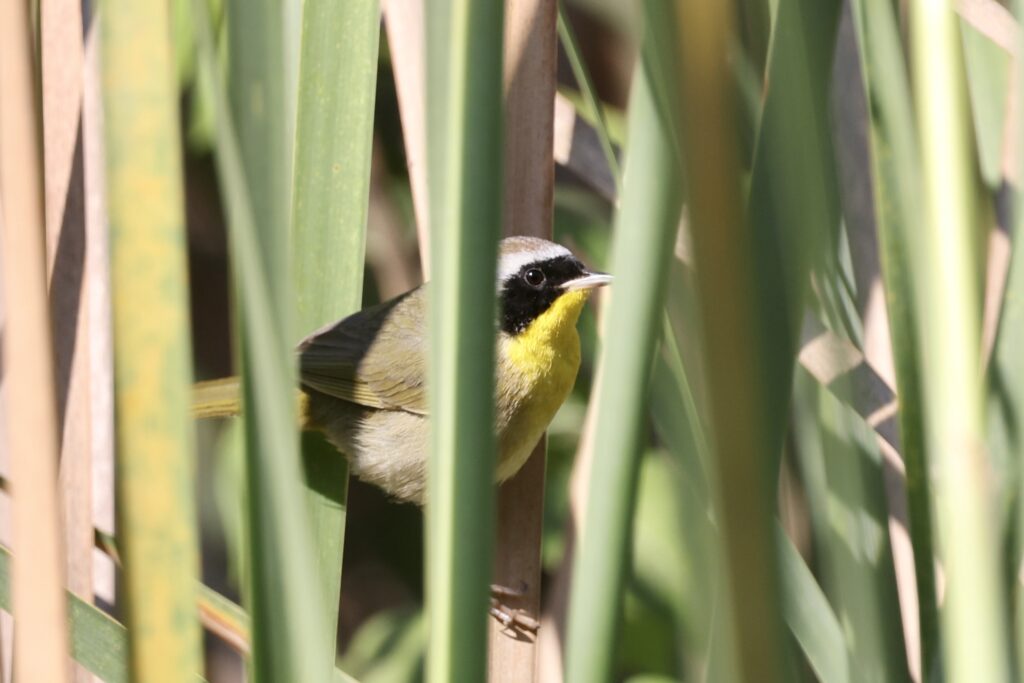
Common Yellowthroat
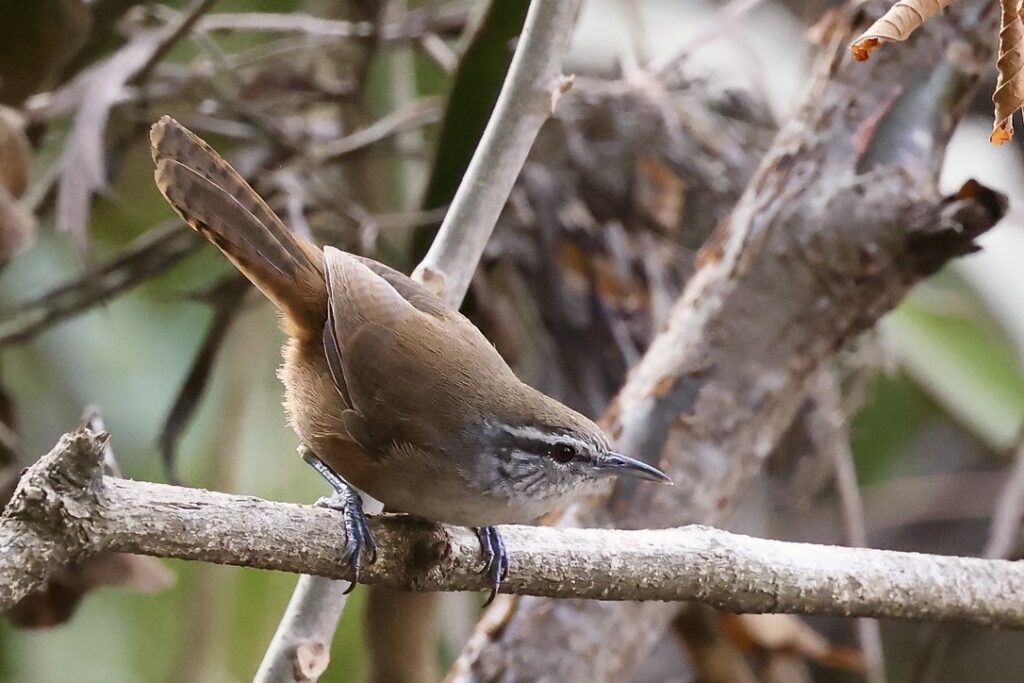
Cabanis's Wren
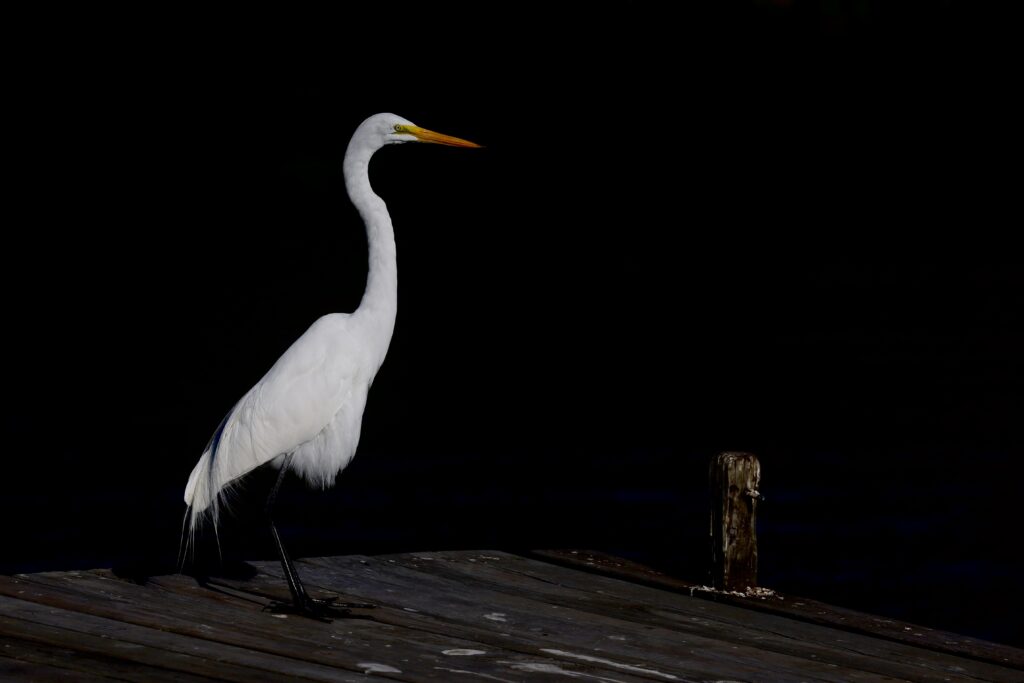
Great Egret
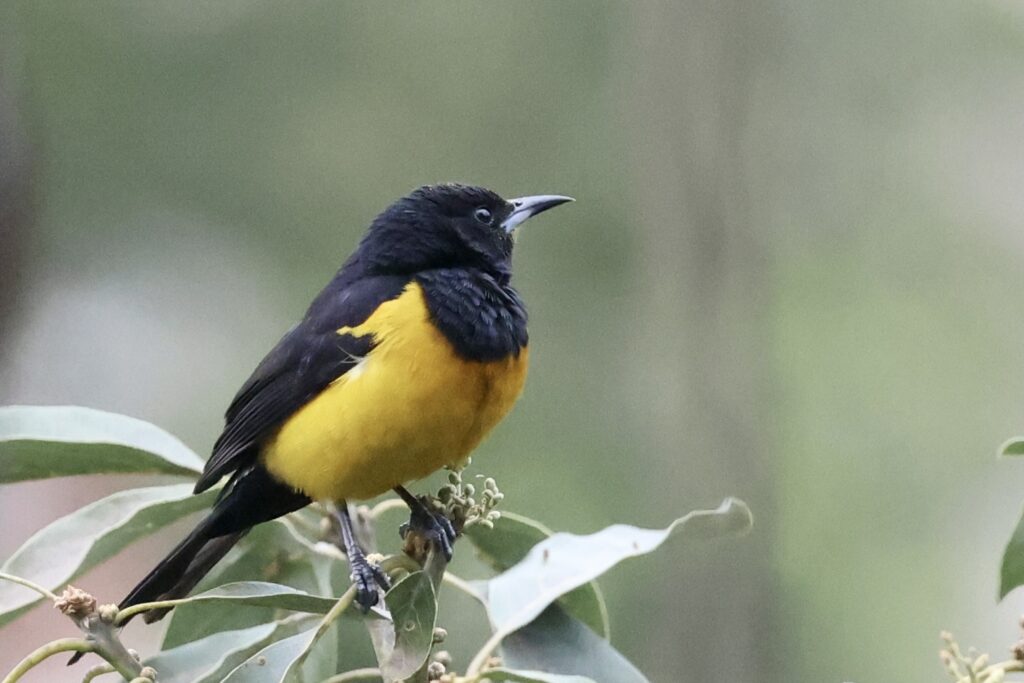
Black-vented Oriole
Casa Amatea
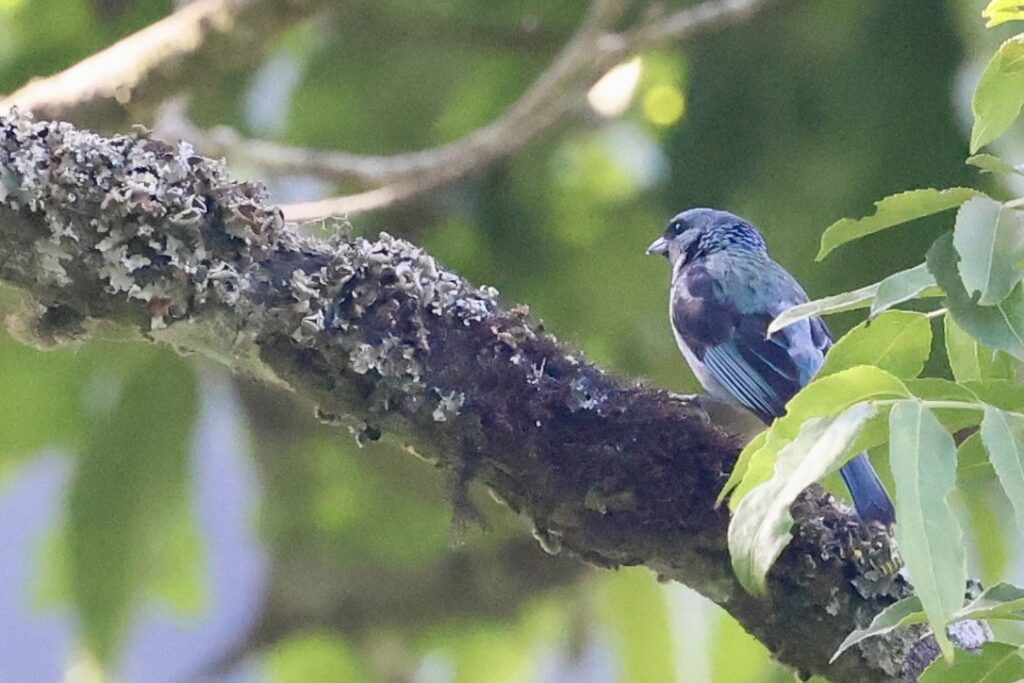
We hired a guide to take us to the Mirador Rey Tepepul – Azure-rumped Tanager trail. Now the Azure-rumped Tanager is one of those endangered birds whose range is down to a few square miles of Volcano slopes around Lake Atitlan. It is a beautiful bird that is on everyone’s target list for Guatemala.
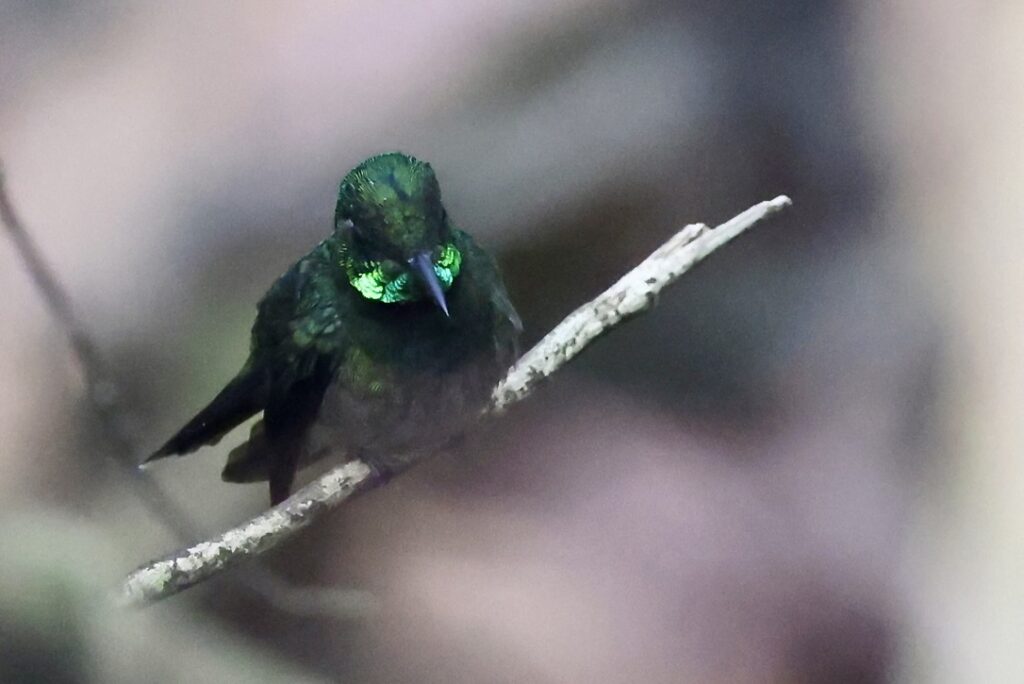
Emerald-chinned Hummingbird
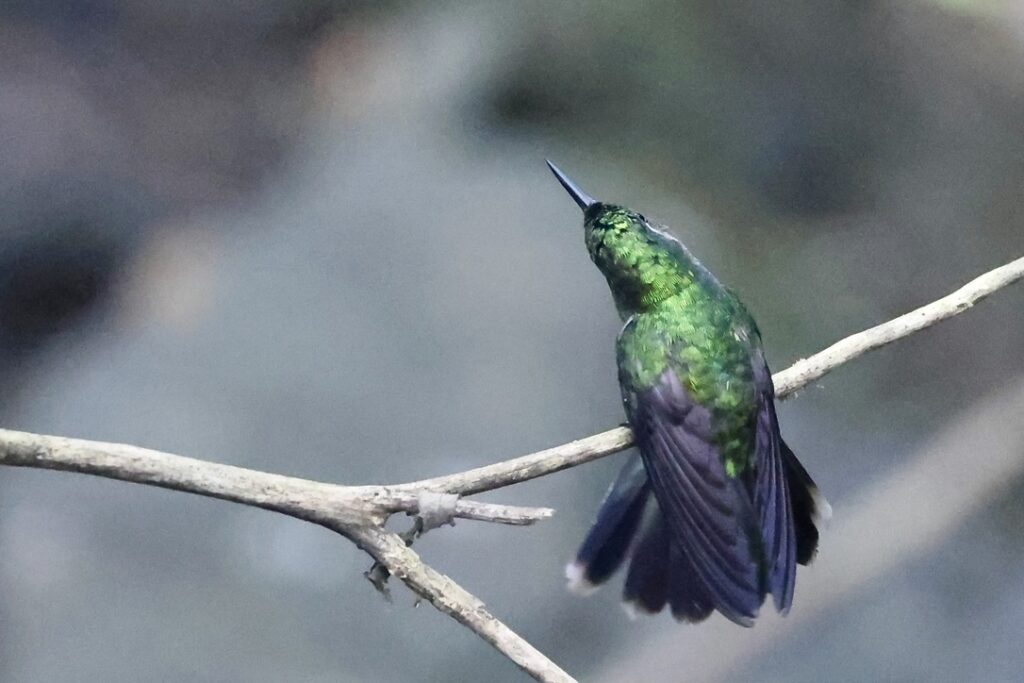
Green-throated Mountain-Gem
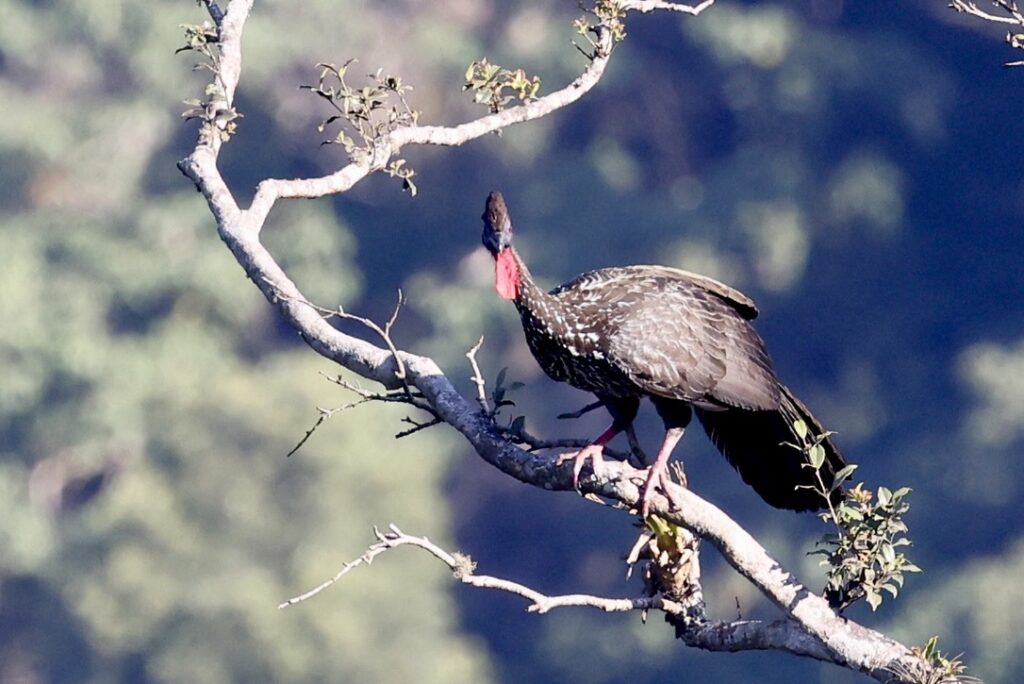
Crested Guan
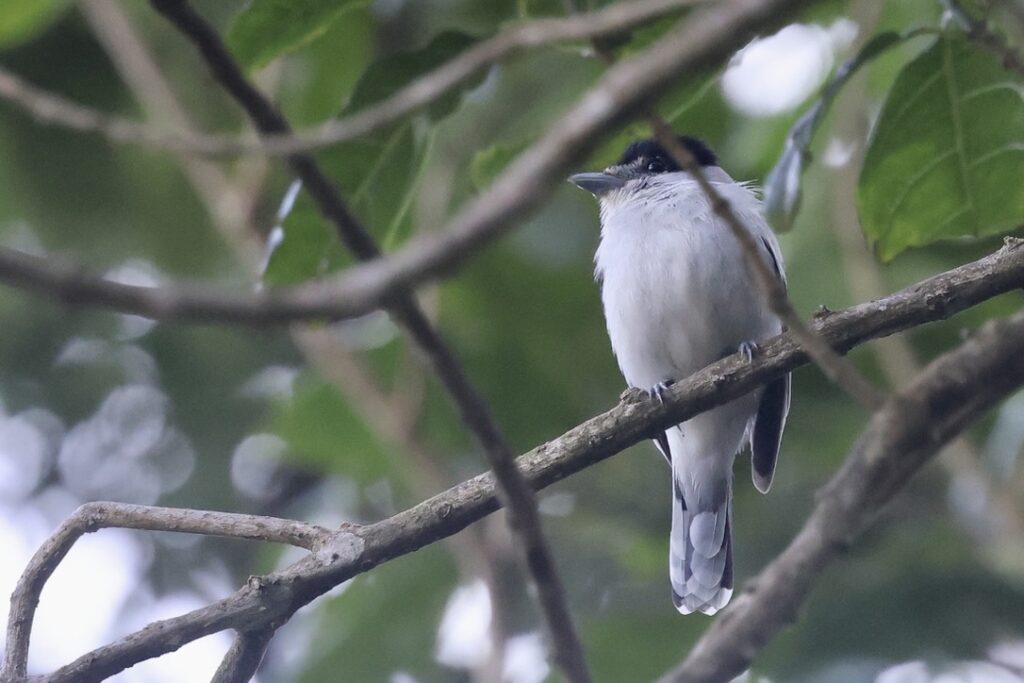
Gray-collared Becard
The hike on the trail was far more rigorous than at the Reserva Natural de Atitlan but we were now altitude adjusted and managed the hike without slowing our guide. Once again, the views were amazing and the birds even better.
Our checklist for this trail was 60 species with 18 lifers. Birding highlights on this trail were the drab Guatemalan Tyrannulet, Crested Guan, the elusive Yellow-throated Nightingale-Thrush, Blue-crowned Chlorophonia and yes, we got the Azure-rumped Tanager.
Critically Endangered Azure-rumped Tanager
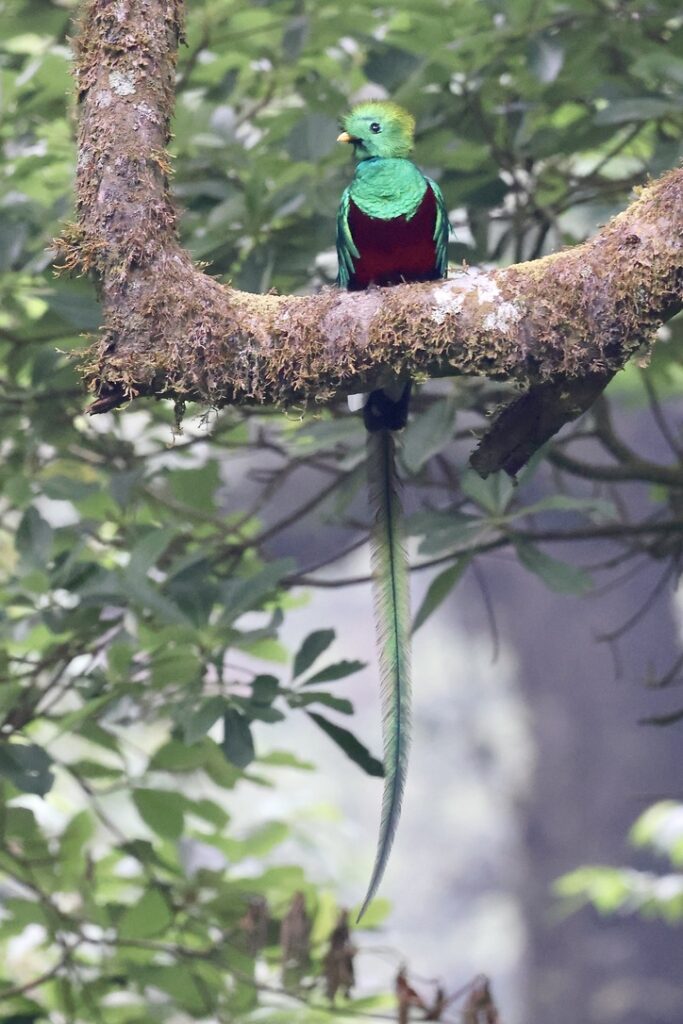
The sighting that ranks as beyond spectacular was our encounter with the national bird, Resplendent Quetzal. In unusual fashion, this male was so accommodating. He seemed curious about us. Without any playback use, he approached for a long photo session on different perches to see us at different angles. It was a great experience.
Guatamala National Bird - Resplendent Quetzal
And then it was time for the last location before meeting up with Patty.
The Chicken Bus – Or Not
Silly us, we thought we could stand by the road with our backpacks, wave at the colorful “chicken bus” as it drove by and it would stop and take us in the direction we were heading. Nope.
After an hour of waiting we determined that there are no colorful “chicken buses” in Santiago. Our next option, wave one of the many pick-up trucks that were equipped with a bar down the middle of the bed to hold on to while you stand in the back of the truck. When we stopped one, there was a vacant seat up front. Mirka insisted that I take it because she clearly wanted to ride in the back. I obliged her.
While she stood in the back, hanging on to the bar, with five Guatemalan agricultural workers, I sat in the front seat. Behind me were three teenaged girls giggling at me and Mirka. This truck took us about 40 minutes to the next town, San Lucas. I worked out in my best Spanish where was the best place to get the “chicken bus” to take me on down the road to Los Tarrales, our next destination.
He dropped us there and again we waited patiently for the big colorful “chicken bus” to come. Nope. Didn’t happen. This time we waved down a 12-person passenger van, and they stated they were going in our direction. Here was the problem, it was a 12-passenger panel van with about 18 people already in and on it.
Mirka squeezed in and stood up fully inside the van. Me, no other option but to stand outside the van on the running board with one other guy hanging on to an after-market handle on the roof. We bounced down the road at 40 mph for about 30 minutes.
Finally, we safely arrived at our destination. The price was right on both legs of transportation, and the experience was priceless.
Birding Guatemala – Reserva Los Tarrales
Our final destination before Mirka would have to return to Oklahoma and I continue with Patty was Reserva Natural Los Tarrales. It is slightly lower in elevation than Lake Atitlan and therefore brings in a few different birds.
This property is a working family farm that has been in operation for four generations. They primarily produce various ornamentals for export, but also coffee. The farm workers live on-site.
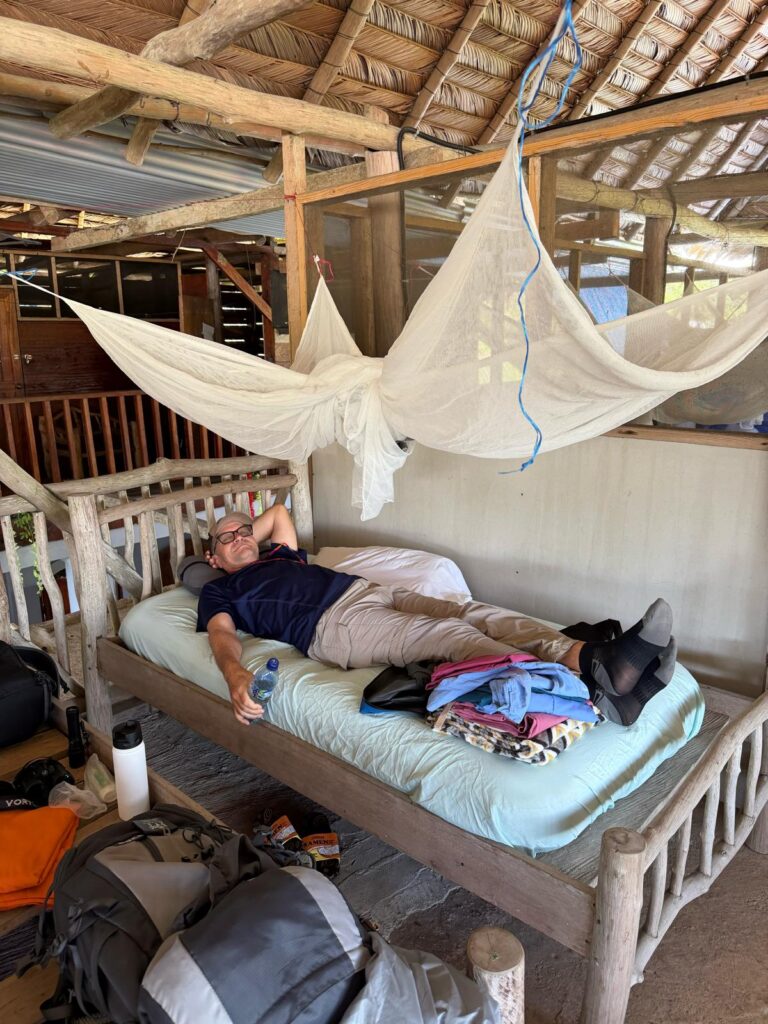
The accommodations here were the most rustic we had stayed in and the most expensive. Meals were not included, outside food is not allowed and there is nowhere else for you to eat unless you have a rental car. I wasn’t too keen on this set-up going in, but the bird possibilities were too good to pass on. They also have in-house bird guides for a reasonable price.
Meals must be committed to in advance and are served buffet style at a specific time with all guests dinning together.
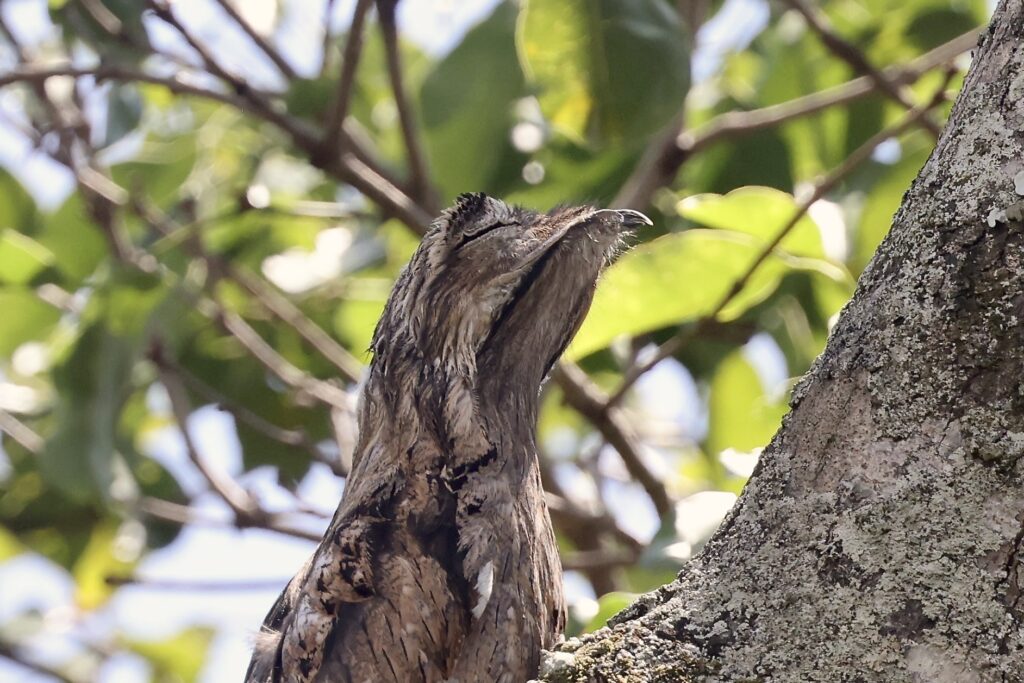
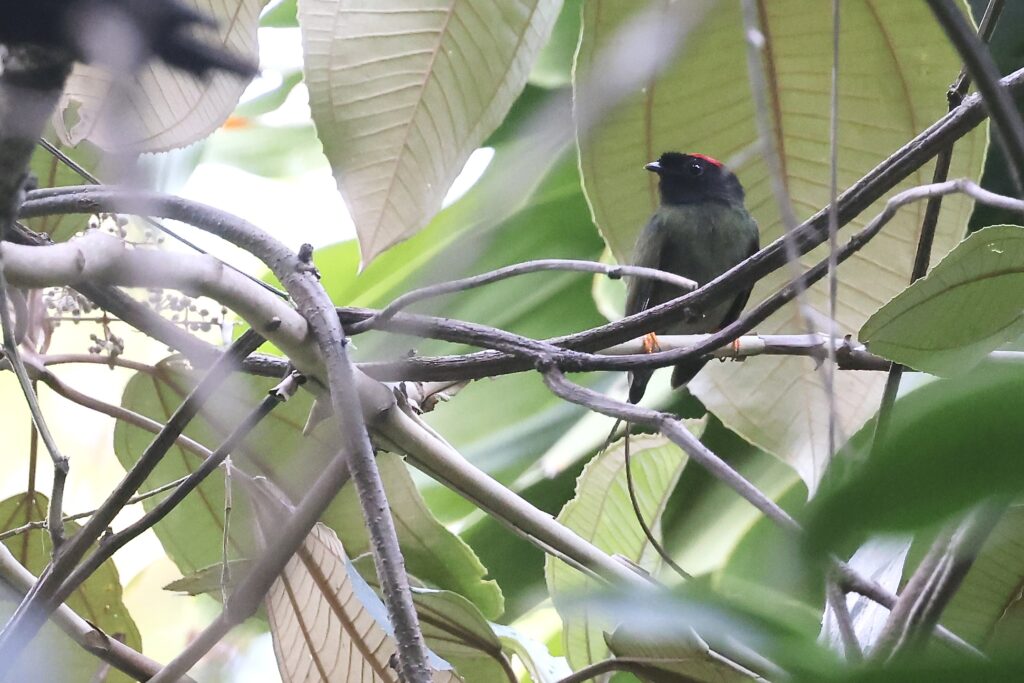
The trails were well developed, and the bird life was exceptional. Thirteen new lifers were identified. We used a guide one of the days and he put us on some hard-to-find lifers like the Long-tailed Manakin, Blue Seedeater, Rufous-breasted Spinetail, Northern Potoo and the Ivory-billed Wood…creeper, no not woodpecker. I had to double-take on that one.
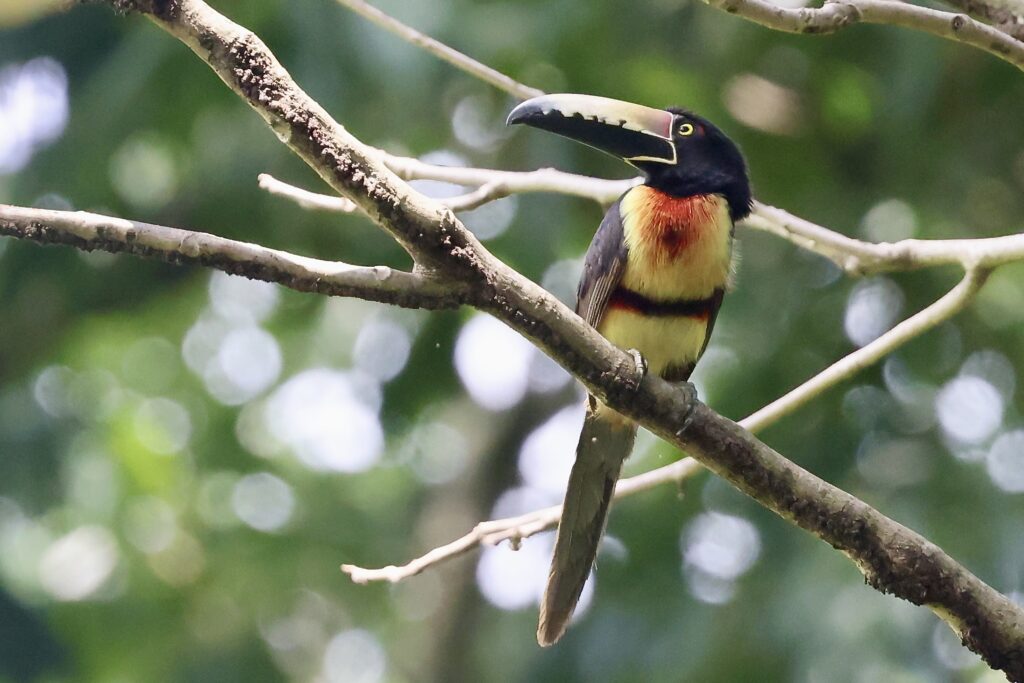
Collared Aracari
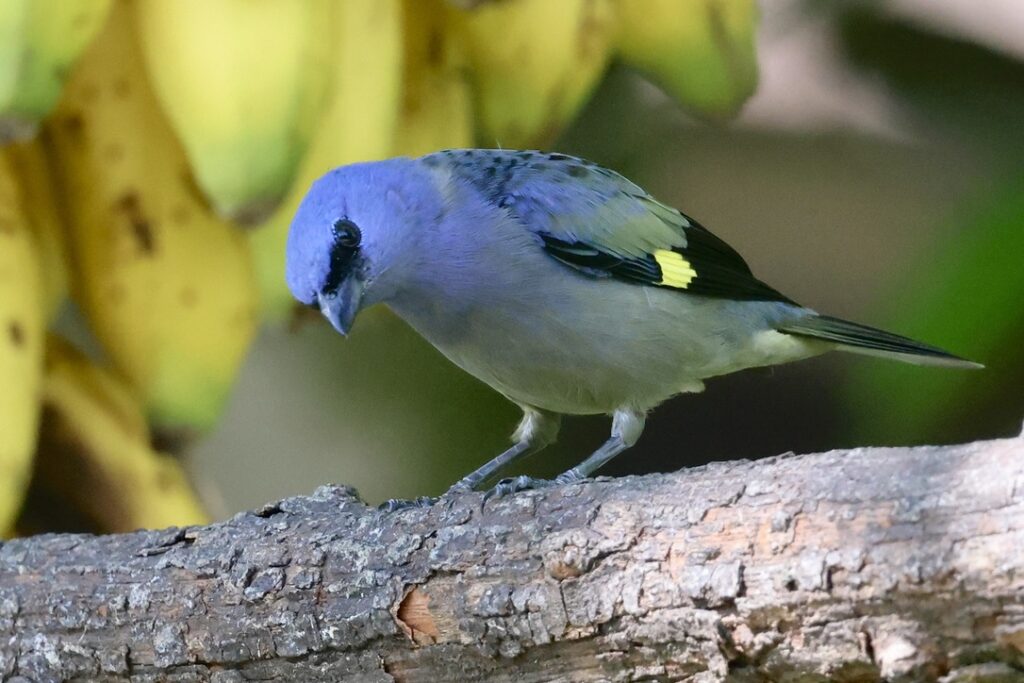
Yellow-winged Tanager
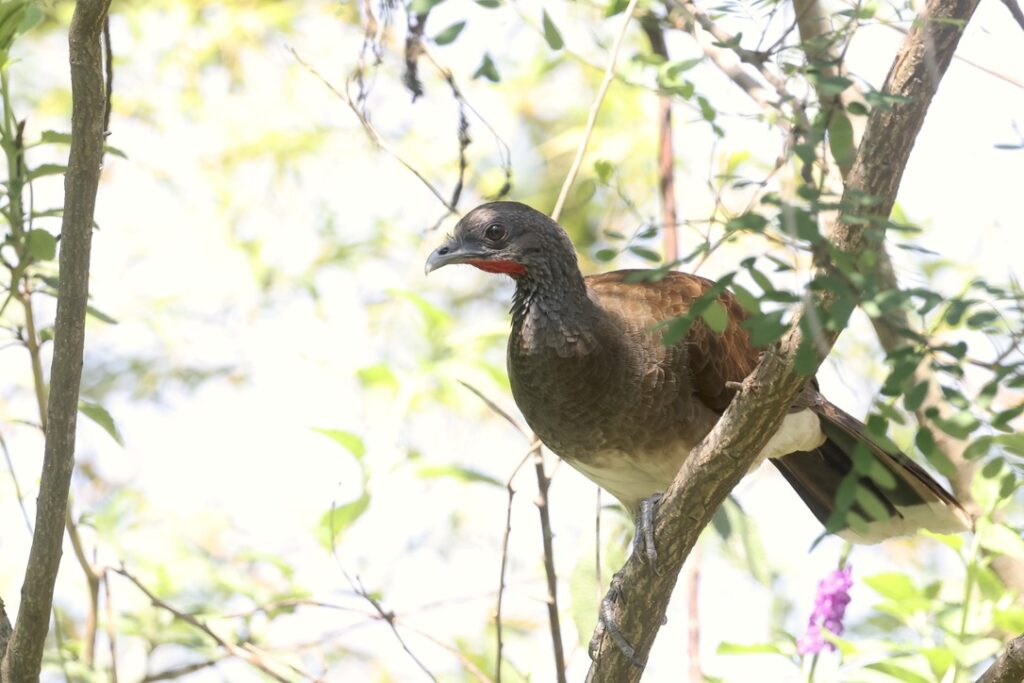
White-bellied Chachalaca
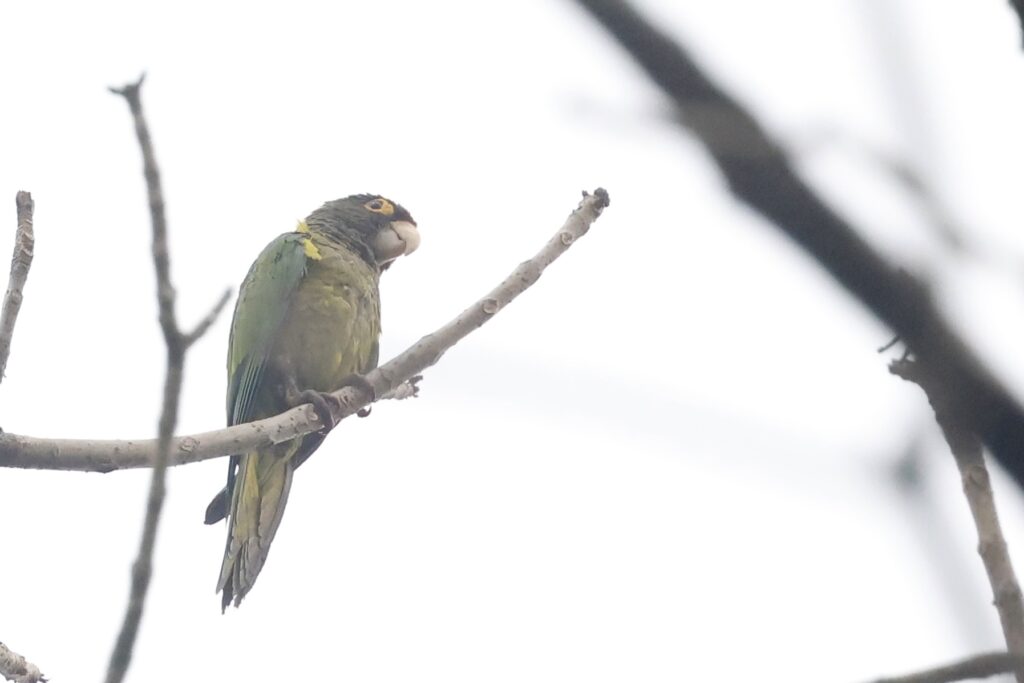
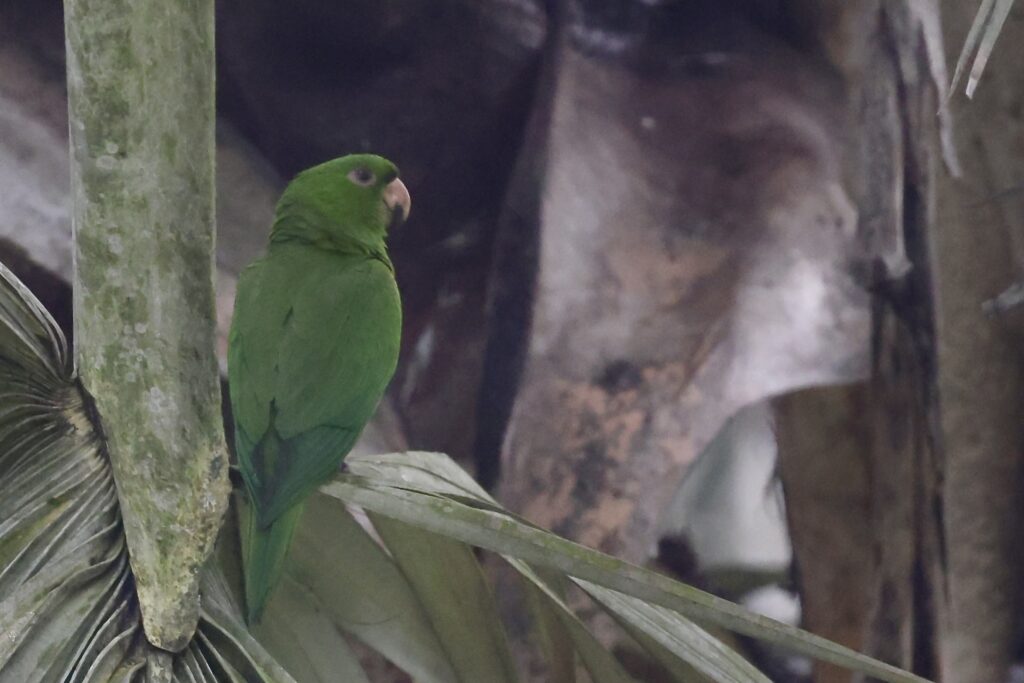
Orange-fronted Parakeet
Pacific Parakeet
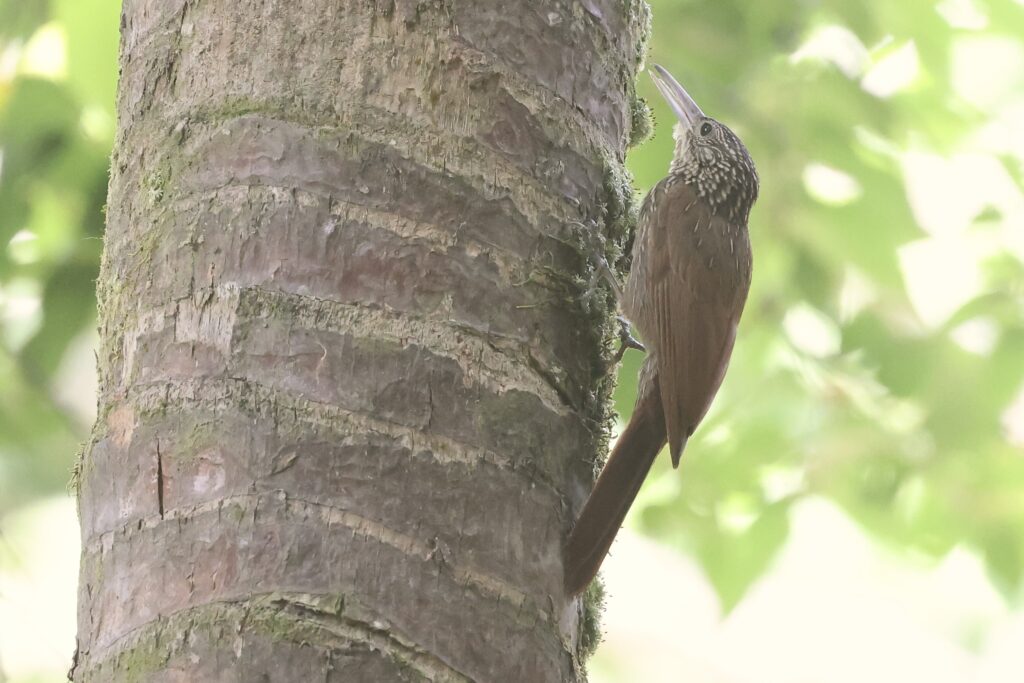
Ivory-billed Woodcreeper
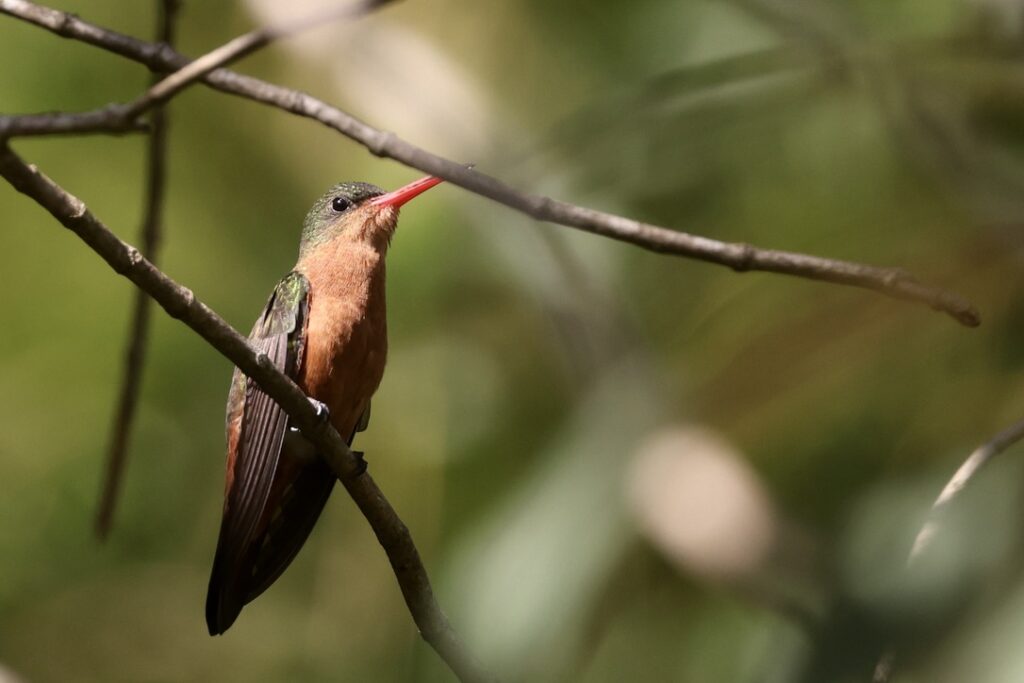
Cinnamon Hummingbird
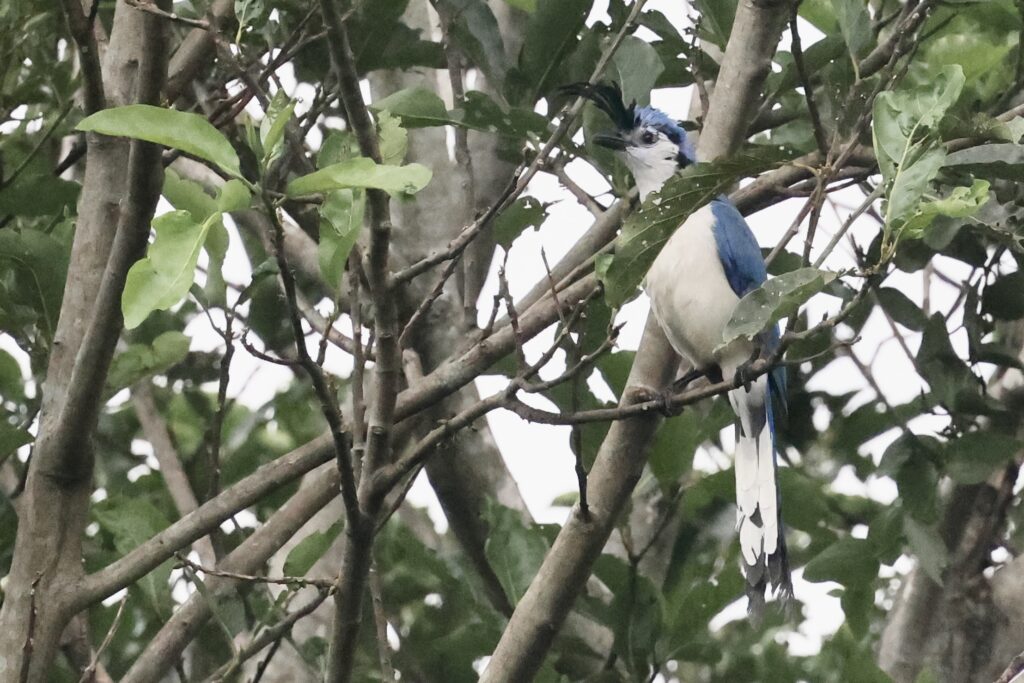
White-throated Magpie-Jay
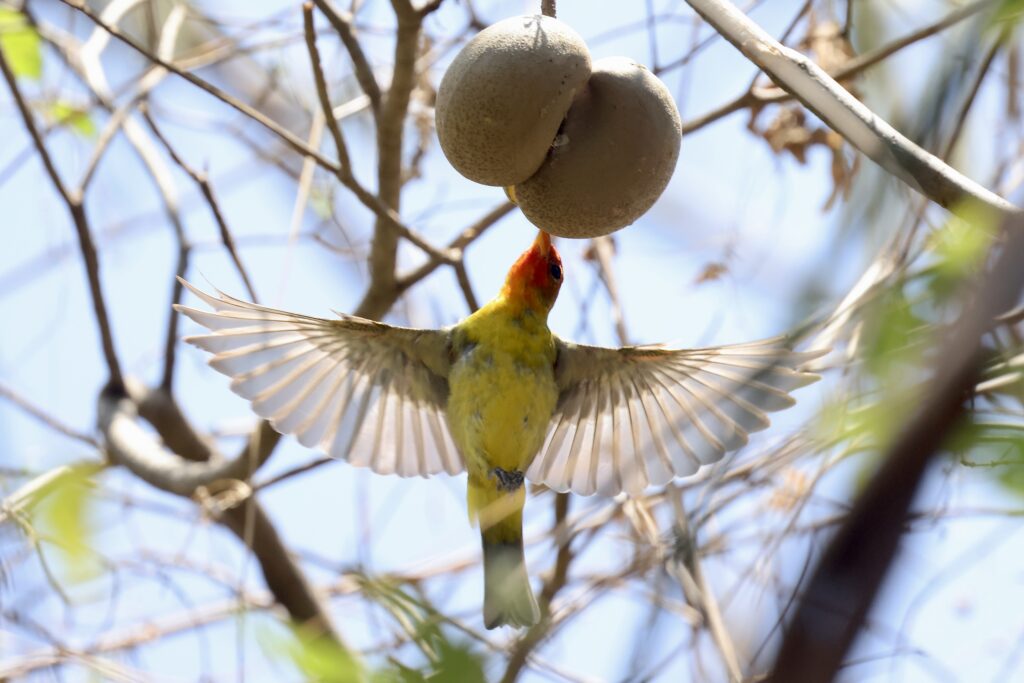
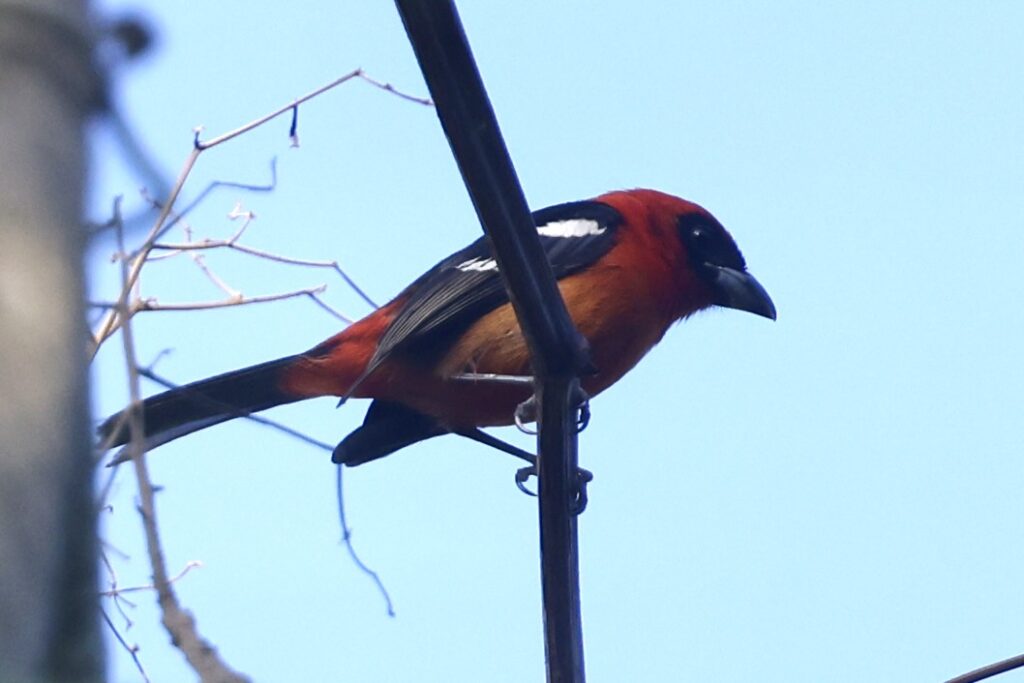
Western Tanager
Scrub Euphonia
We left Los Tarrales one day early because there was an expected “civil action” to block roads to protest against the government for high fuel prices and other things. The risk of Mirka missing her plane or me missing the mission trip convinced us to leave a day early.
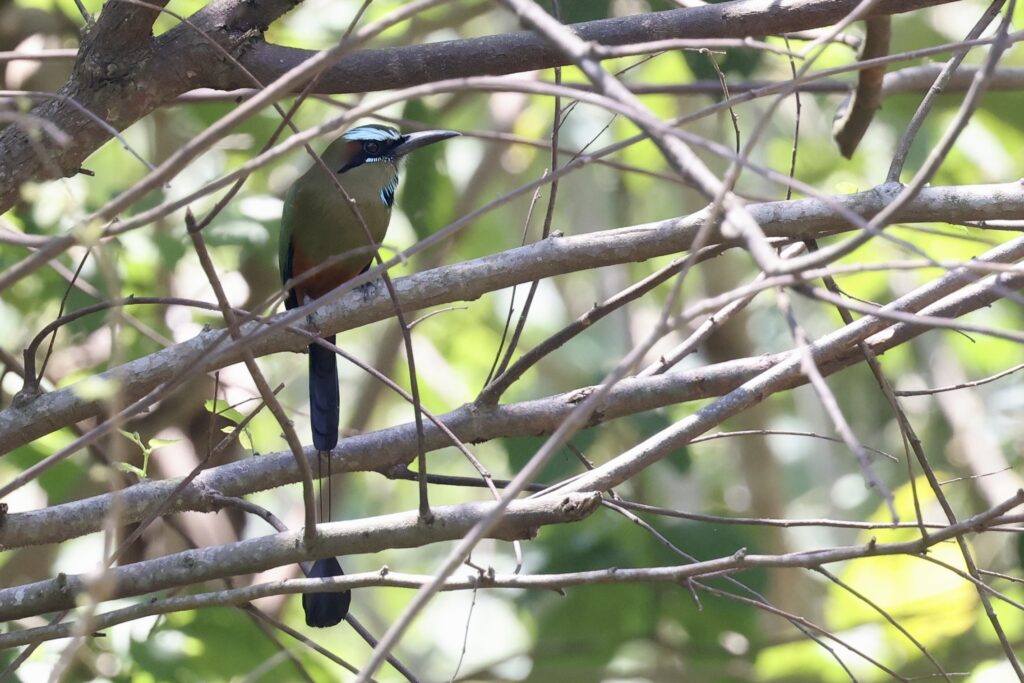
Turquoise-browed Motmot
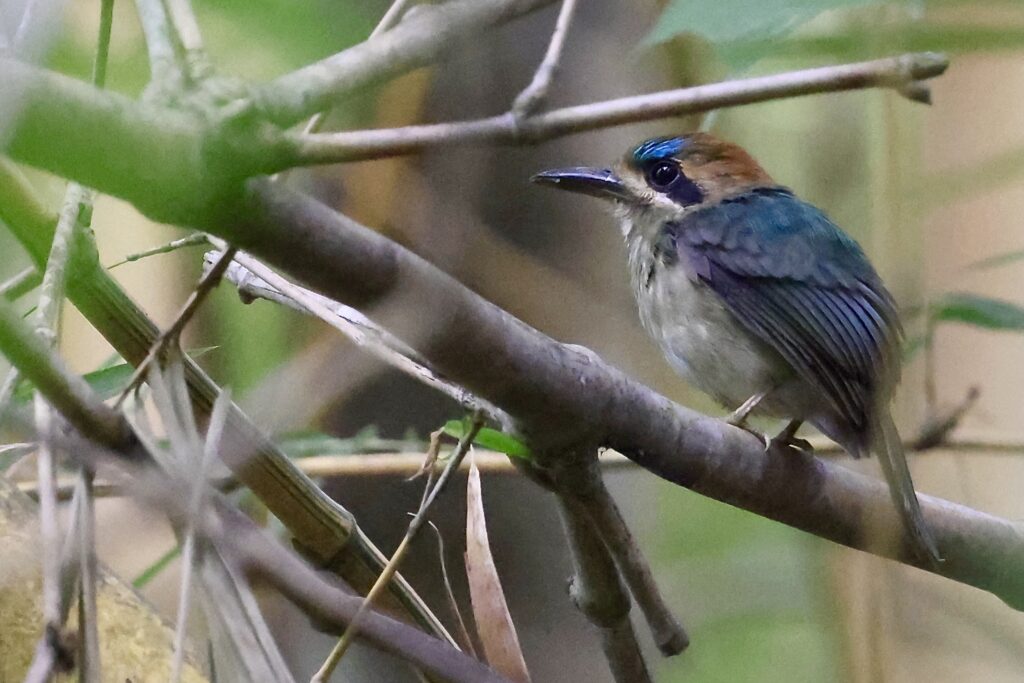
Tody Motmot
Lesson's Motmot
Black-and-white Wren
Northern Potoo
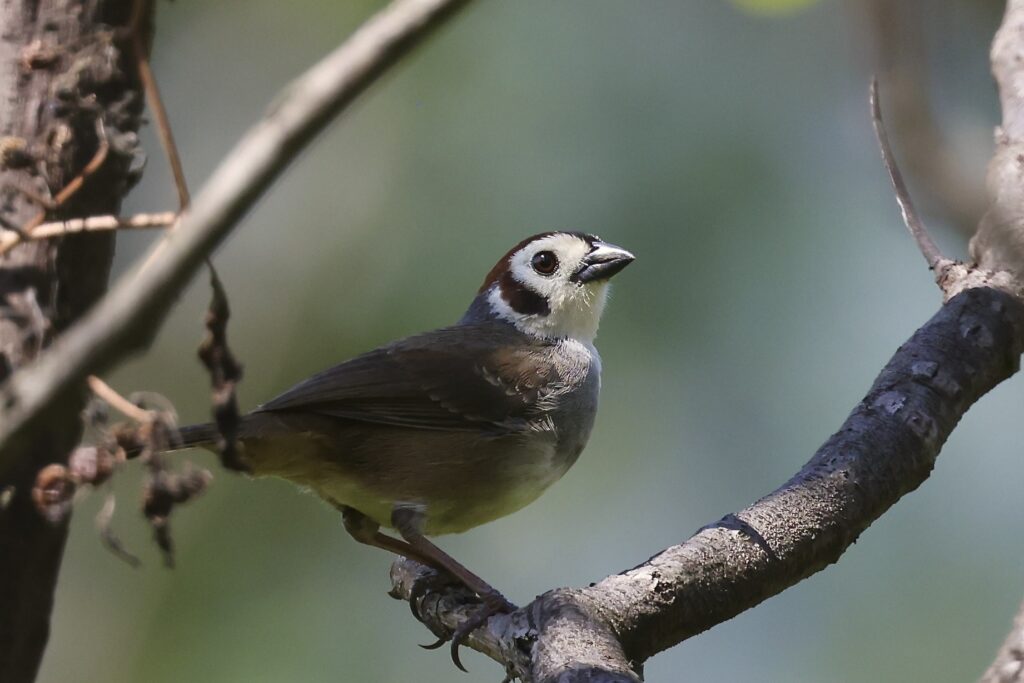
White-cheeked Ground-Sparrow
Long-tailed Manakin
White-winged Tanager
A Lovely Santiago View
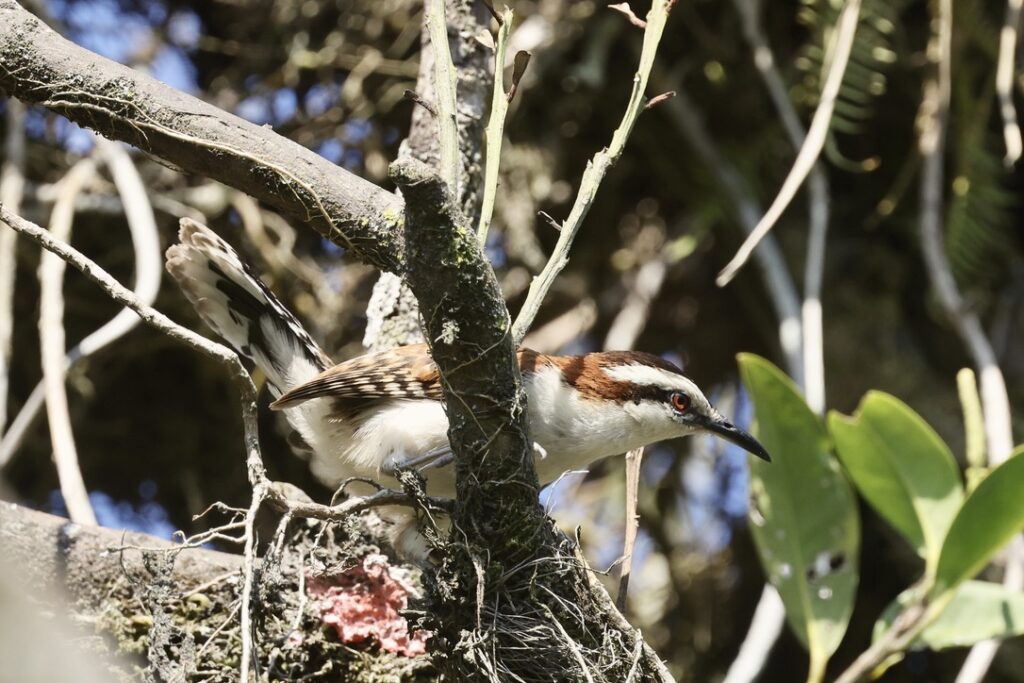
Rufous-backed Wren
Guatemala City and the Atitlan Grebe
In retrospect, maybe it was a little blessing in disguise for us because we had a full day in Guatemala City.
Following advice from our AirBnB host we taxi’d to the heavily policed “safe zone” of downtown. We hit a couple of museums and strolled the streets listening to street musicians and eating some street food.
It was in one of the museums that I learned of the Atitlan Grebe. A proper birding blog on Guatemala cannot be complete without some discussion of the now extinct Atitlan Grebe.
As the name implies, the Atitlan Grebe was a species endemic to Lake Atitlan. It was very similar in appearance to Pied-billed Grebe but much larger. Imagine a Pied-billed 50 cm long. That was the Atitlan Grebe.
To bring baseball into the story, it was three strikes and the Grebe was out.
Strike one was the human development around Lake Atitlan significantly increasing in the 1950’s putting an unsustainable demand on the reed beds around the lake. The reeds were harvested for mats and ceilings and furniture use. The reed beds were nesting and cover for the grebes.
Stike two was the introduction of Largemouth and Smallmouth Bass in the late 1950’s for recreation. These fish are voracious eaters, not only consuming the grebe’s food of small fish and crabs but also consuming the grebe chicks. Within 10 years the population was reduced by 70%. Anne LaBastille is credited with establishing a breeding and nursery refuge for the grebe in 1966. When strike three hit, the population was well on its way to recovery.
Strike three was the earthquake of 1976 that instantly lowered the water level of the lake making the reed beds away from the water’s edge. A few seasons of breeding were lost due to the time required for the reed beds to reestablish. Sadly, there was no recovery.
Numbers declined from over 200 individuals in 1976 to about 30 in 1983, to two individuals which were last seen in 1989. A sad story to be sure.
It’s Not Just for the Birds
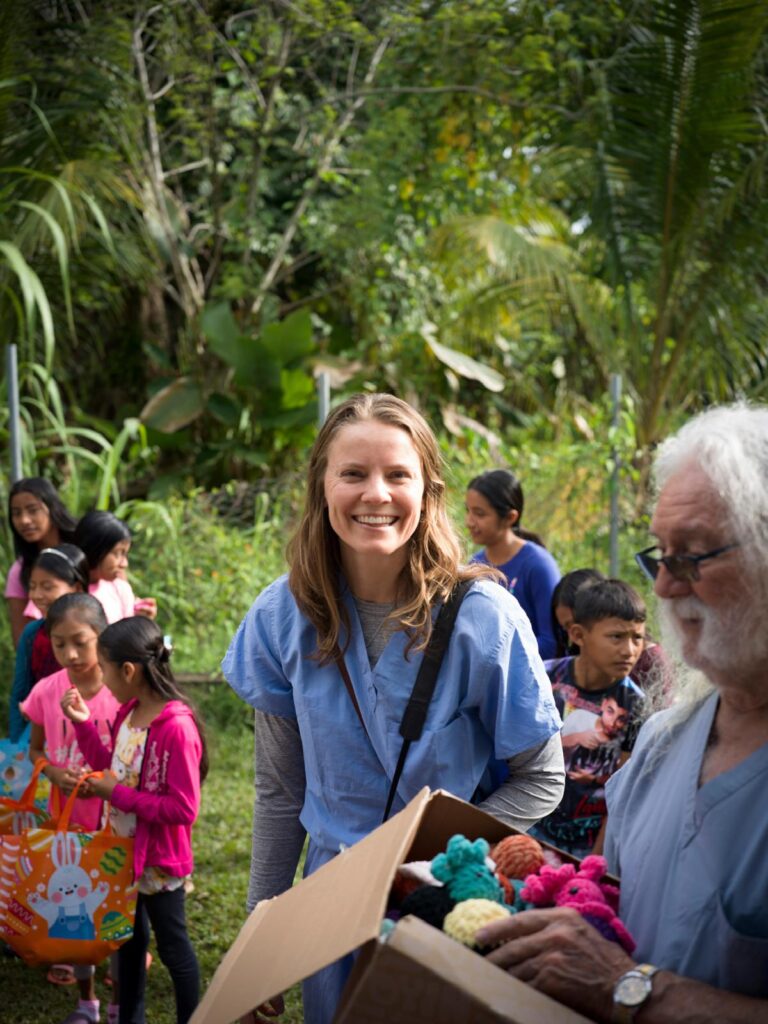
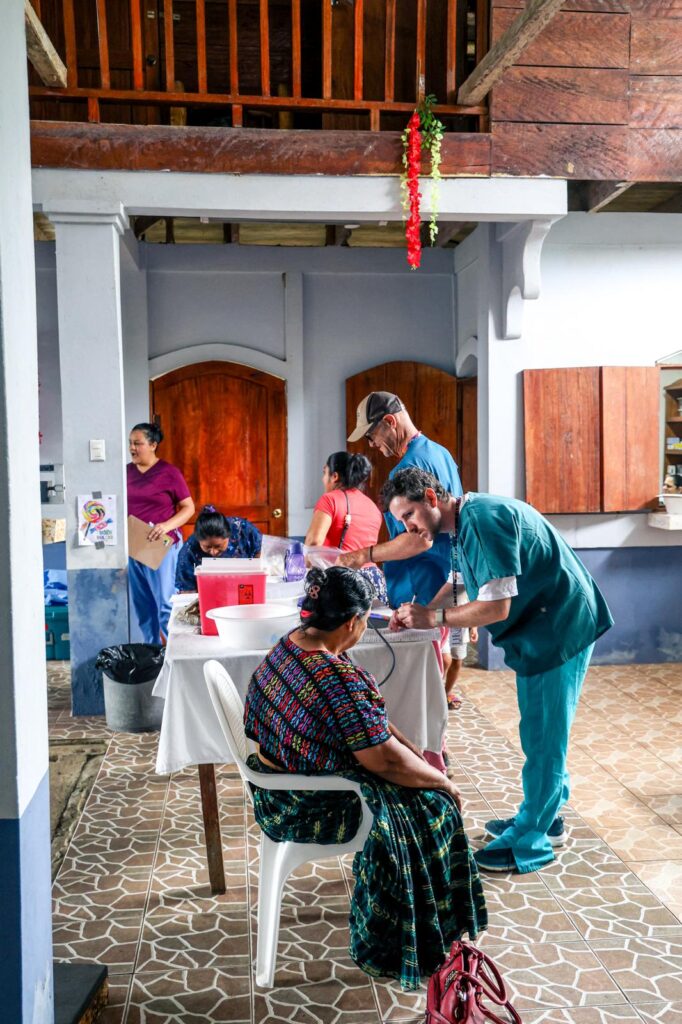
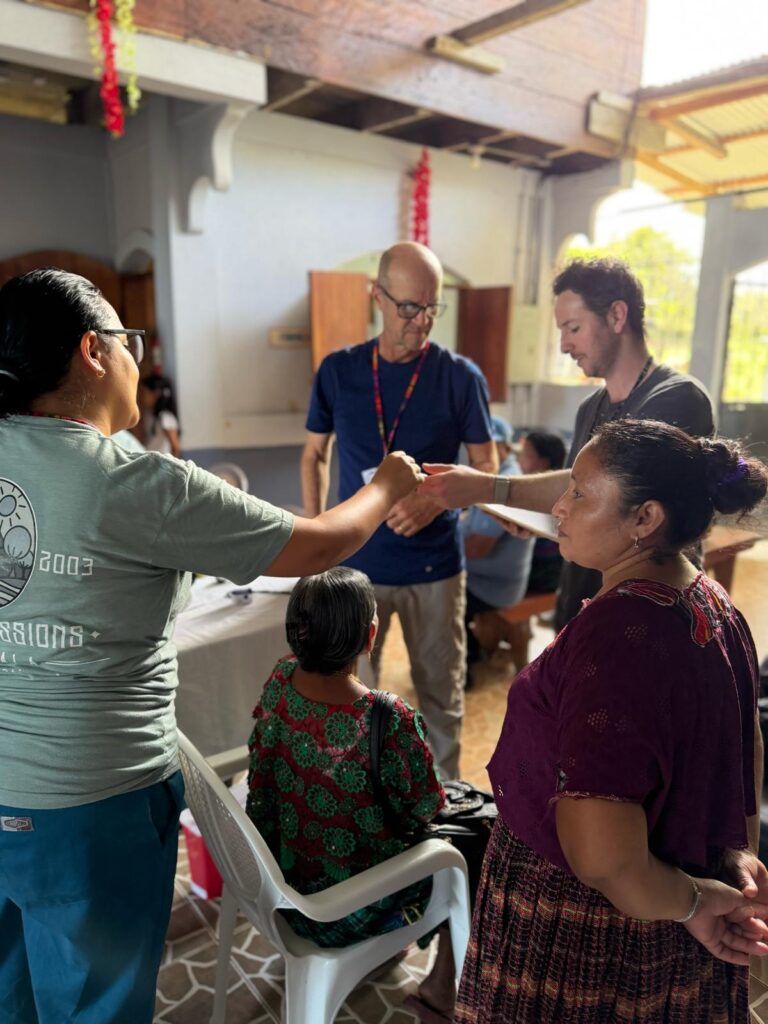
Now it was time to think less about birds and more about the medical mission trip at hand. Refuge International is one of many NGO’s providing free or low-cost medical care to remote or otherwise underserved areas of Guatemala.
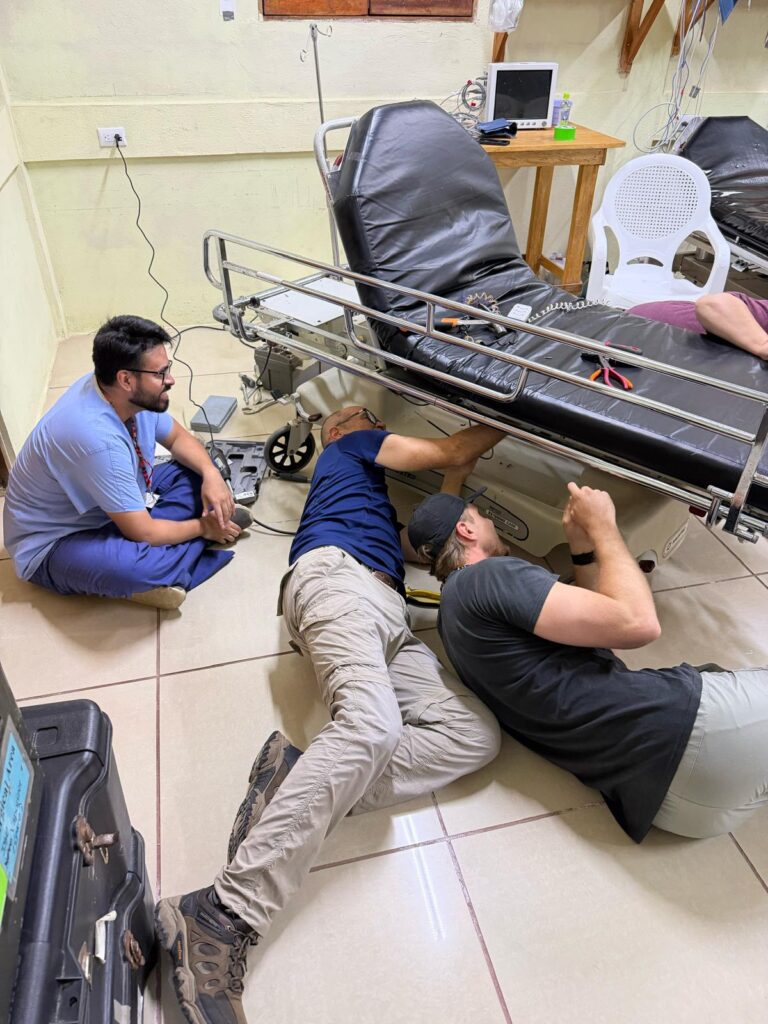
Now I am no medical person, but I can fix things, I can speak a few words of Spanish, and I am trainable for whatever little task helps.
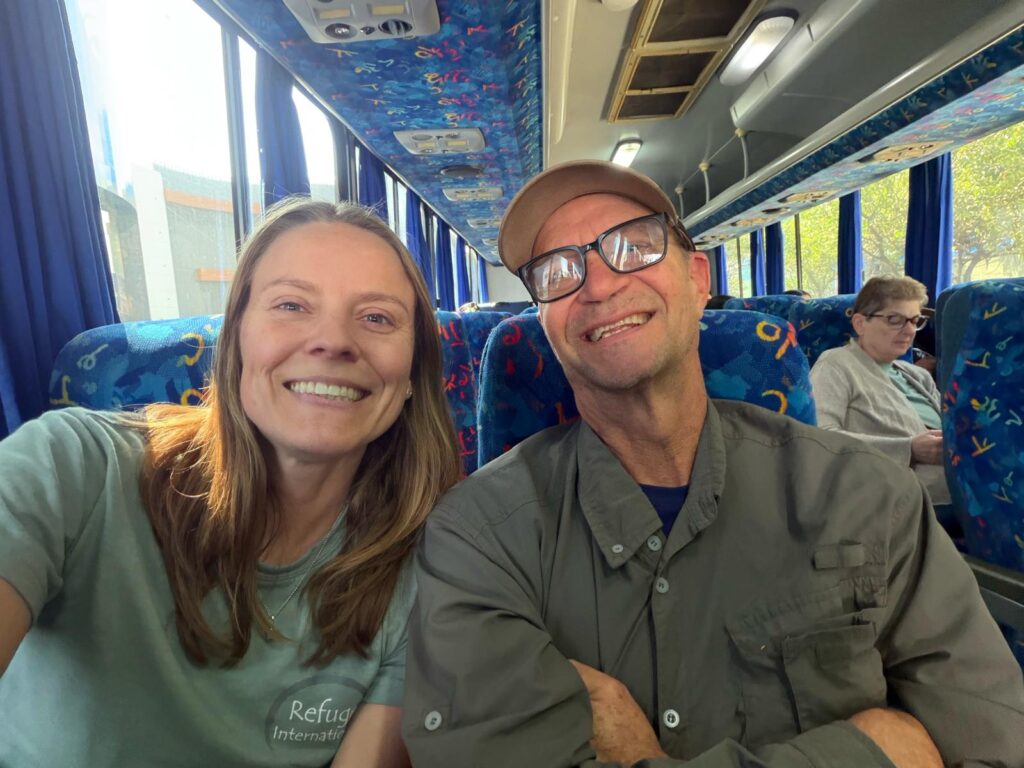
Upon Patty’s arrival in Guatemala, we boarded the bus with about 20 other people and started the long trek from the city to Puerto Barrios, Guatemala’s Atlantic port city. The road was long and busy, but the bus was large and comfy, so the 7 hours went by quickly.
I began meeting the other US based volunteers as well as the local Refuge International staff and translators. Some were rookies like me; others were more seasoned. We all had certain things in common, a sense of adventure, a desire to participate and a desire to expand the mind. Everyone was so nice, and I enjoyed spending time with them. By the end of the week, I even had some of them vowing to become more serious birders!
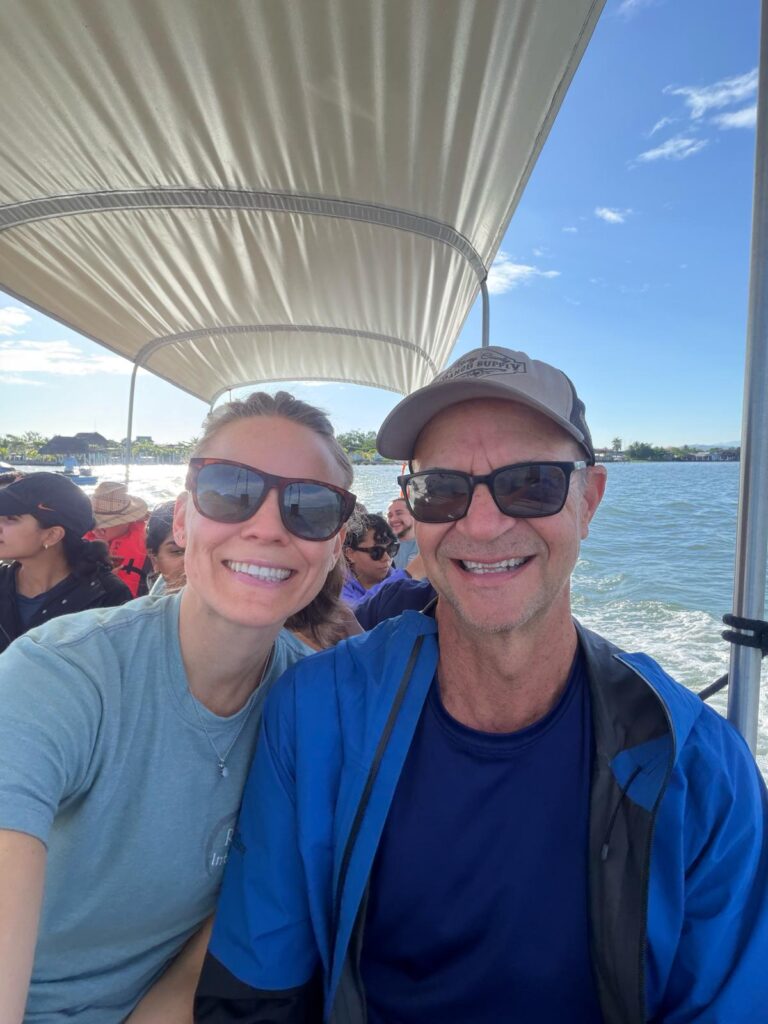
We overnighted at a nice little hotel, woke early the next day and headed to the docks where our two pangas were waiting to take us on the 40-minute boat ride to Sarstun, a small village on the Sarstun River which divides Guatemala from Belize.
Sarstun
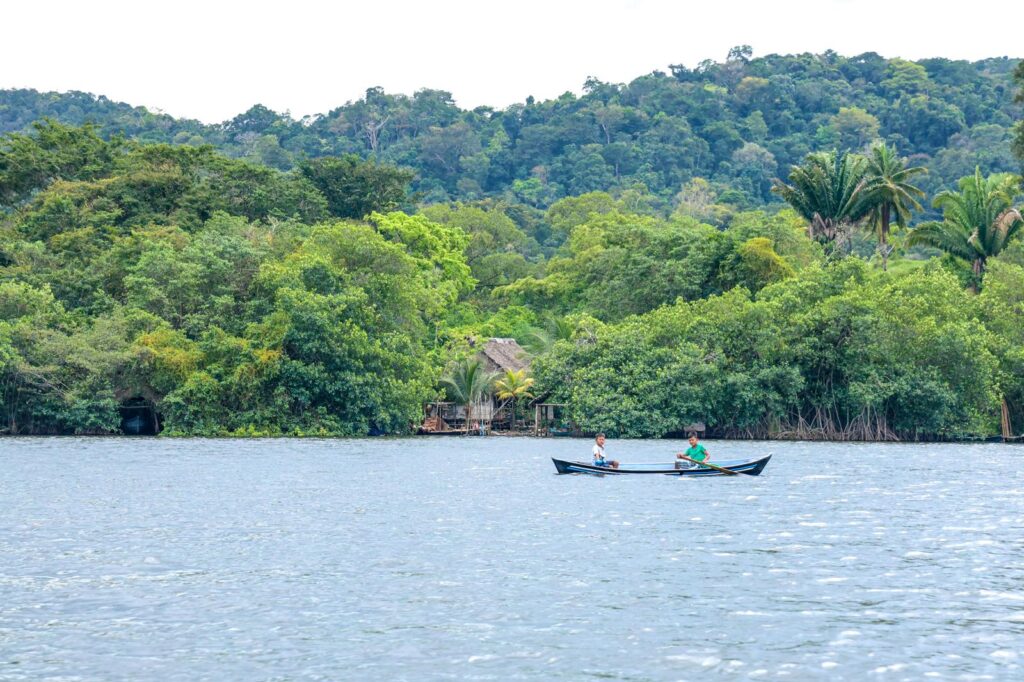
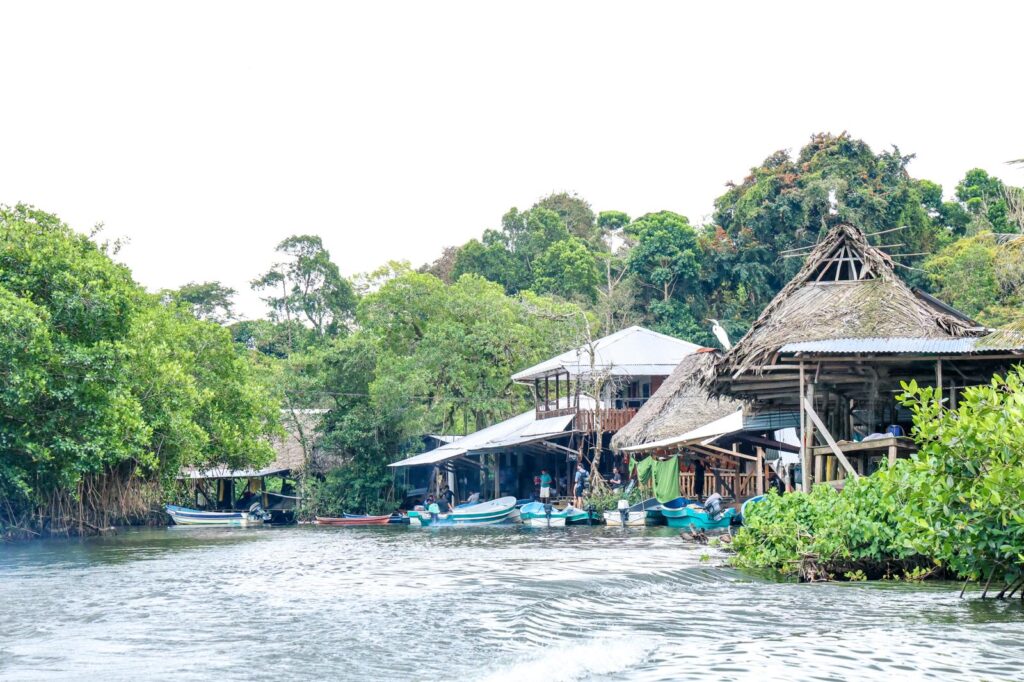
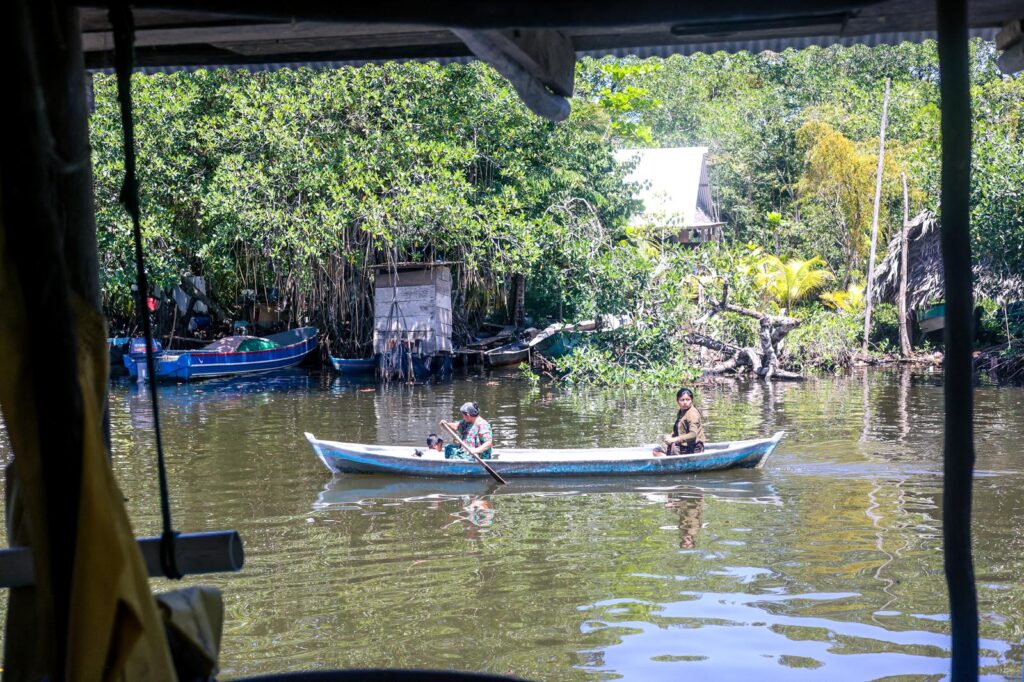
The sarstun river is large and wide, the village dock is situated 100 meters up a mangrove lined natural channel. The village is small with one little store at the dock selling essentials and no other business that I would see other than agriculture and maybe an outboard mechanic. For most people here, it is subsistence living. The population in the immediate area was likely no more than 100-150 people. Many of them speak only their indigenous language, no English, no Spanish.
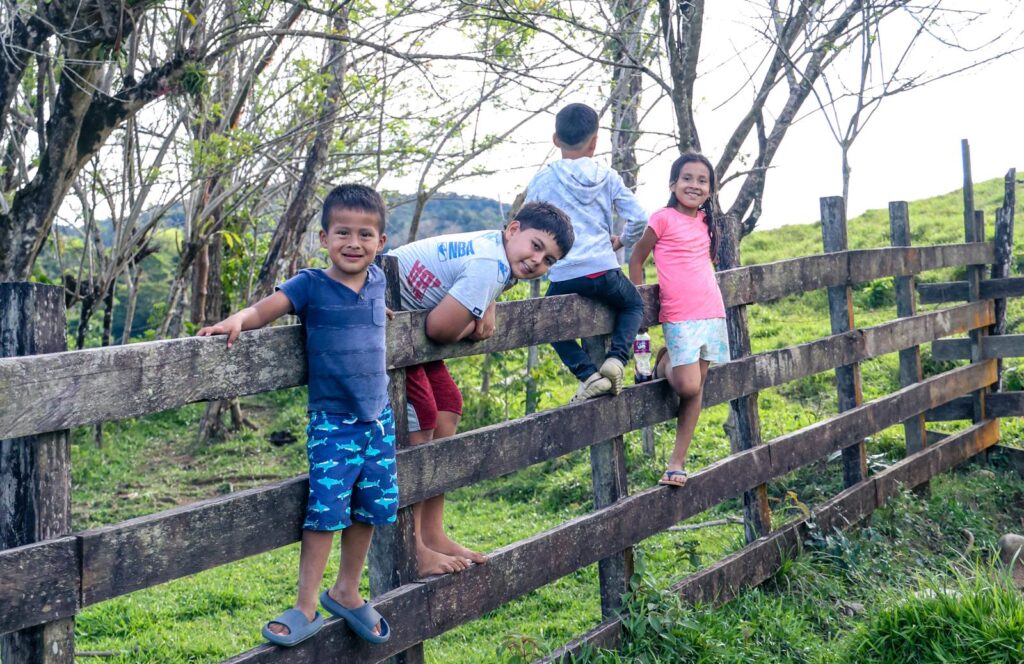
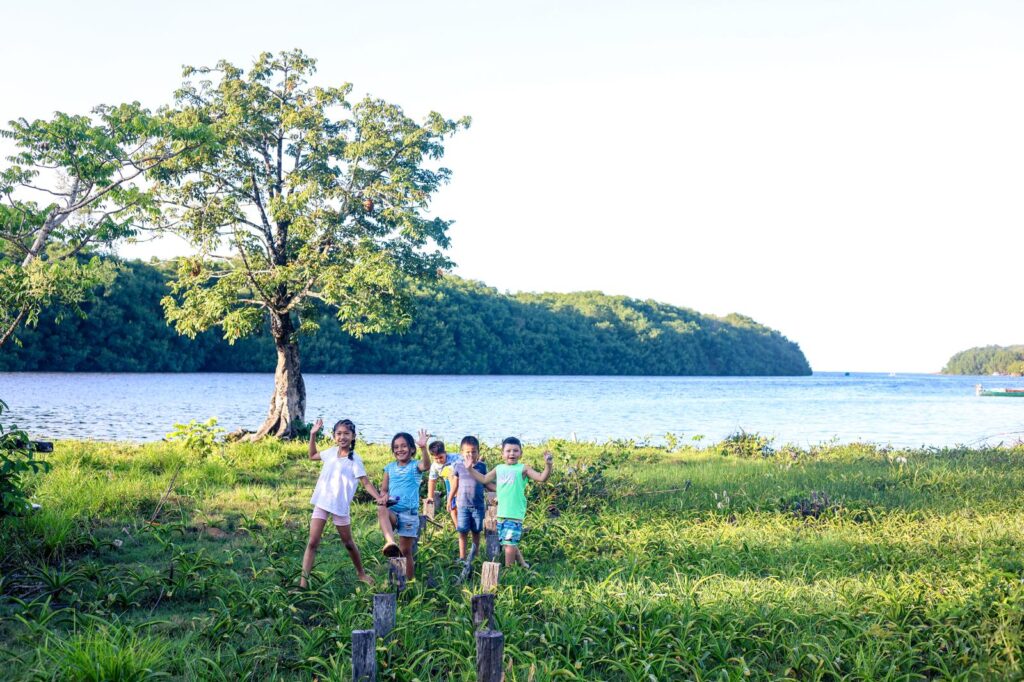
Children were everywhere. Smiling faces, inquisitive, interactive; like children anywhere. Patty has been there enough that she knows many of the people and many of the children. The children love her and request her time for playing on a daily basis.
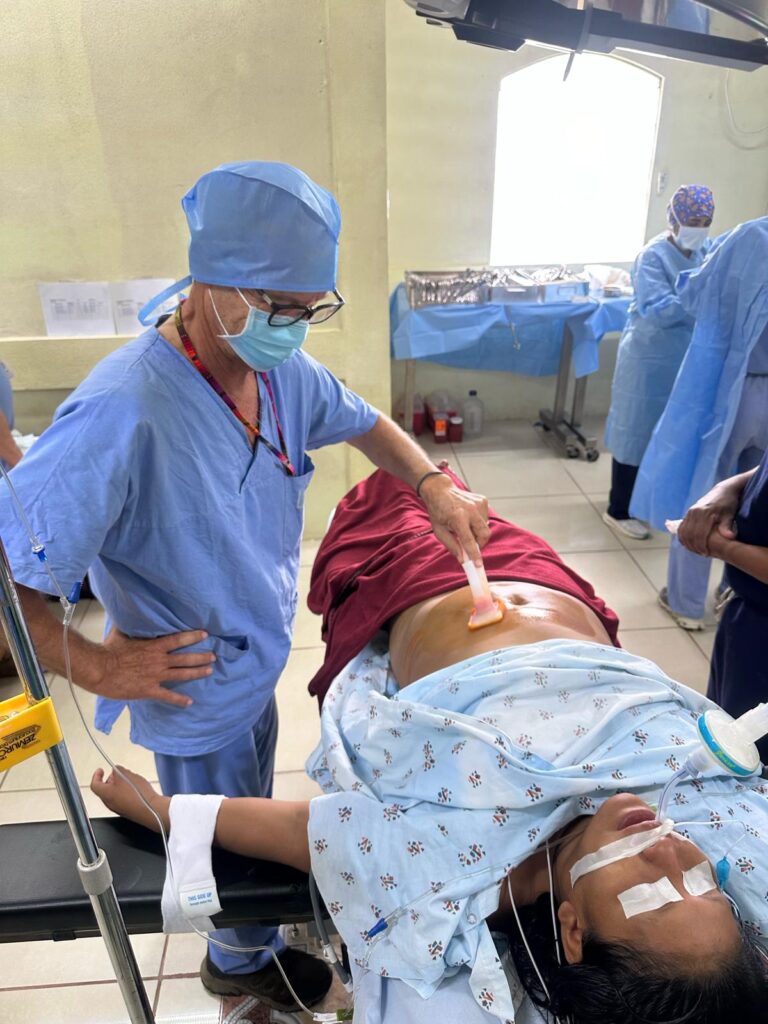
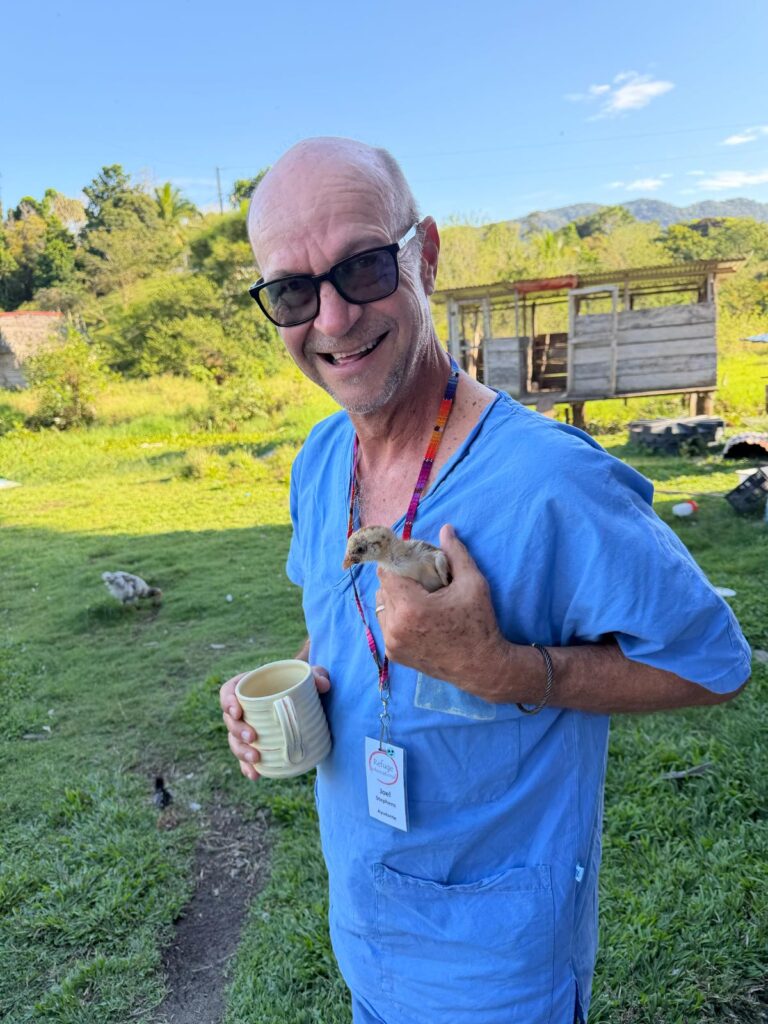
I was also able to be in the operating room due to the less strict rules as compared to the USA or any other developed part of the world. I even adjusted the cauterizing gun in real time during an operation and sterilized bellies with a sponge thing.
Me Scrubbing
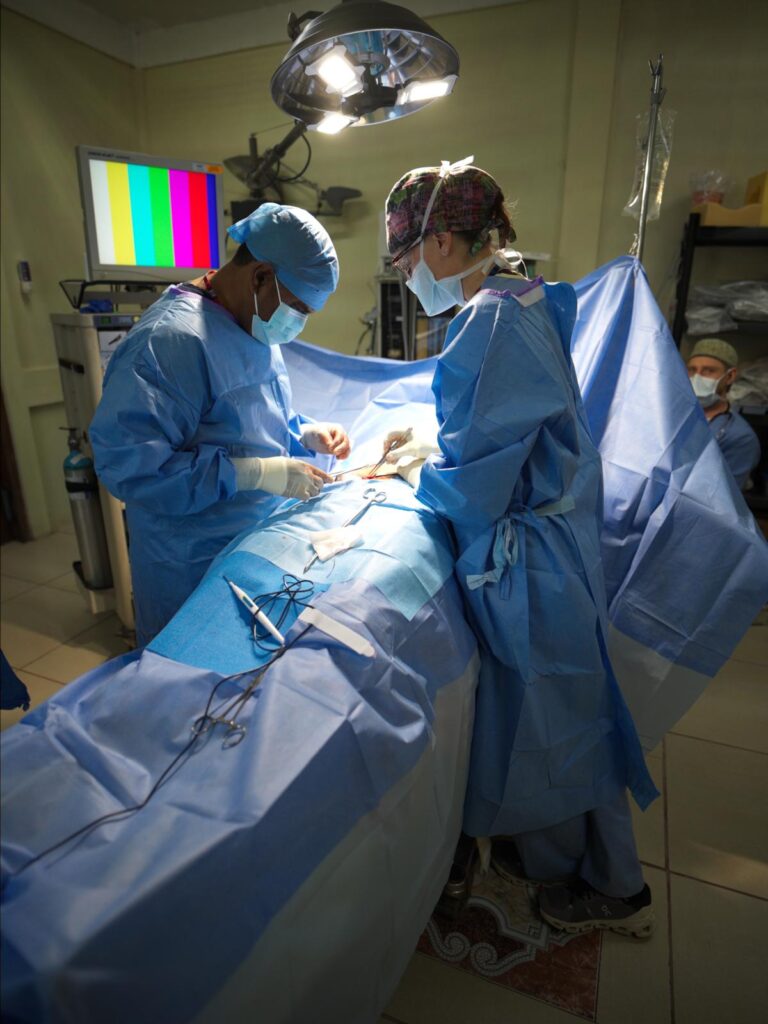
Patty Cutting
Patty Fixing Things
Me Fixing Things
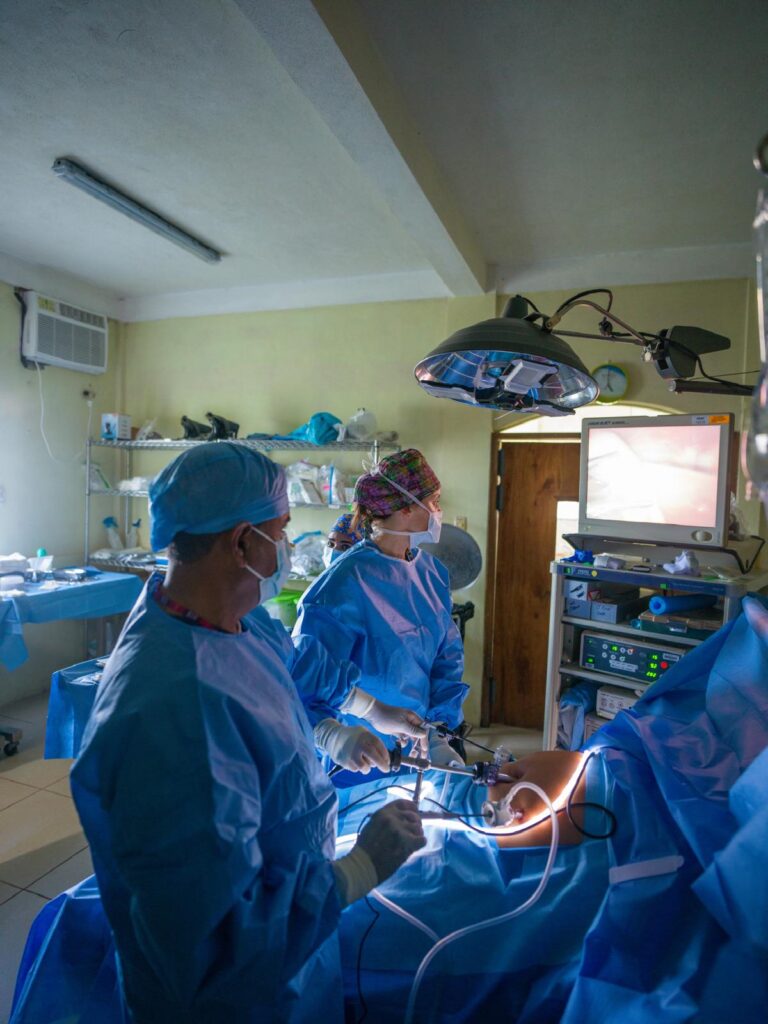
Without a doubt the most rewarding part of my time in Sarstun was watching Patty (a PA specializing in robotic gynecological surgery) work in surgery. When the surgery was gynecological in nature, the surgeon, Jay, would lean heavily on her. Seeing her cut holes in people’s bodies and stick tubes and instruments in and manipulate those instruments to perform whatever the task was amazed me and made me proud.
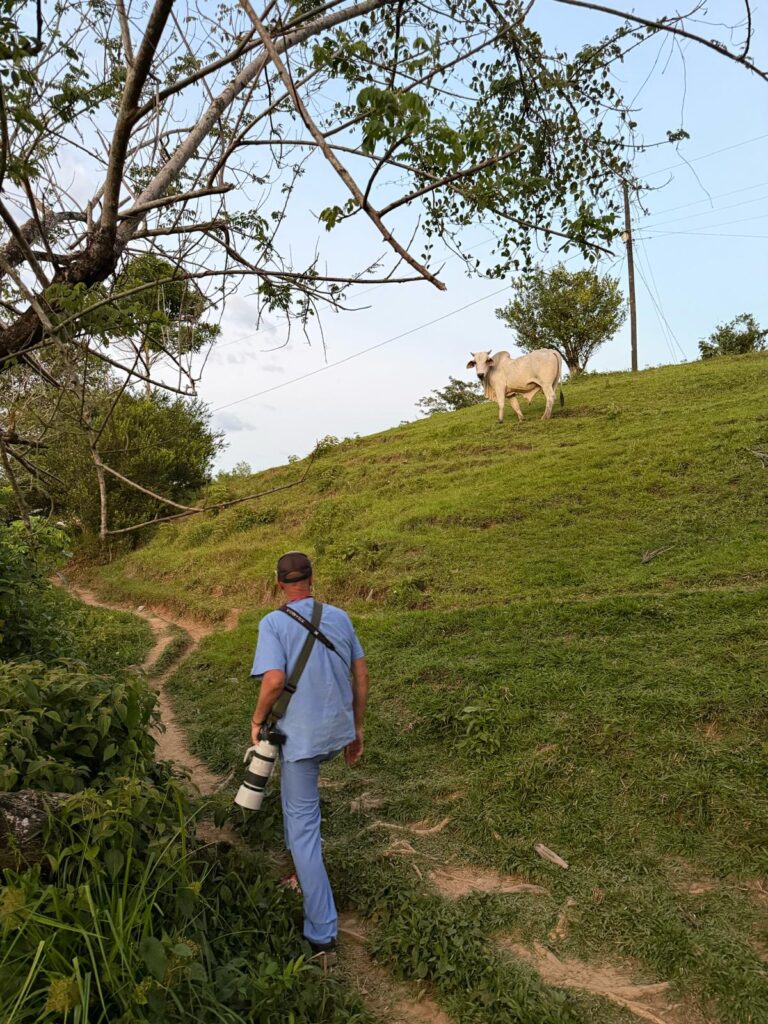
On one day, me and a couple of other guys who were also less medically essential went with a couple of the Refuge International people to an even more remote village to see what the need and interest was there. This trip took us by boat upriver for another half hour and then on a 5 km hike. Good exercise to be sure and you get an appreciation of how simple and happy a life can be.
Checking In
Checking In
End of the Day
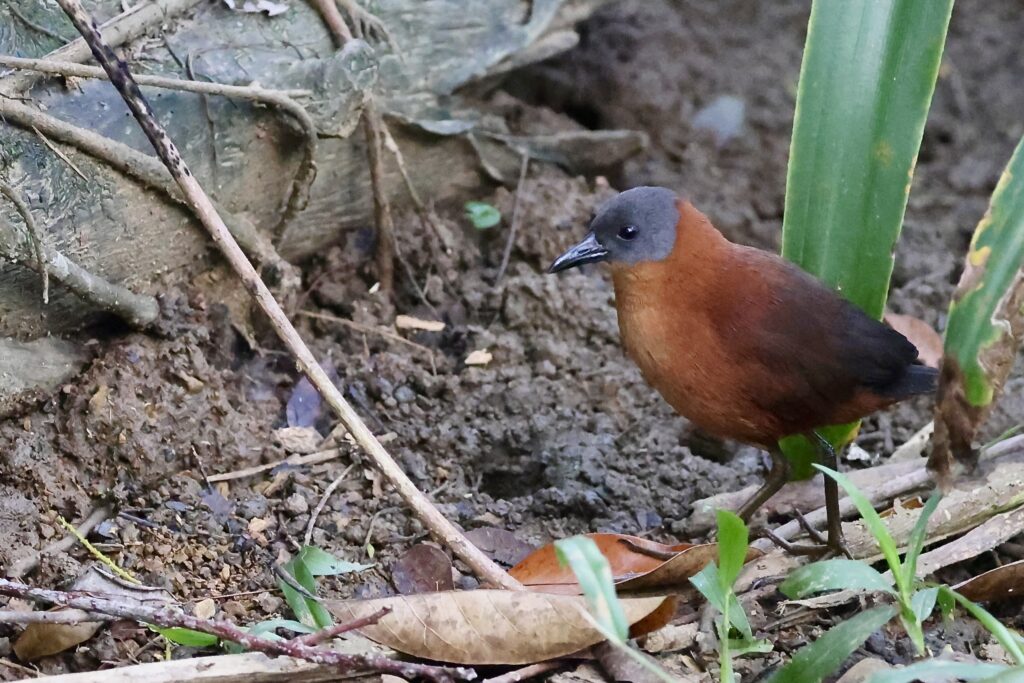
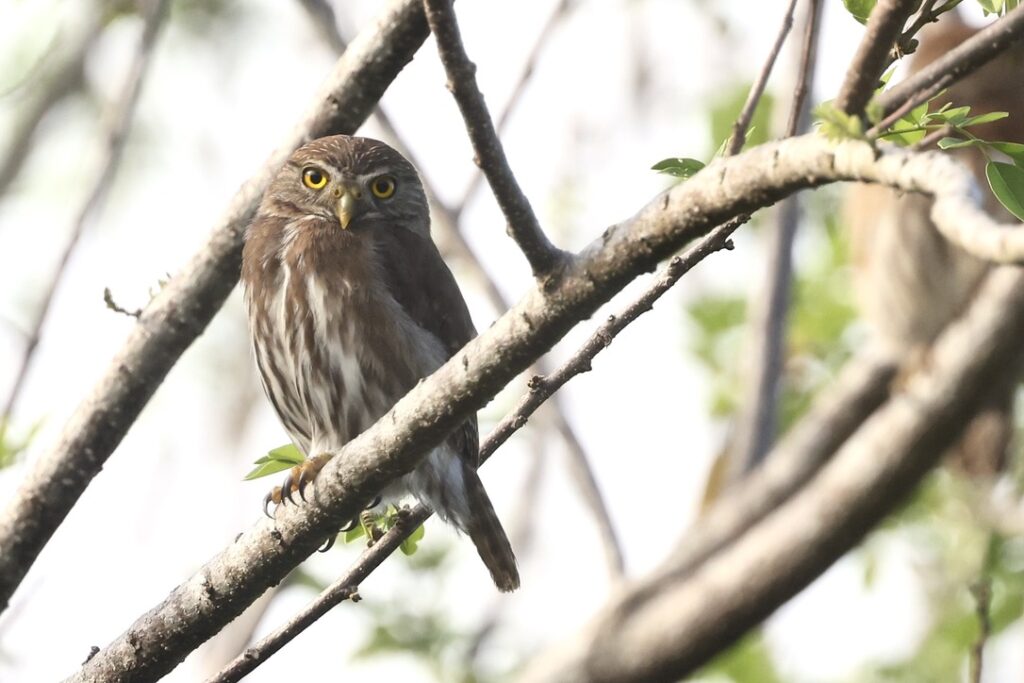
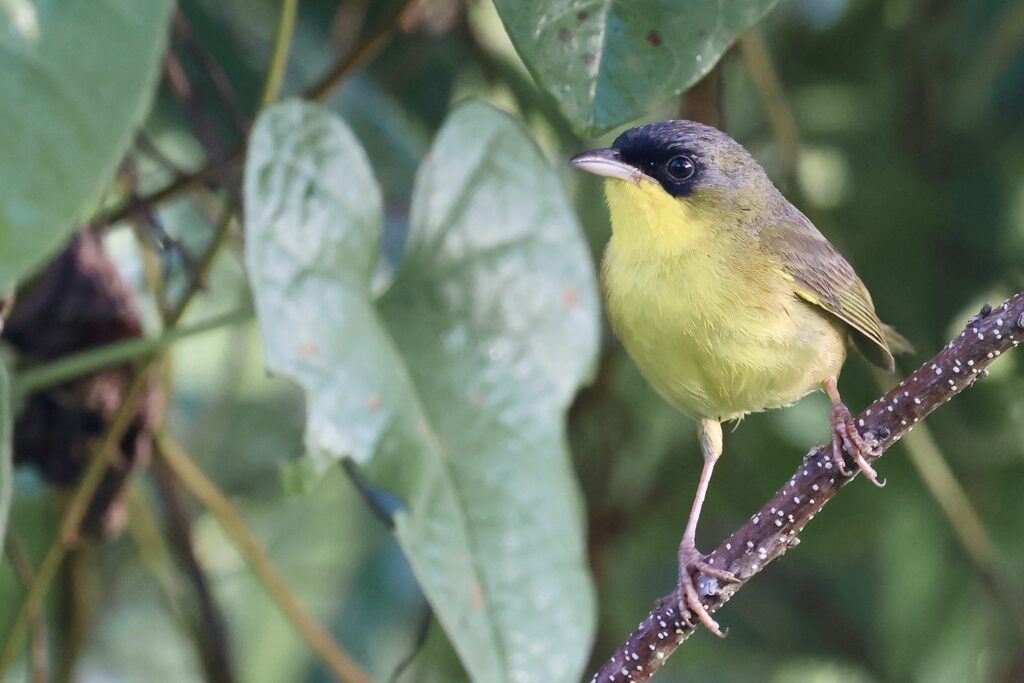
It was sad to pack and leave at the end of the week, but so it goes. I did manage a little bit of birding, some on my own and some with others. I was so happy to coax a lifer Ruddy Crake out into the open for a photo shoot. I was also surprised to find the uncommon, Gray-crowned Yellowthroat in the grassy marsh around the village. A pair of Ferruginous Pygmy-Owls gave me some good looks too.
A Different Kind of Scrub Birding
This Bird Doesn't Count
Ruddy Crake
Ferruginous Pygmy-Owl
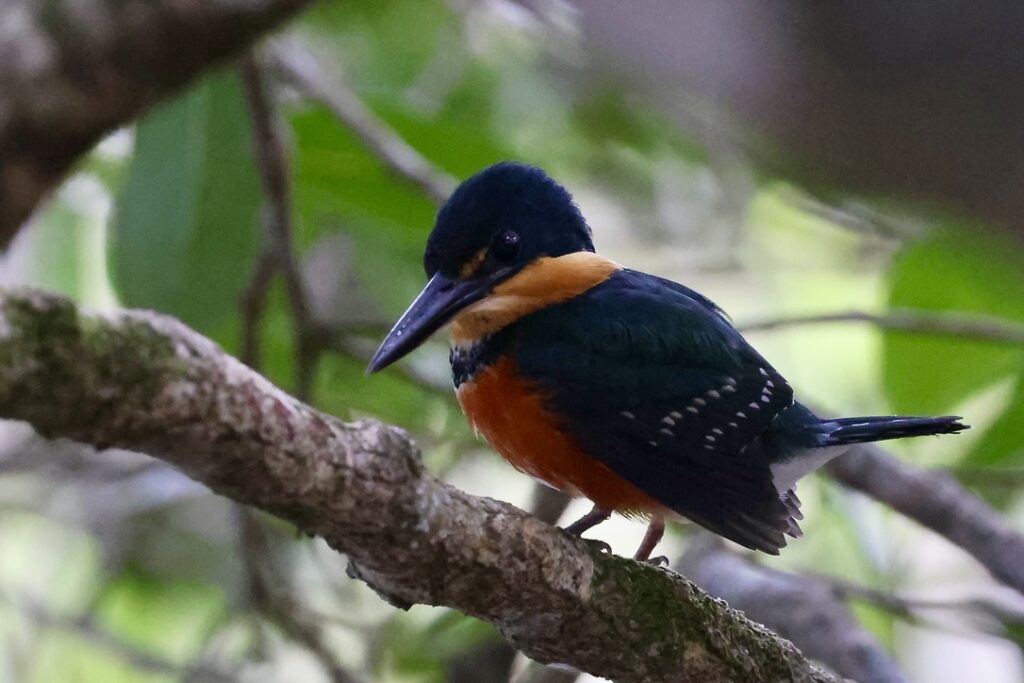
American Pygmy-Kingfisher
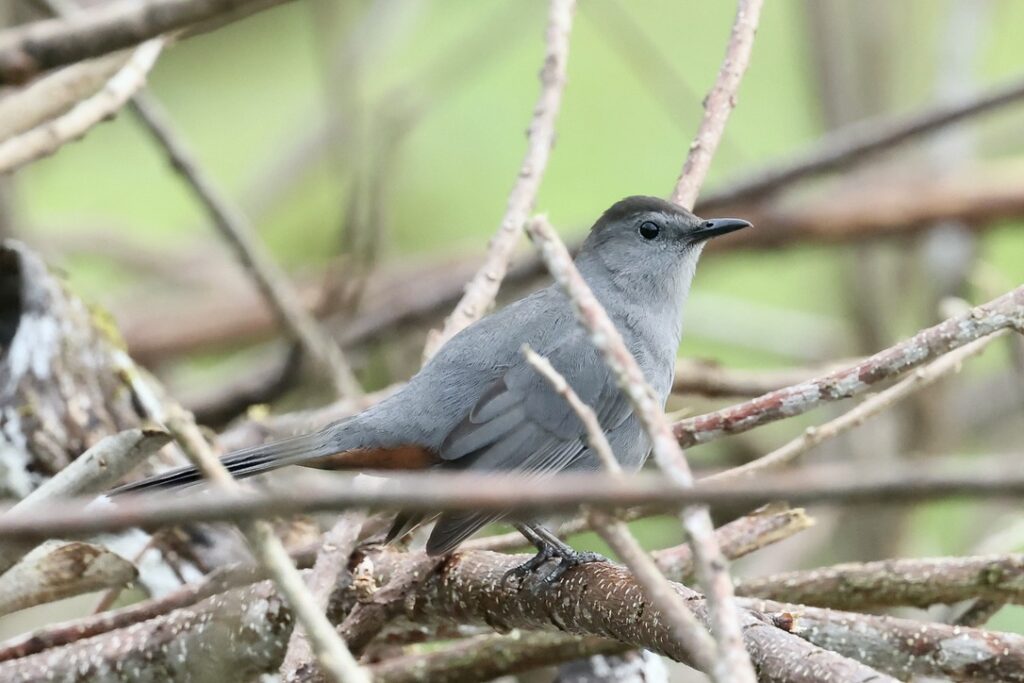
Gray Catbird
Gray-crowned Yellowthroat
The boat ride in heavy rain back to Puerto Barrios added an element of adventure to the trip. Remember that “civil action” mentioned earlier in the blog? Well, it happened, just a week later than planned. Our bus ride to Antigua took 22 hours. Most of it sitting still on a blocked road. Yes, we had an option to pay a reasonable air fare and fly on a private single engine plane in the rain to Guatemala City but that did not appeal to me, Patty or most of the volunteers.
A few did go by plane, but only the ones with flights to catch that they could not miss. That plane made it safely to its destination.
Birding Guatemala - Antigua
We arrived at our hotel in Antigua in the wee hours, managed a few hours of sleep and started our day.
Antigua is the top tourist destination in Guatemala. It is a beautiful, well-preserved colonial city that is a UNESCO World Heritage Site and was the capital for over 200 years. The capital was relocated in 1776 after they got tired of rebuilding after earthquakes every 50 yrs or so.
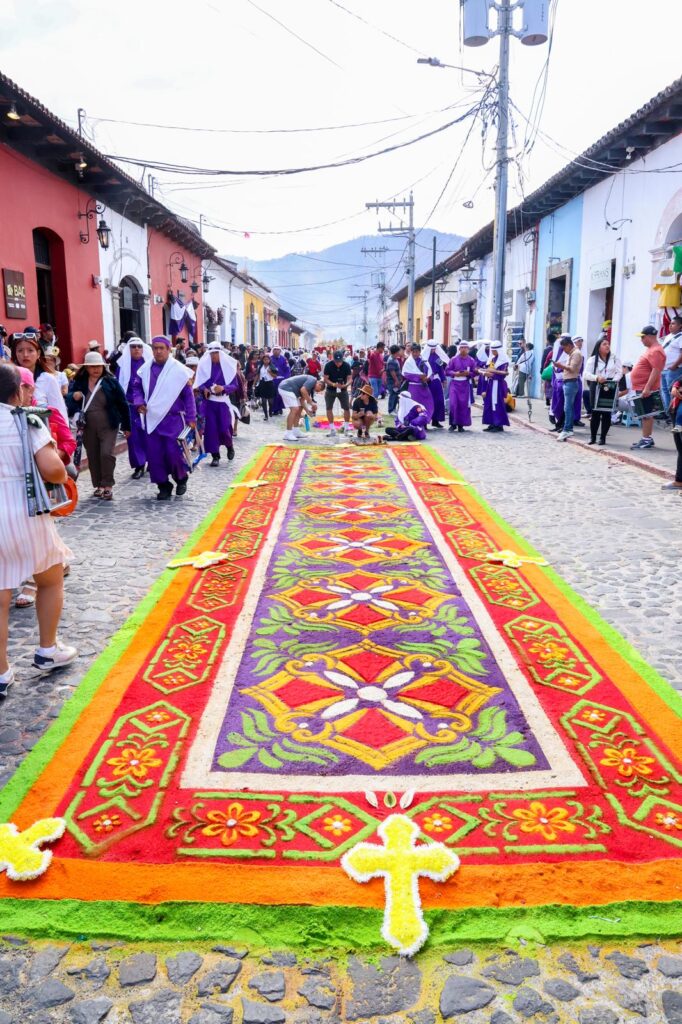
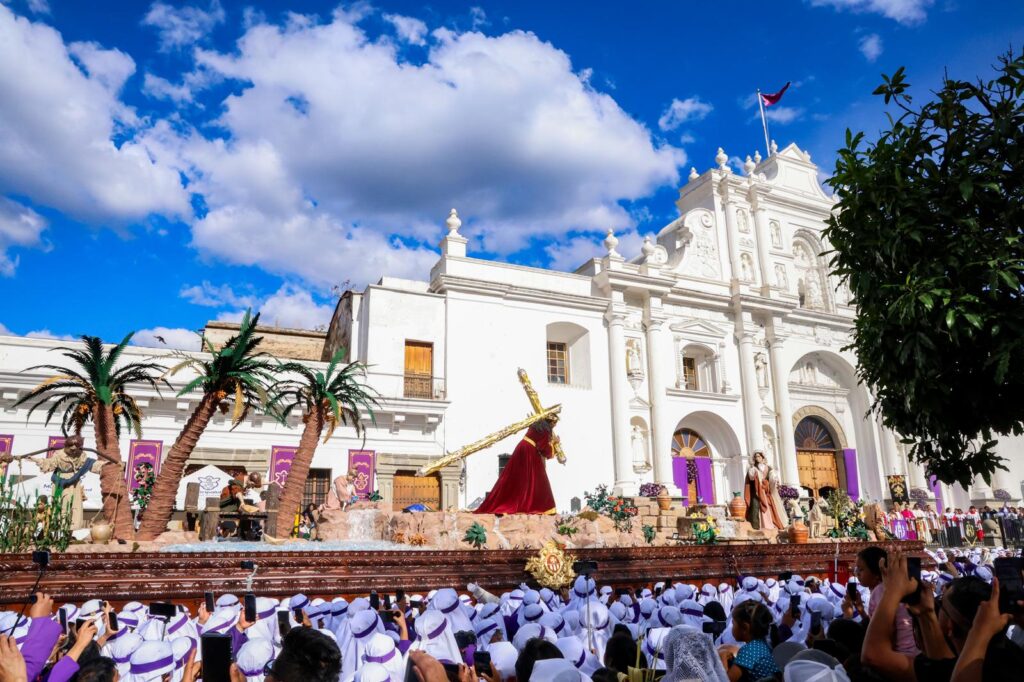
We were there during Holy Week, making it even more of a desirable destination. The tradition of processions is strong. Processions are purely religious and mostly have a solemn mood. Groups will make these beautiful “alfombras de aserrin” on the road for the processions to walk over.
Alfombra de Aserrín
A Procession
The clean-up crew follows immediately behind the procession to clean the sawdust and the people will make a new one before the next procession the following day. In case you didn’t know, alfombras de aserrin translates to Sawdust Carpets. They are made from sawdust and wood shavings that are dyed.
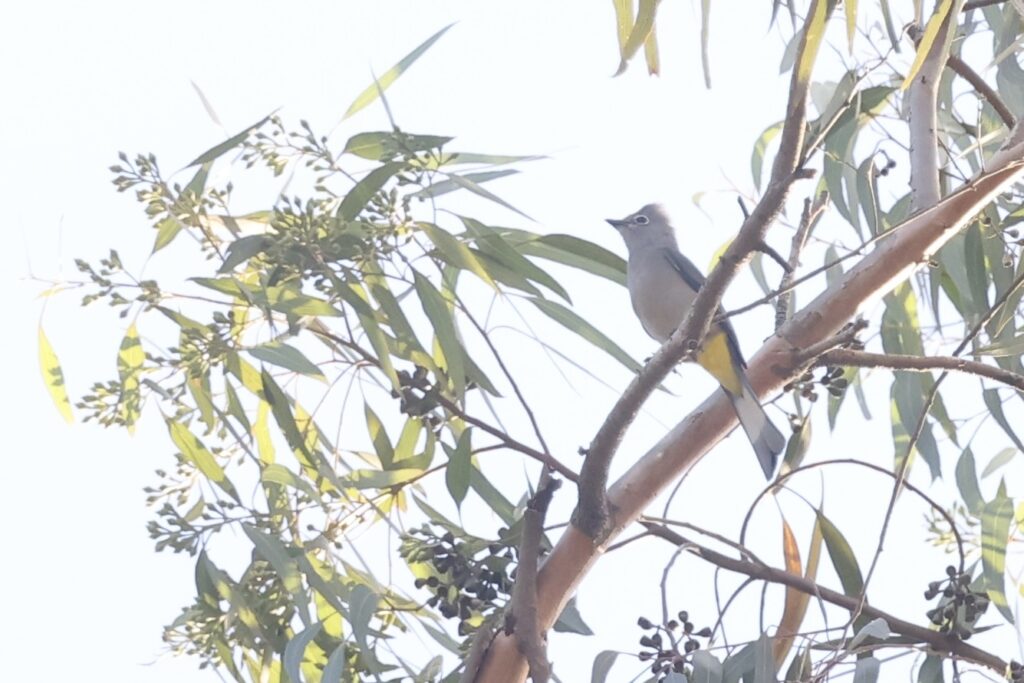
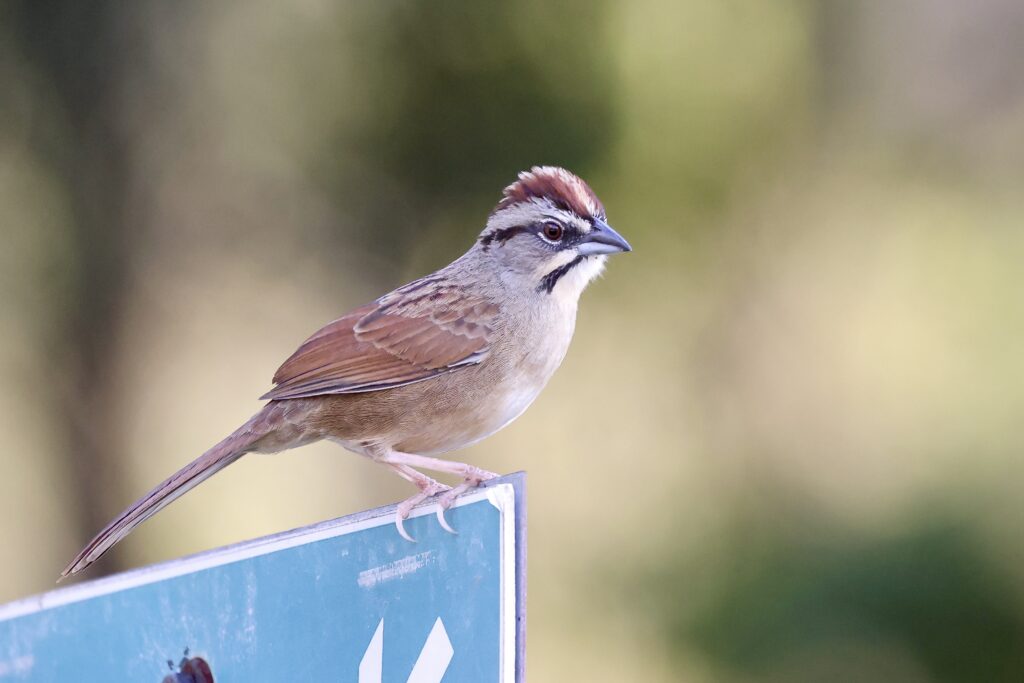
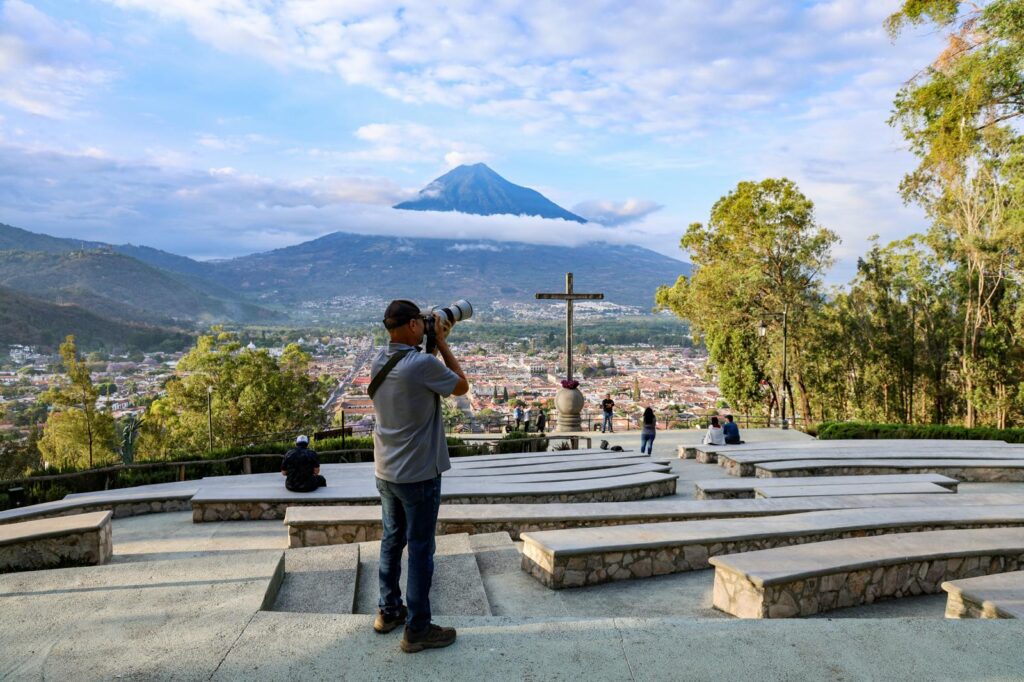
In addition to walking the stone paved roads around the city, there was some birding to be had. One such area that Patty and I went twice is the large cross overlooking the city. It is a walk up through some forest and the cross itself is surrounded by forest. This area was quite birdy and is where I finally got the Guatemalan Flicker and the Rusty Sparrow. I also, managed a photo of the Gray Silky-flycatcher, a bird that is common but likes to stay high in trees.
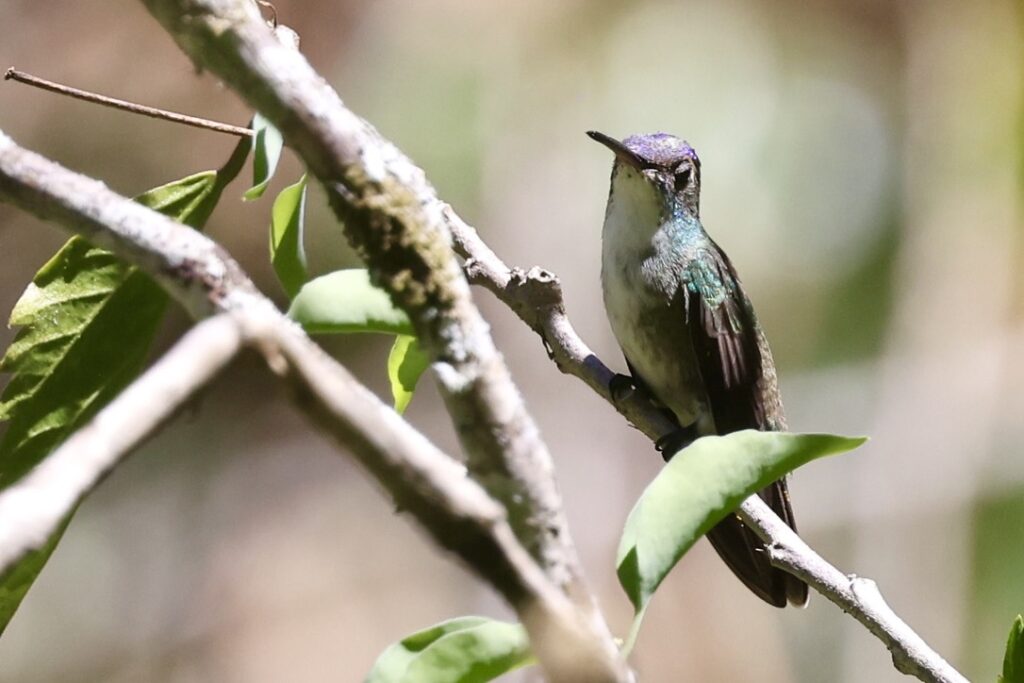
The next day we went to Finca Pilar with the last of the volunteers in Guatemala. Finca Pilar is a well-known birding site with hummingbird feeders and extensive trails. I got my last two lifers on this walk, the Azure-crowned Hummingbird and the skulky (code for no photo) Ruddy Foliage-gleaner.
Azure-crowned Hummingbird
Gray Silky-Flycatcher
Rusty Sparrow
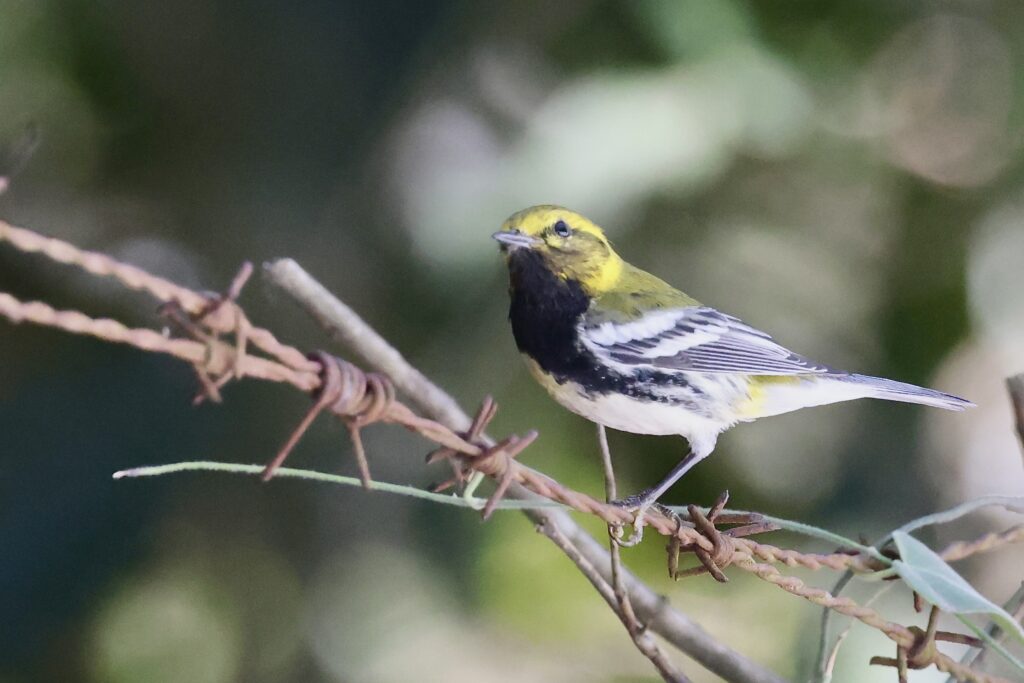
Black-throated Green Warbler
So ended birding Guatemala. By the numbers it was 241 species observed including 66 lifers. It was a memorable two-part trip, Mirka then Patty. Mirka continues to improve her birding skills and enthusiasm, and Patty continues to impress me with her skills, big heart and independence. Thank you both for sharing with me.
10 thoughts on “Birding Guatemala – Atitlan-Sarstun-Antigua”
Barbara Gentilucci
Joel, so fun reading about your trip. The birds are so beautiful. I especially liked the Emerald-chinned hummingbird and the Guatemala National Bird. Your journey of getting to the various destinations was very interesting and challenging to say the least. I recently retired from nursing…I was a RN Circulator in the OR for 12 years, hundreds of robotic cases-Looks like you did a great “scrub” on the belly! So cool Patty is a PA and enjoys the robotic cases too! How wonderful that she donates her time to the Mission. What a fantastic trip you had! The pictures are beautiful!
I love you, dad! So thankful you joined me on this trip, a core memory for me, one I will cherish forever! ❤️ and I loved all the birding adventures! Thanks for bringing that into our family! ❤️
Joel, you looked so natural as a scrub nurse and should keep it up. A worthy cause. All of those treks brought back memories since 1959 when I was in Guatemala City for Semana Santa for the easter rituals. Later, as a banana consultant in the 1990s, I took Phyllis, Elaine and Zola to Panajachel and Lago Atitlan. It was so wonderful then, but I notice high rises along the shore now. Banana plantations are along the rio Motagua at Puerto Barios where birds abound. Thanks for the memories.
Joel, what an amazing trip! You look like a natural in your medical garb. I know you are proud on Patty. As usual, the birds are beautiful. It’s easy to see why the Resplendent Quetzal is the national bird of Guatemala!
Joel, thanks for sharing this trip info~ definitively looks like it will stay as a “possible” for me in the near future. Disappointed I couldn’t join you last March.


Joel, so fun reading about your trip. The birds are so beautiful. I especially liked the Emerald-chinned hummingbird and the Guatemala National Bird. Your journey of getting to the various destinations was very interesting and challenging to say the least. I recently retired from nursing…I was a RN Circulator in the OR for 12 years, hundreds of robotic cases-Looks like you did a great “scrub” on the belly! So cool Patty is a PA and enjoys the robotic cases too! How wonderful that she donates her time to the Mission. What a fantastic trip you had! The pictures are beautiful!
Thanks for you kind words, Barbara. I think you are a perfect fit for one of these trips!
I love you, dad! So thankful you joined me on this trip, a core memory for me, one I will cherish forever! ❤️ and I loved all the birding adventures! Thanks for bringing that into our family! ❤️
Joel, you looked so natural as a scrub nurse and should keep it up. A worthy cause. All of those treks brought back memories since 1959 when I was in Guatemala City for Semana Santa for the easter rituals. Later, as a banana consultant in the 1990s, I took Phyllis, Elaine and Zola to Panajachel and Lago Atitlan. It was so wonderful then, but I notice high rises along the shore now. Banana plantations are along the rio Motagua at Puerto Barios where birds abound. Thanks for the memories.
You are lucky to have such a dedicated daughter like Patty. The world needs more people like her.
You’re so kind, uncle Clyde ❤️ thank you!
Joel, what an amazing trip! You look like a natural in your medical garb. I know you are proud on Patty. As usual, the birds are beautiful. It’s easy to see why the Resplendent Quetzal is the national bird of Guatemala!
Thanks for you kind comments!
I like the Ground-Sparrow pic! 40 mph on a running board sounds a little scary! Glad you had a good mix of birds, fun, and volunteering.
Joel, thanks for sharing this trip info~ definitively looks like it will stay as a “possible” for me in the near future. Disappointed I couldn’t join you last March.