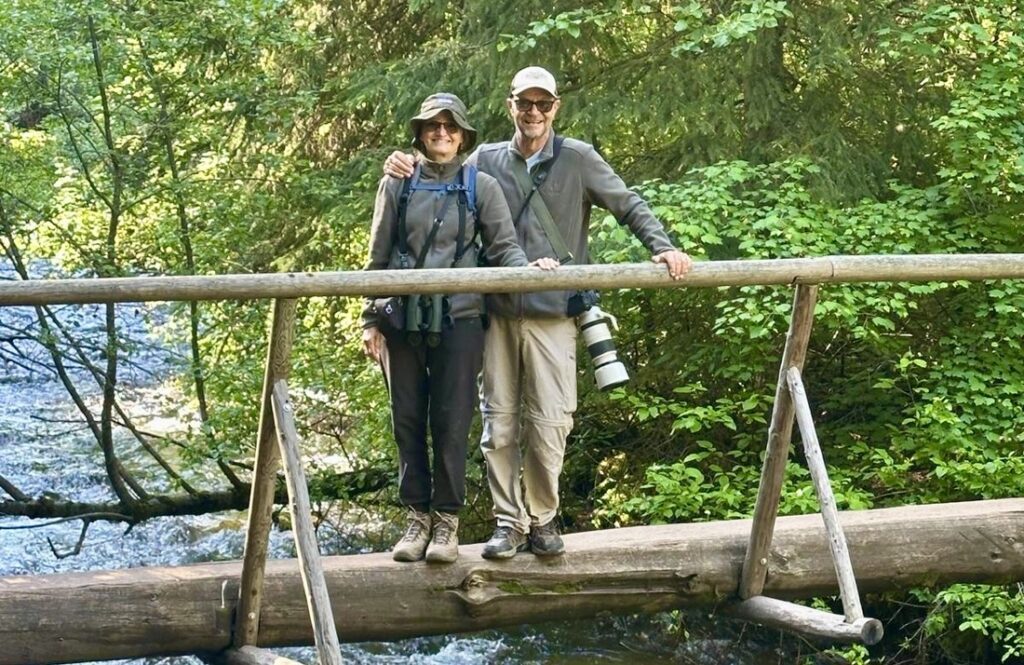
“Scope creep” is a bad word in my previous life working in Oil Refineries and Project Management; however, “scope creep” is an exciting and welcome variable when it comes to retirement travel, especially when chasing birds.
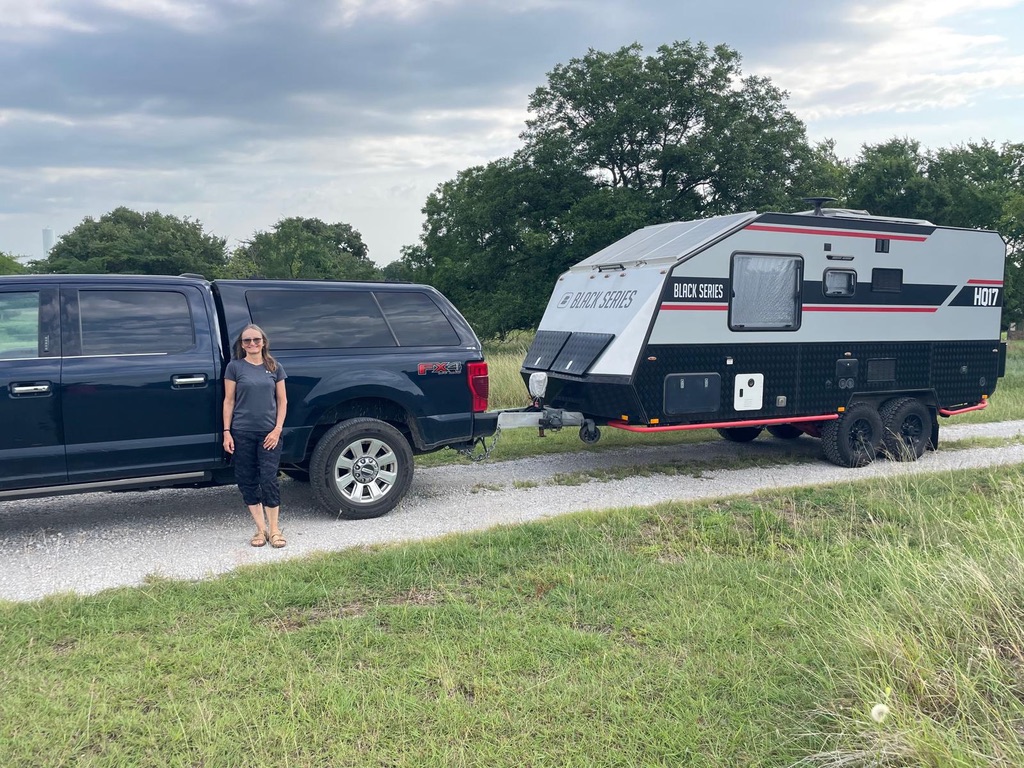
What started as a long weekend to get a little use out of our Black Series camper for the first time since our 2024 Alaska trip, turned into 2+ weeks and 5000+ miles of cross-country exploration and birding America’s grasslands, The Great Plains. I would have been fired from Valero Energy if I approved that much scope creep on a project!
I knew there would be some good birding along the way. The surprise was how much I enjoyed refreshing myself on a facet of American history and sharing it with Mirka. The complex history of the westward migration of pioneers, homesteaders, gold seekers and Mormons through and into Indian territory is a theme of National Park Service sites in the Great Plains region.
A Stormy Start
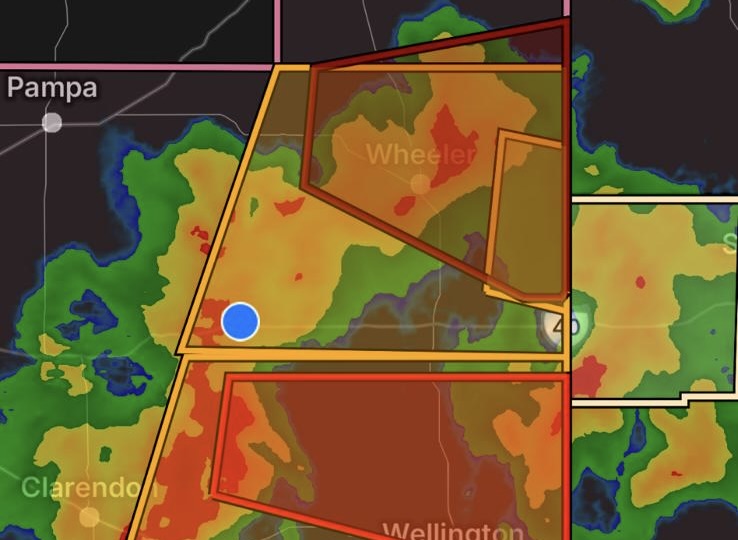
And just like that, we had the camper ready to travel in the July heat. We left our home and headed for the Oklahoma panhandle. As we got close to the target county in the panhandle, Mirka started to look at the radar. Tornados and hail. That is what we were driving towards.
Loaded and Ready to Roll
At first, the optimist in me noted that if we could just get around the big cell in front of us, we would be home free. But as we skirted around an ominous thunderhead, complete with lightning bolts, on a gravel road, we were hailed down by an emergency response vehicle who insisted that we turn around immediately. It seems that there were three tornados on the ground already and tennis ball sized hail. All of that coming our way.
I did not hesitate to comply. Heading south looked like a good option as new cells were popping up in our direction every time we looked at the radar. At one point we were uncomfortably tucked between two tornado warning zones. We ended up driving south for three hours and west on I-40 towards Amarillo, Texas for another hour before feeling comfortable enough to turn back north.
Stuck in the middle of two Tornado warnings (red boxes)
We enjoyed a nice dinner in McLean, Texas at the Red River Steakhouse and they were nice enough to let us overnight in their parking lot.
We were safe but suffered a one-day setback on my loosely planned schedule for birding America’s grasslands. I would have to drop a low percentage attempt at the Lesser Prairie Chicken. We did enjoy two days camping at Lake Evans and birded Beaver and Texas County extensively accumulating more than 50 species in each county.
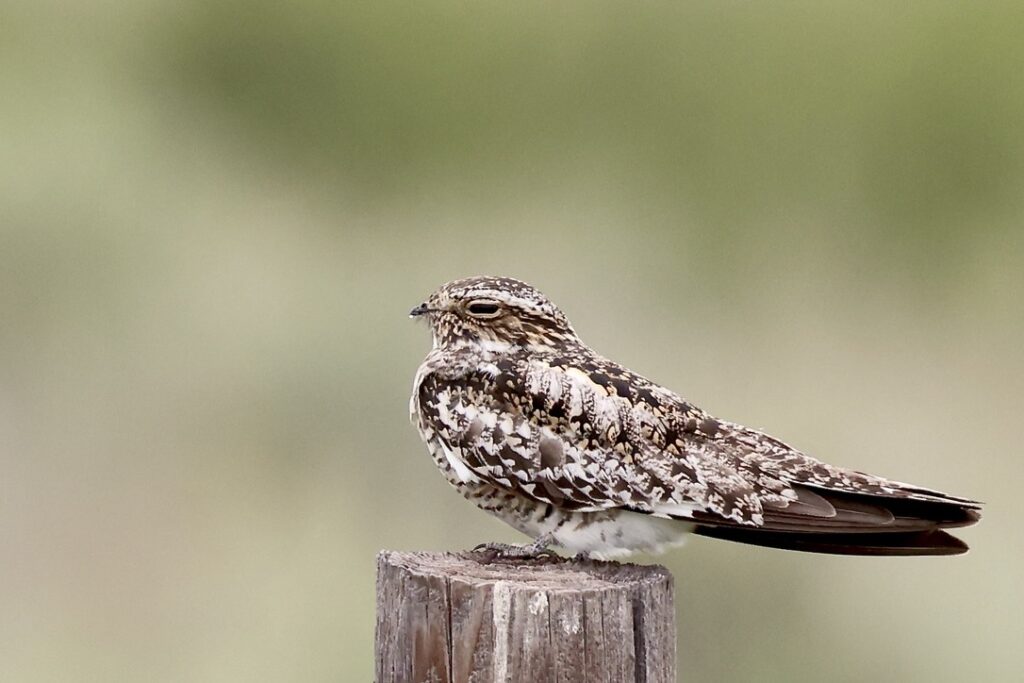
Common Nighthawk
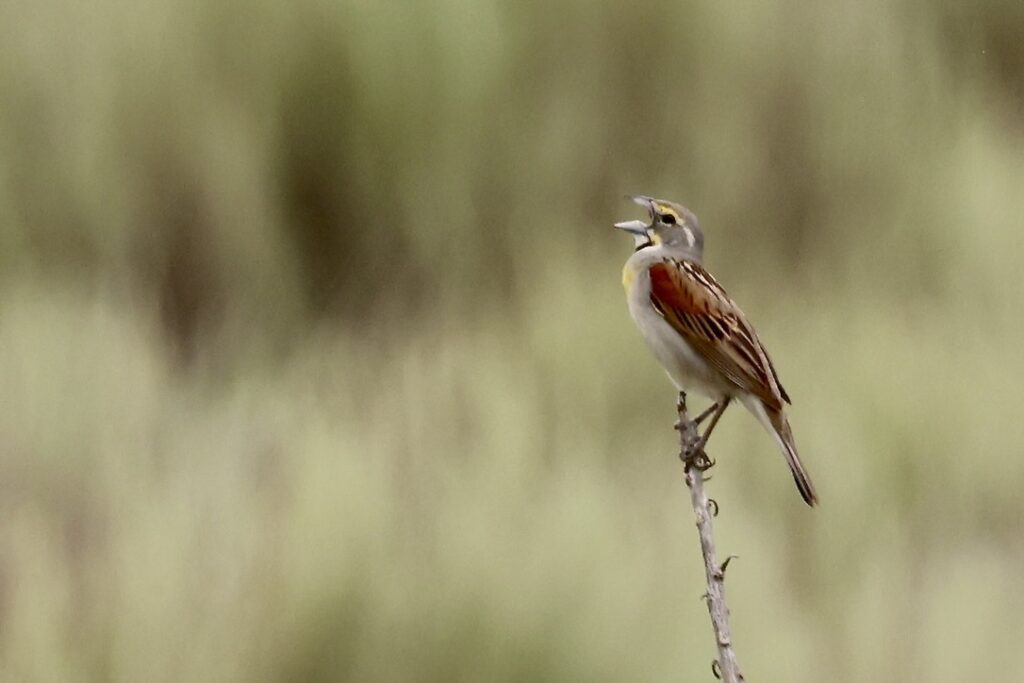
Dickcissel
Birding America’s Grasslands – Eastern Colorado
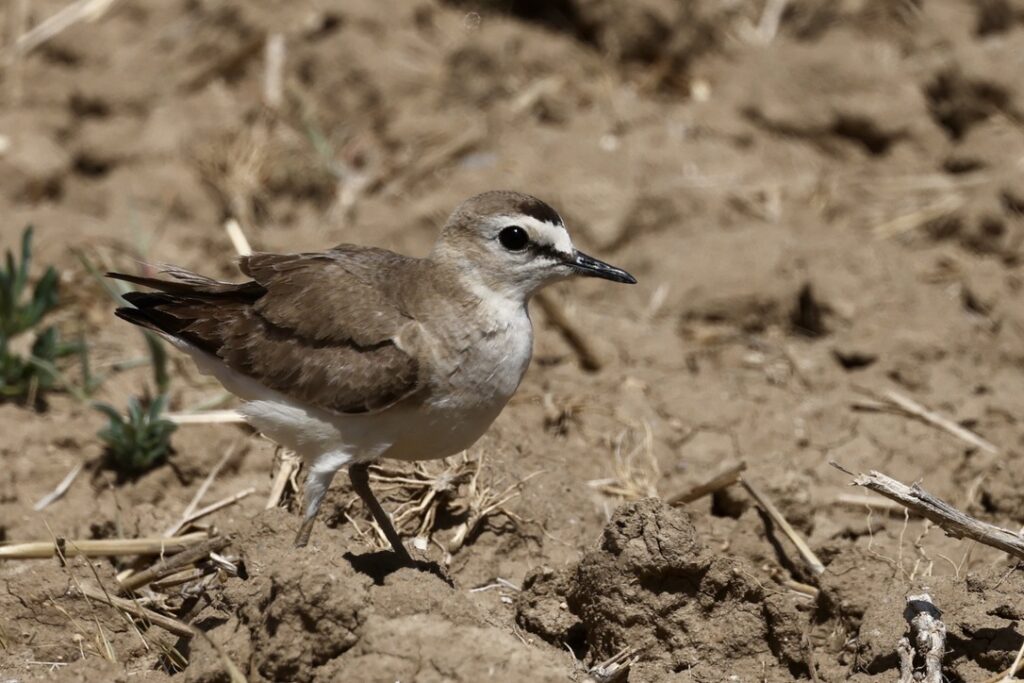
Did you ever notice how the names of some birds make no sense? There are many and I could do a whole blog on just that topic. Our next target would be what must be one of the worst named birds in North America, the Mountain Plover. The Mountain Plover is never seen anywhere near a mountain. Its habitat is dry, barren, flat agricultural fields that are void of any vegetation.
The Mountain Plover capital of North America, indeed the World, is the tiny eastern Colorado town of Karval. They actually have a Mountain Plover festival in the spring. My plan was to drive up through prime habitat all the way to the Pawnee National Grasslands and camp there.
This drive took us off the blacktop roads and on to gravel county roads for, dare I say, hundreds of miles. Sadly, the roads around Karvel where the plovers were often reported yielded nothing. We kept heading north towards the grasslands. My optimism was waning. First, no Lesser Prairie Chickens, now no Mountain Plover. Would I get any lifers this trip?
Just when I was ready to find a real road, a large group of birds flushed from the side of the road. Could it be? Was it just a bunch of Kildeer? Strange Kildeer indeed. Mountain Plovers, in mass. They lit back on the ground right next to where I stopped. We counted a dozen. A high number that eBird did not like. I had to explain that it was an exact count. Mirka and I high fived, took some photos and charted a path to the nearest brewery to celebrate. That would be Greely, Colorado.
Mountain Plover
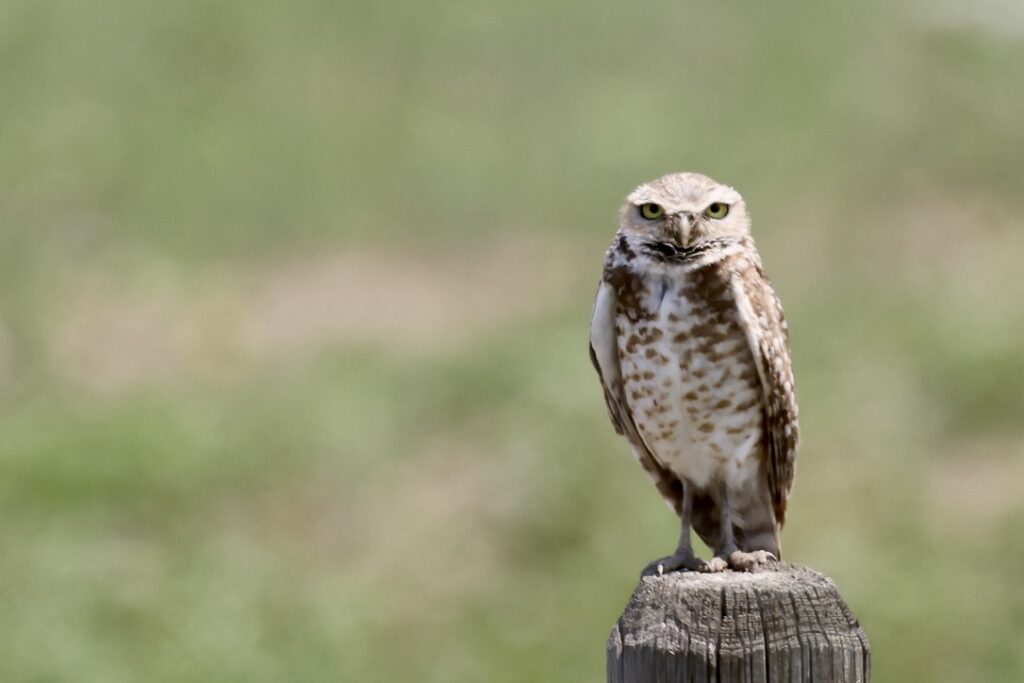
Burrowing Owl
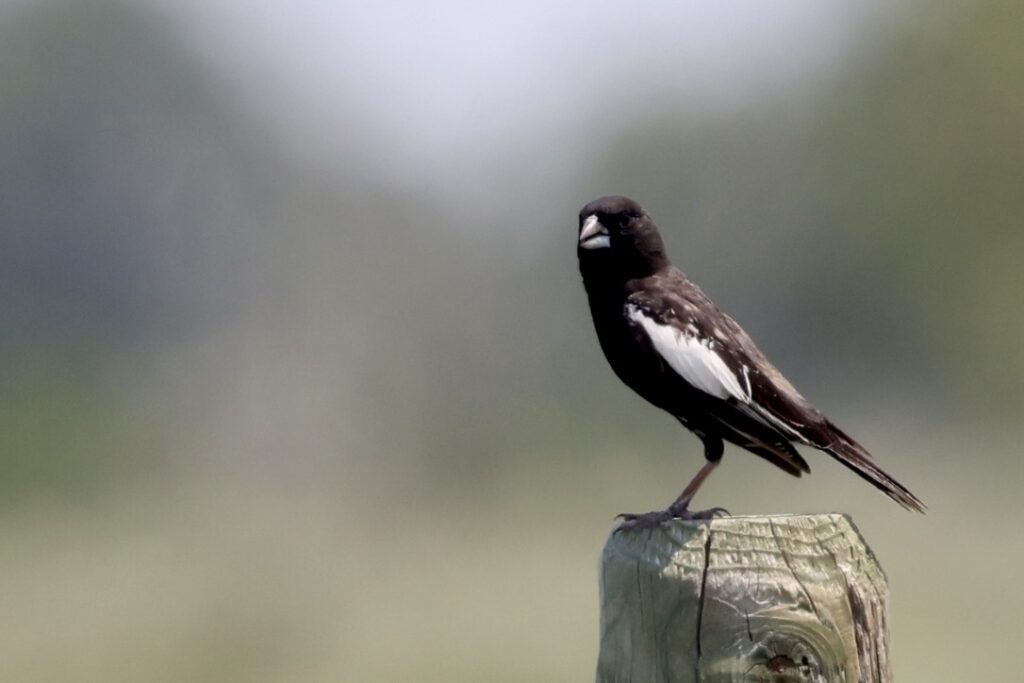
Lark Bunting
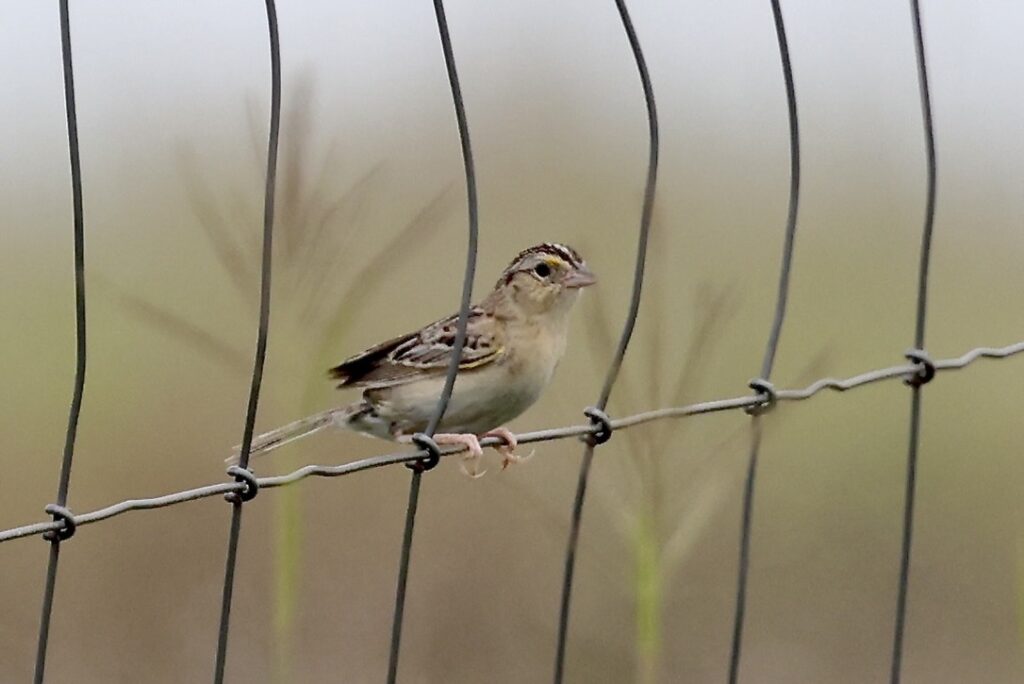
Grasshopper Sparrow
After a meal and a cold one, we were on the road. That night we camped with a bunch of 18-wheelers at the Wyoming welcome center.
Birding America’s Grasslands - Wyoming
I must give a shout-out to the Wyoming welcome center on I-25. It was the best I have ever seen with displays and useful information. We probably spent an hour looking around.
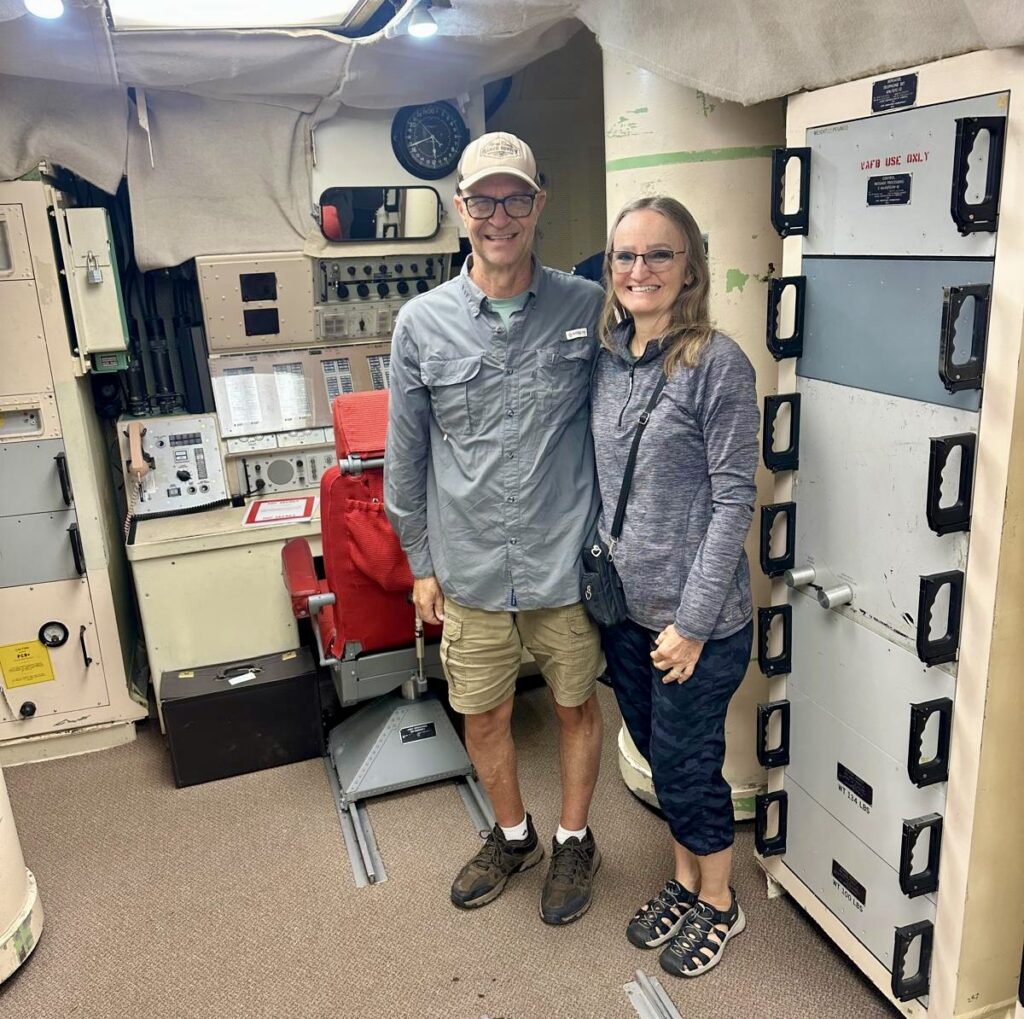
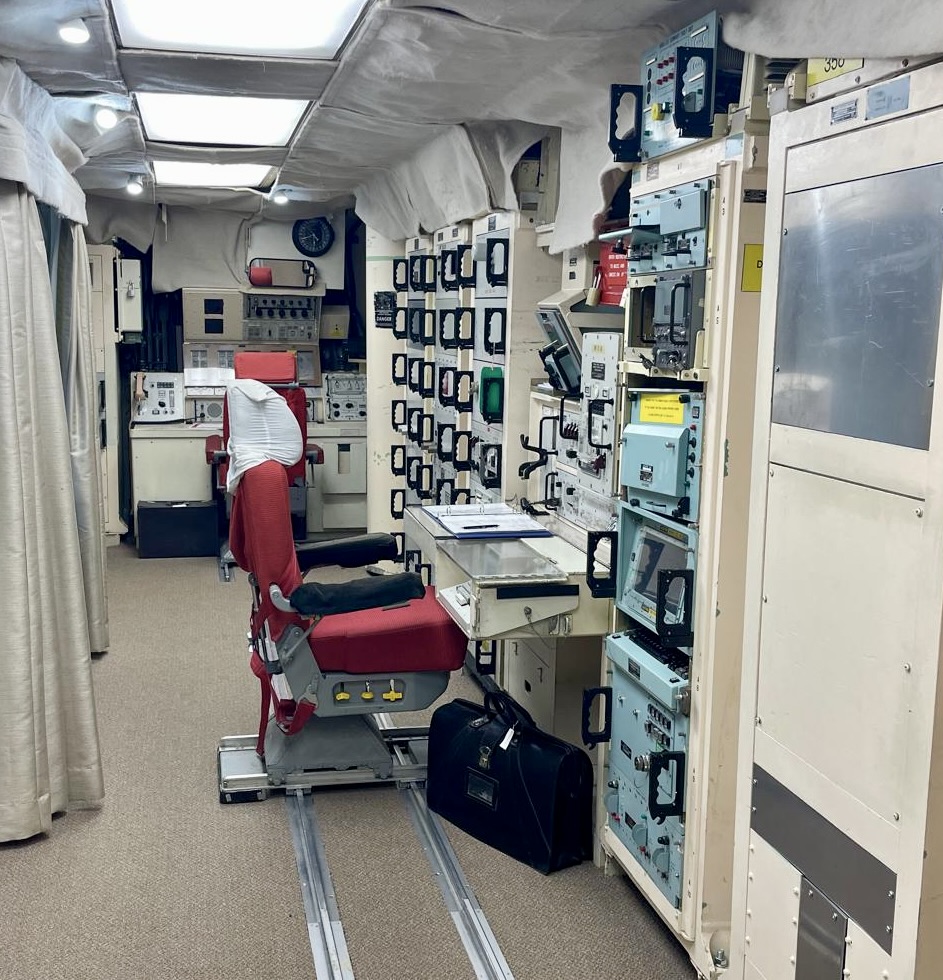
Based on the Welcome Center we decided to go to the Quebec-01 Missile control center where an amazing little tour can be had into the command center for about 40 nearby nuclear missile silos. Of course, it is now a tourist attraction and there are no missiles being controlled here. The tour takes you deep underground and into a nuke proof vault where the personnel are isolated for the duration of their shift. You learn the protocols that must be followed to launch. It would take about 5 minutes to complete the 40 steps after receiving the call from the president. A really cool experience.
Inside the Control Center
Nuke Proof Control Center
We birded America’s grasslands in Wyoming and western Nebraska for a couple of days, getting the requisite 50 birds in each of those states without much difficulty.
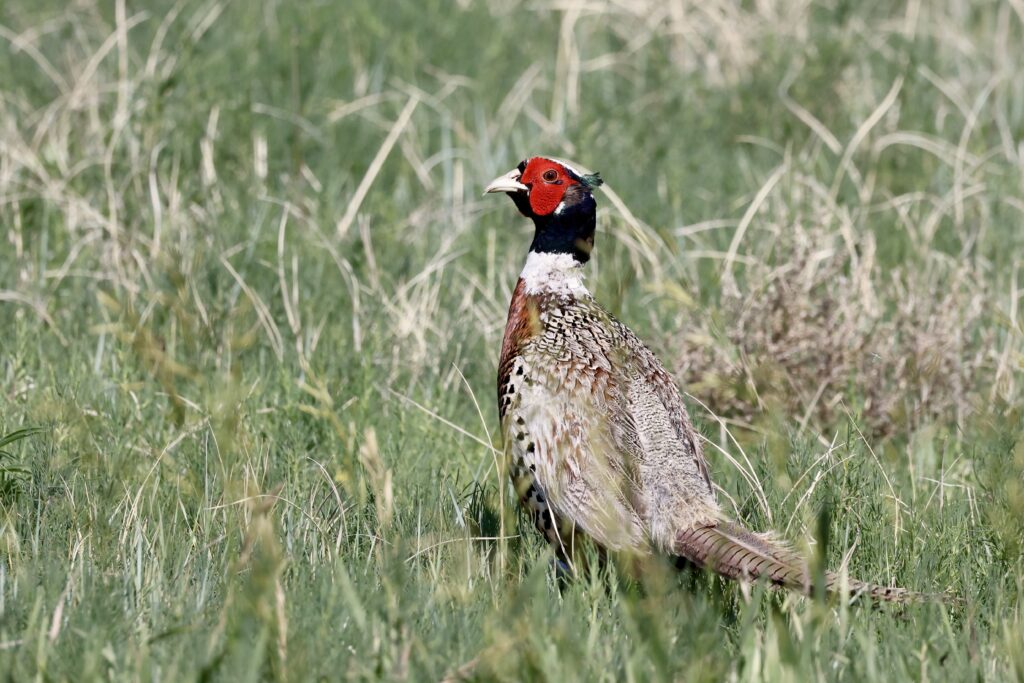
Ring-necked Pheasant
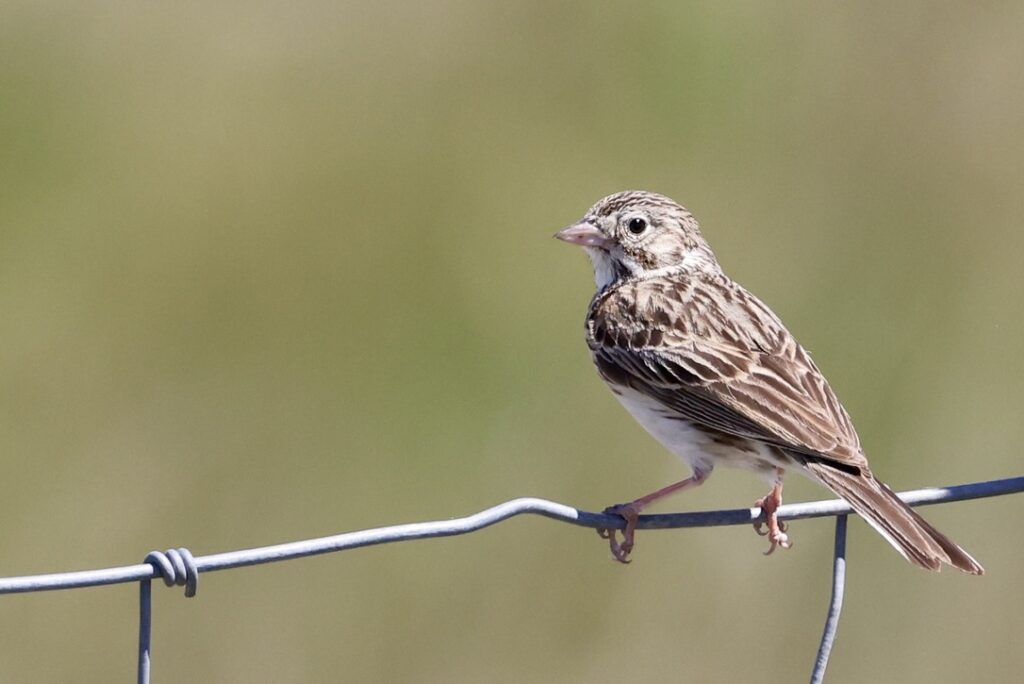
Vesper Sparrow
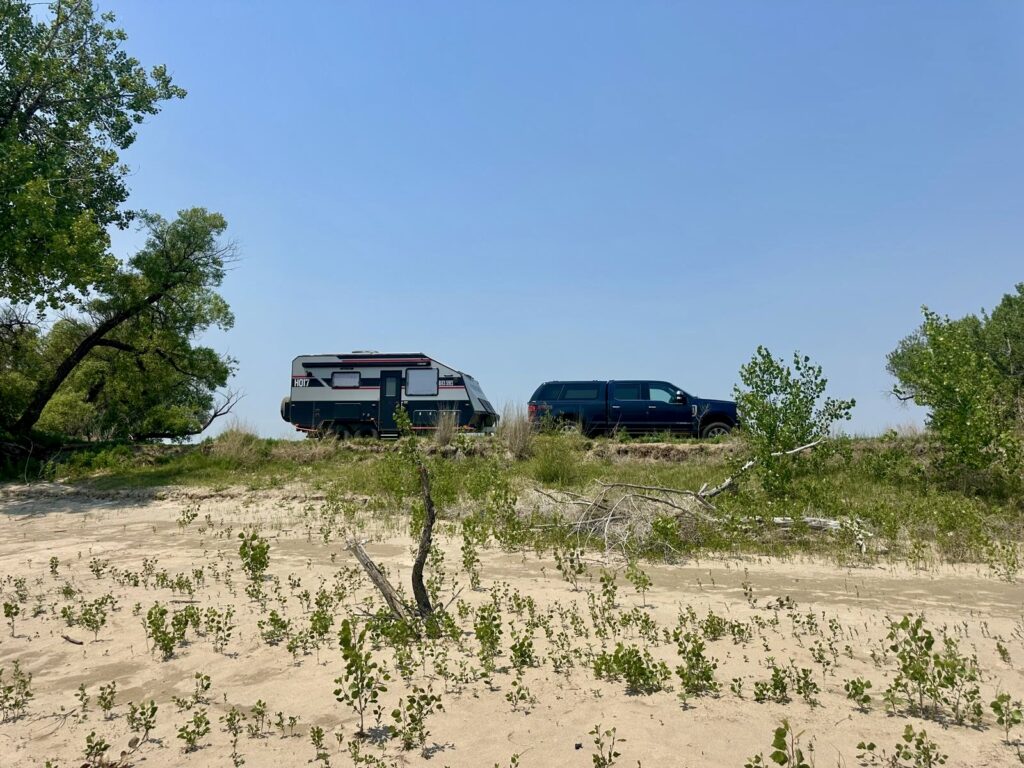
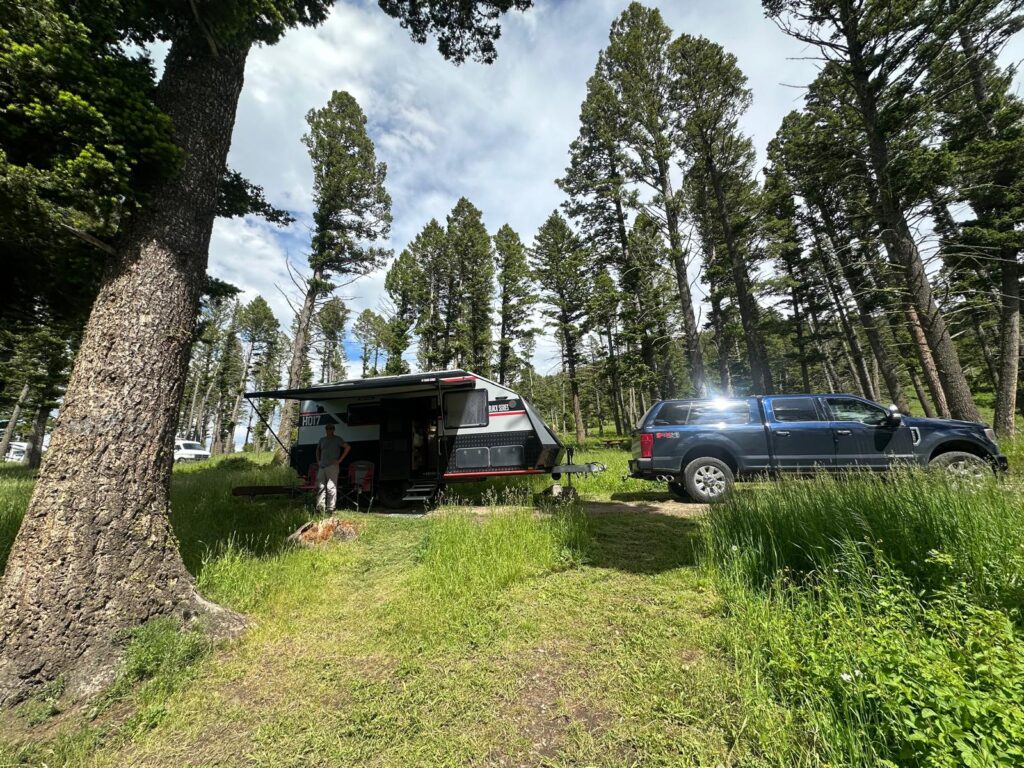
Our Wyoming Camp
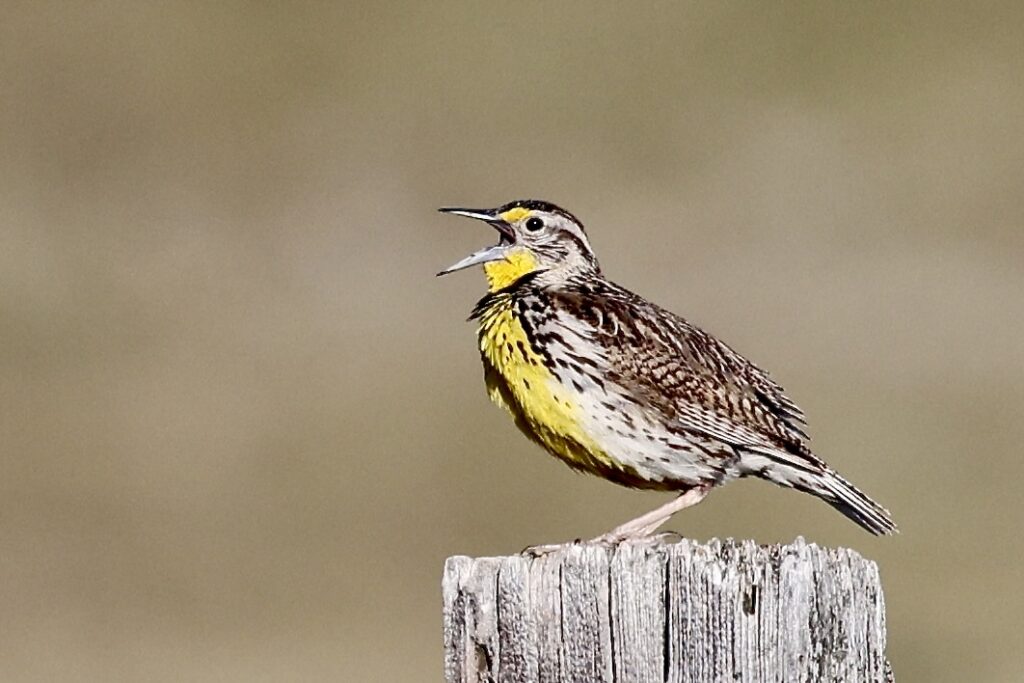
Western Meadowlark
American History Class
We also visited three National Park Service sites, Agate Fossil Beds NM, Scott’s Bluff NM and Ft. Laramie NHS.
All three of these sites are preserving a complicated part of American History. The expansion of European immigrants and Americans westward through Indian Territory and out to the west coast.
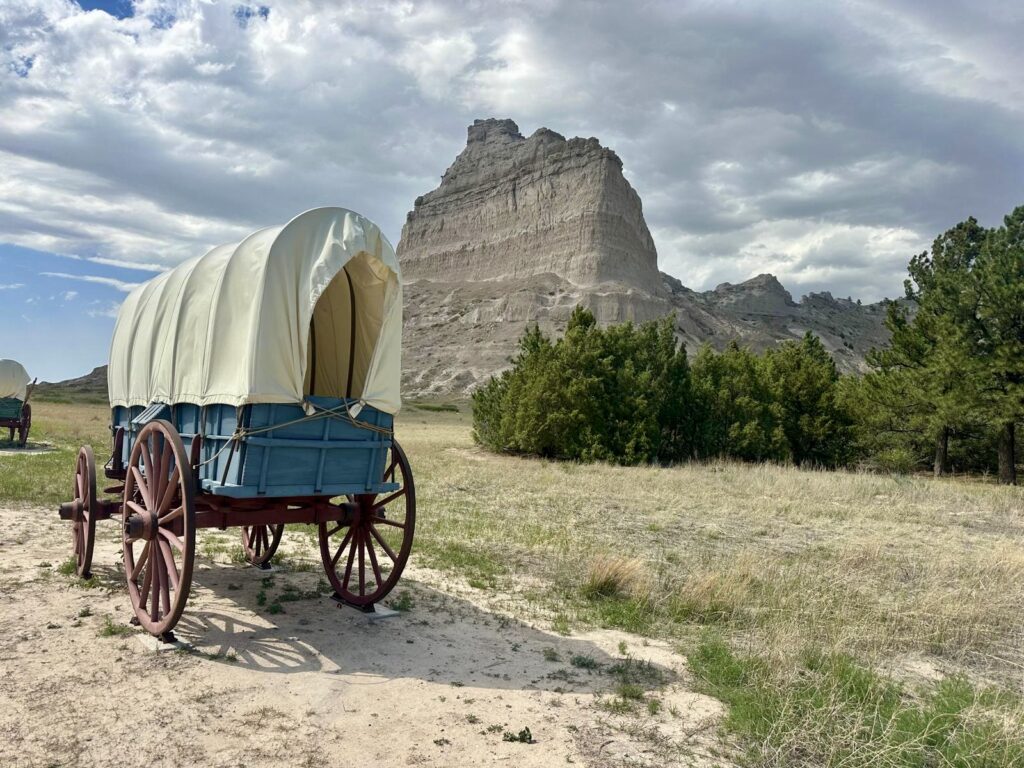
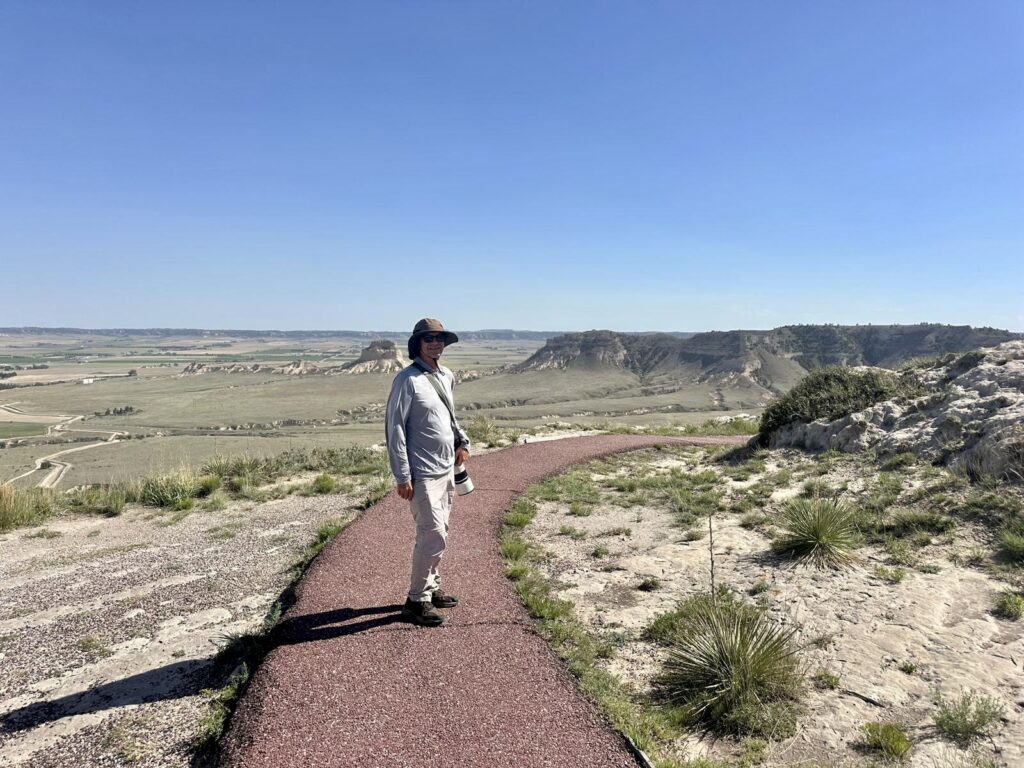
Scott’s Bluff NM preserves a cut through a pass that was along the Oregon Trail, California Trail and the Mormon Trail that allowed the travelers to stay close to the water source, the Platte River.
The Oregon Trail
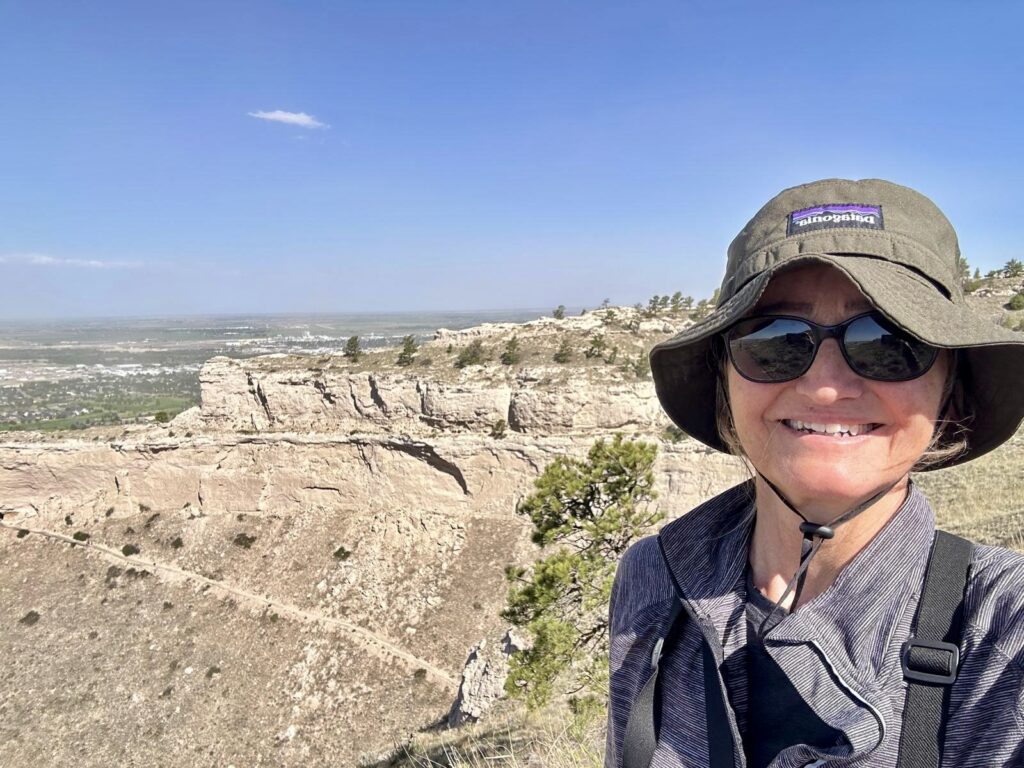
View from Scott's Bluff
Fort Laramie NHS preserves an army frontier fort that was originally built by private interest involved in the fur trade as a trading post for travelers and Indians. It was bought by the US Army in 1849 to protect travelers from Indian aggression and criminal activity. It was the last stop for resupply and repairs for travelers before crossing the Rocky Mountains on their way to Oregon, California and Utah.
They still had price lists in some of the stores. I adjusted those prices to today’s dollars and can tell you that there were no bargains to be had. A wagon wheel repair would run about $75. A new wheel would run $250. Maybe the only bargain was an entire new wagon at $3500.
Fort Laramie was a place where many treaties were signed. Unfortunately, as we are taught in school, many of those treaties were not honored. Some were made with good intent by the US Government but were not followed by private citizens, usually gold or silver speculators. The government took action on those violators and even set up agreed upon outposts to help police it. There were also many times when the Indians violently took matters into their own hands.
Other treaties were never ratified by congress, and this legal detail was used as an excuse for government forces to violate the terms of the treaty. Indians would retaliate with violence towards otherwise unwitting travelers and homesteaders just looking to make a better life.
Sadly, all this ultimately led to bloody conflict between government forces and Plains Indians.
It is a sobering part of American History to be sure.
Agate Fossil Beds NM preserves fossils from prehistoric times that a rancher, James Cook, had discovered. Cook himself is a historical figure in that he made peace with the Indians in his area and was widely respected. The site displays many of the gifts that he received from the various Indian chiefs that he befriended.
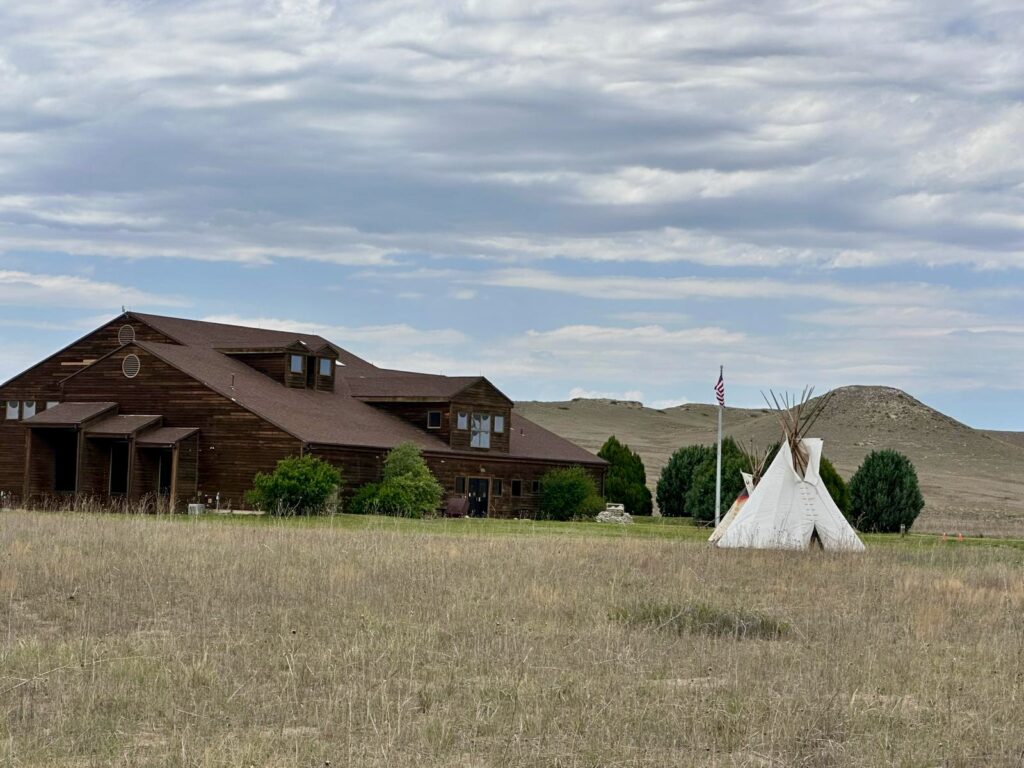
Agate Fossile Beds Vistor Center
Trail to the Fossils
At the Fossil Beds (most removed for preservation)
A Change Of Plans – Bozeman, Montana
The next big bird on the list was Sprague’s Pipit. It is a thinly dispersed bird that is very localized. You have to know where to find them or get lucky, or both. Turns out that the most reliable spot at this time was Old Gap Road near Harlowton, Montana.
We made a big decision to deviate from looking in North Dakota for the pipit and headed to Montana. Harlowton is about an hour from Bozeman. The mountains around Bozeman is one of the better places in the lower 48 to find Evening Grosbeak in the summer. This helped me decide to go way out of the way.
We would be celebrating America’s 250th in Bozeman.
Our Bozeman Camp
Happy Birthday. America!
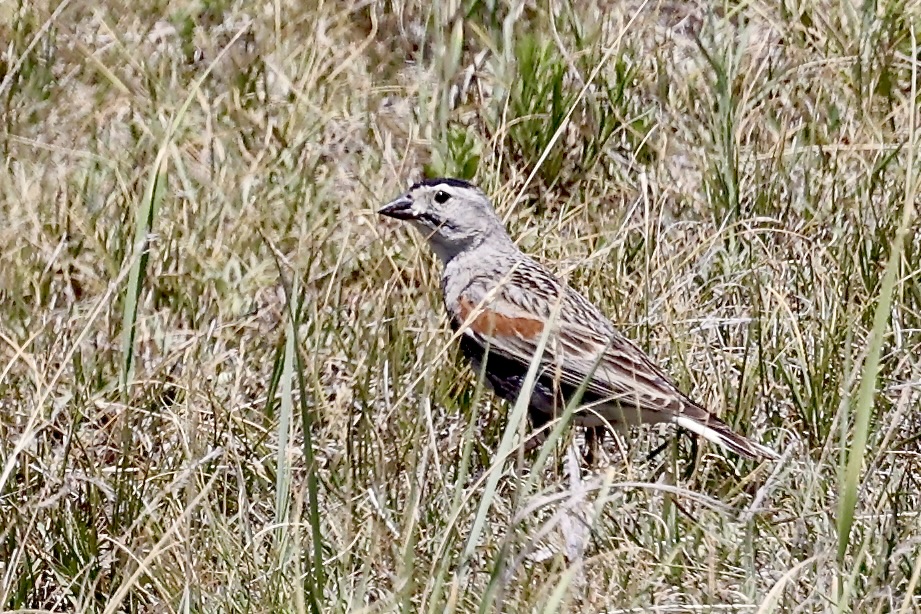
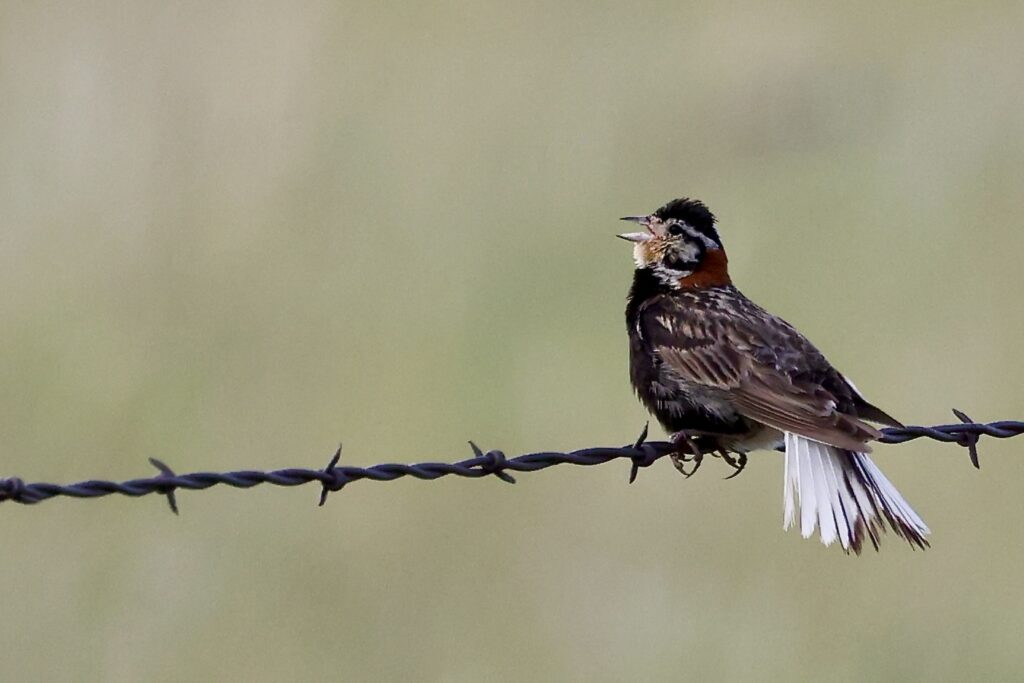
We ended up spending five nights between Harlowton and Bozeman. Old Gap Road turned out to be a very birdy gravel road and it wasn’t long until the pipit was on the list, although photos proved to be difficult. We did; however, have great looks at Thick-billed and Chestnut-collared Longspurs in breeding plumage.
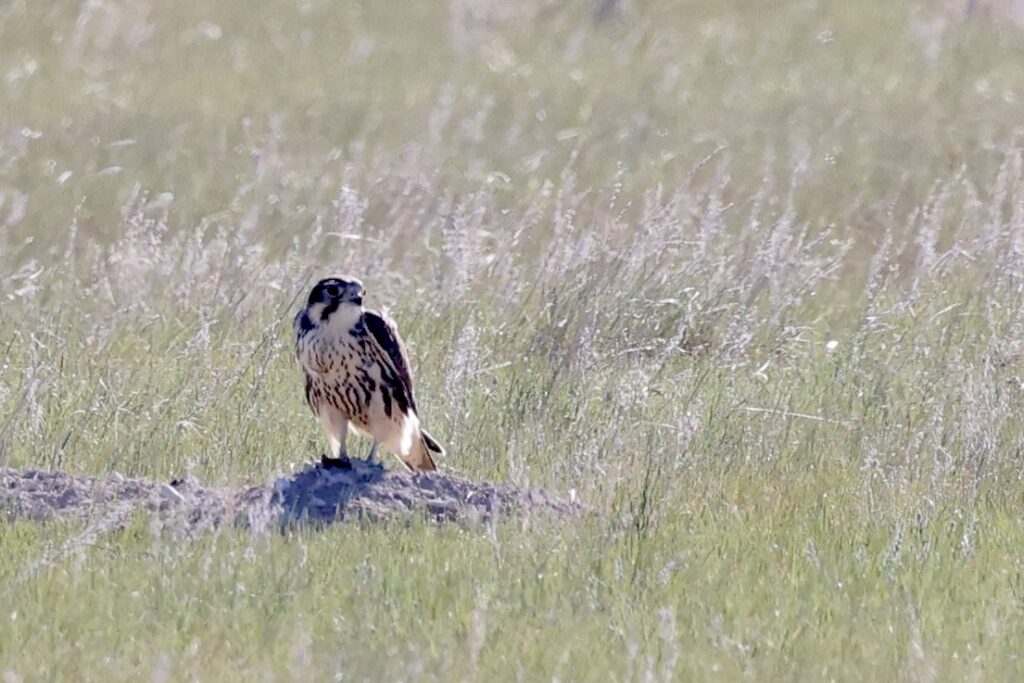
Prairie Falcon
Thick-billed Longspur
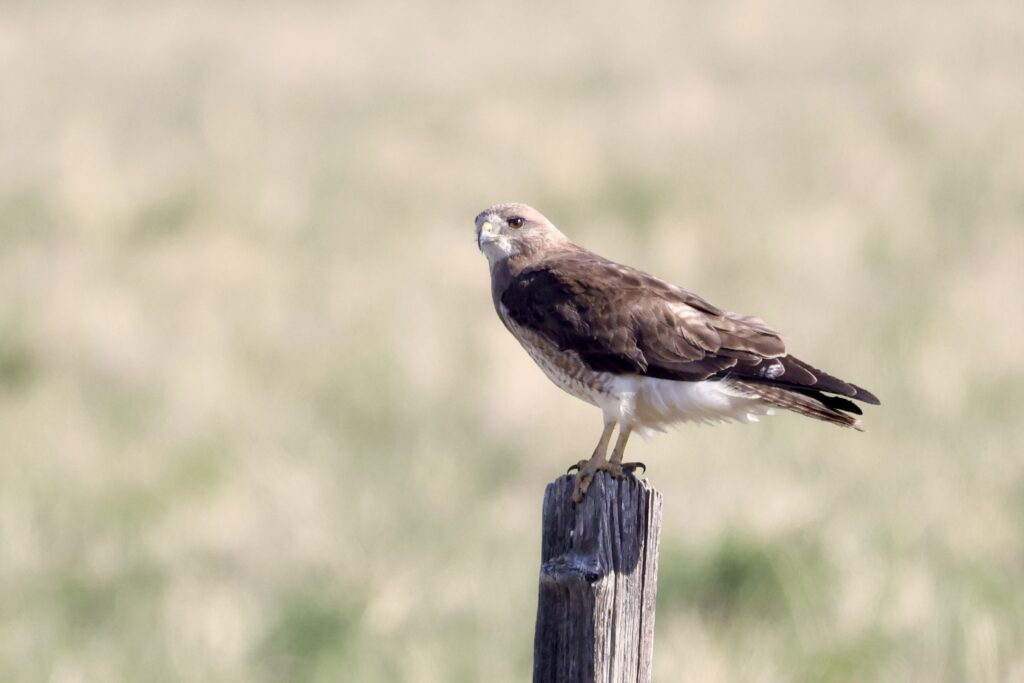
Swainson's Hawk
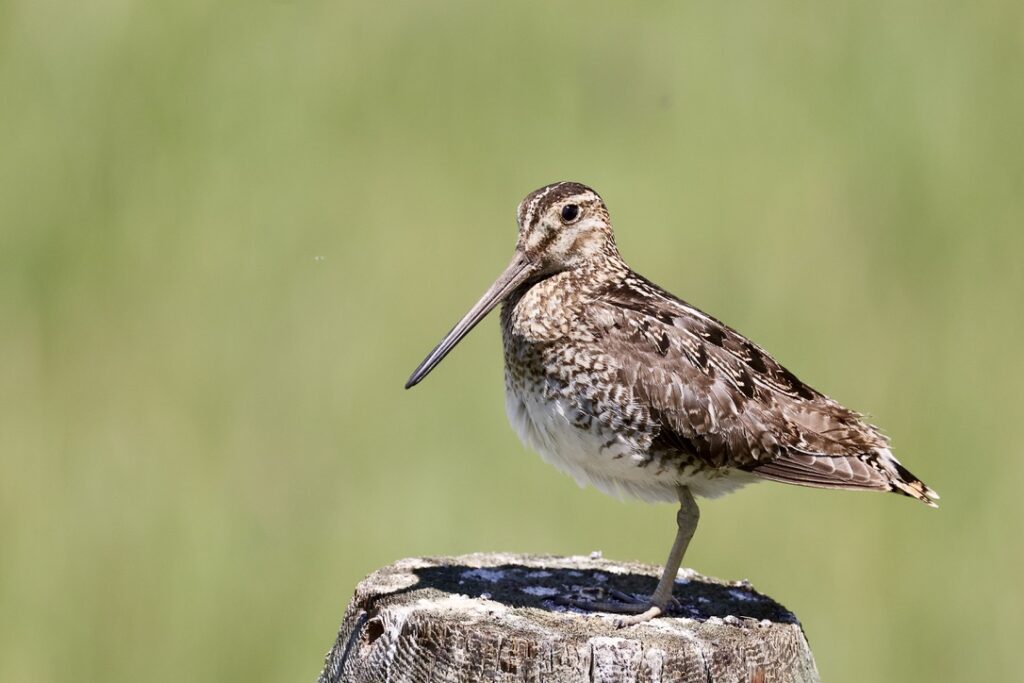
Wilson's Snipe
The South Cottonwood Canyon trail was our second hike in our effort for the Evening Grosbeak. The trail was incredibly beautiful and not nearly as rugged as the Kirk Hill Nature Trail where we first looked for the grosbeak.
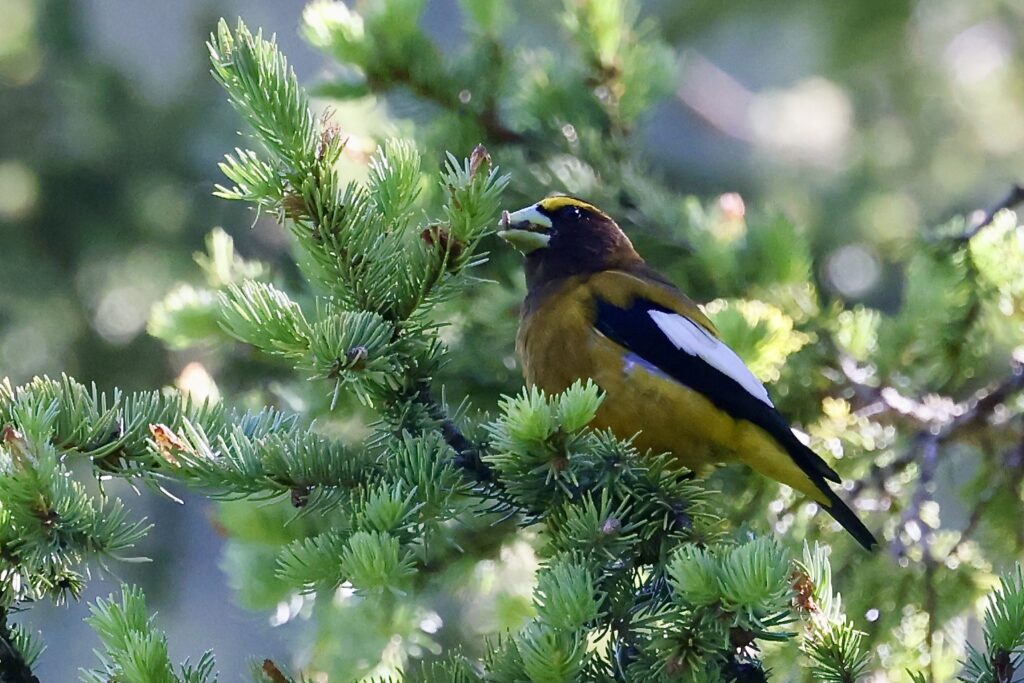
After hiking a couple of miles, we paused by a clear mountain stream to look for the American Dipper and met a lady who was apparently familiar with Evening Grosbeaks on this trail. She informed us that they were almost always in the first half-mile of the trail. We thanked her for the intel and continued on. No kidding, no sooner than she was out of site two unfamiliar birds flew into a spruce, my first thought was Red Crossbill, but as soon as I got my binoculars on them, Evening Grosbeak. They were quite accommodating.
Looking for Dippers
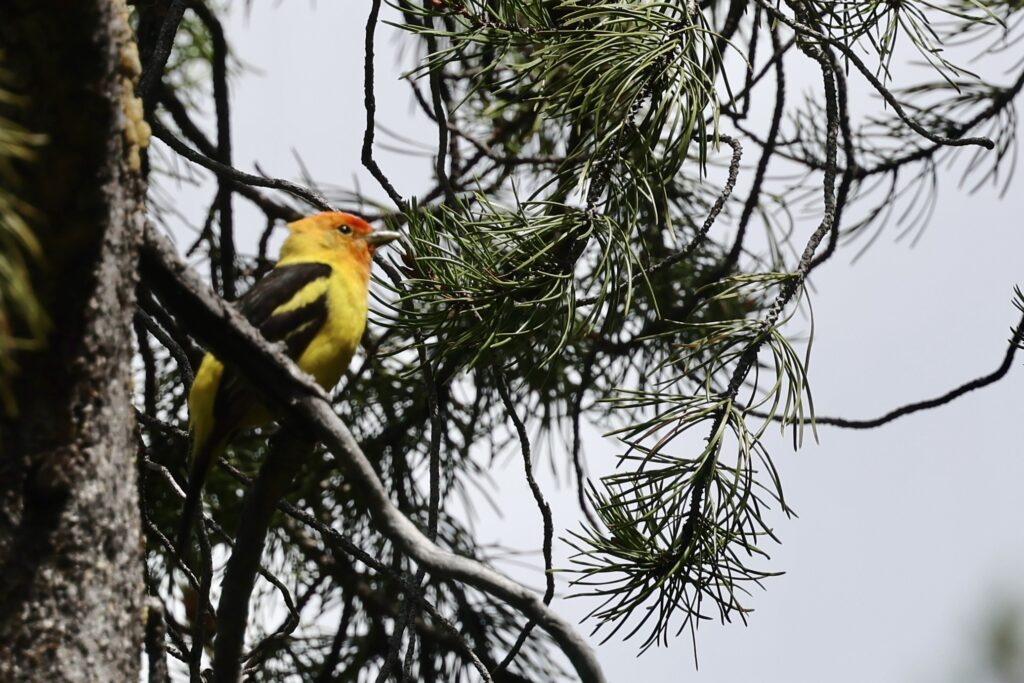
Western Tanager
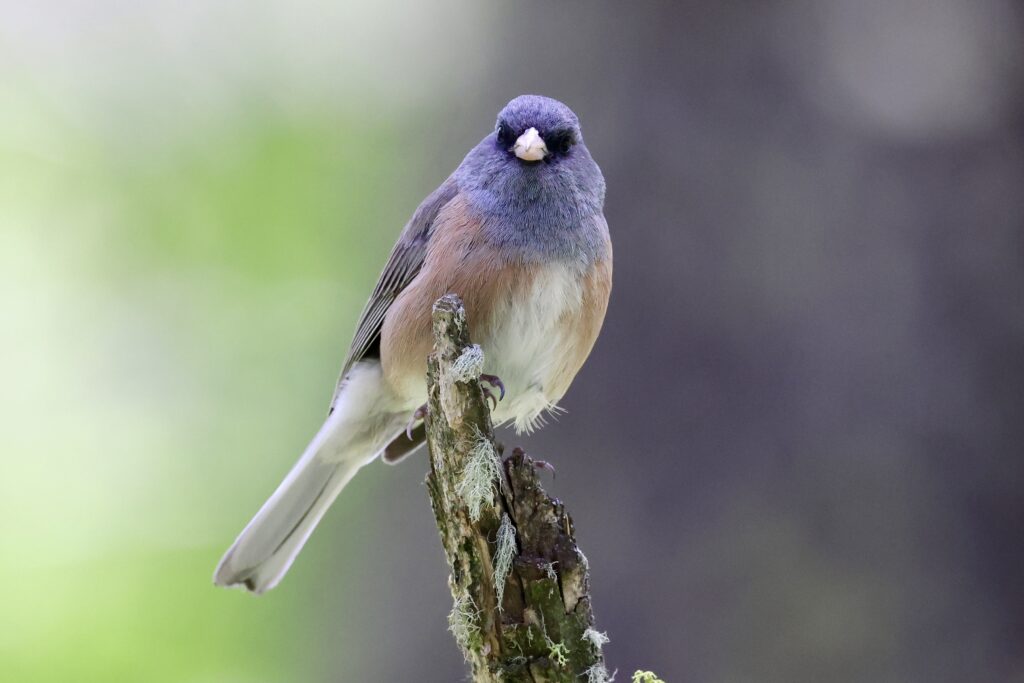
Dark-eyed Junco (pink-sided)
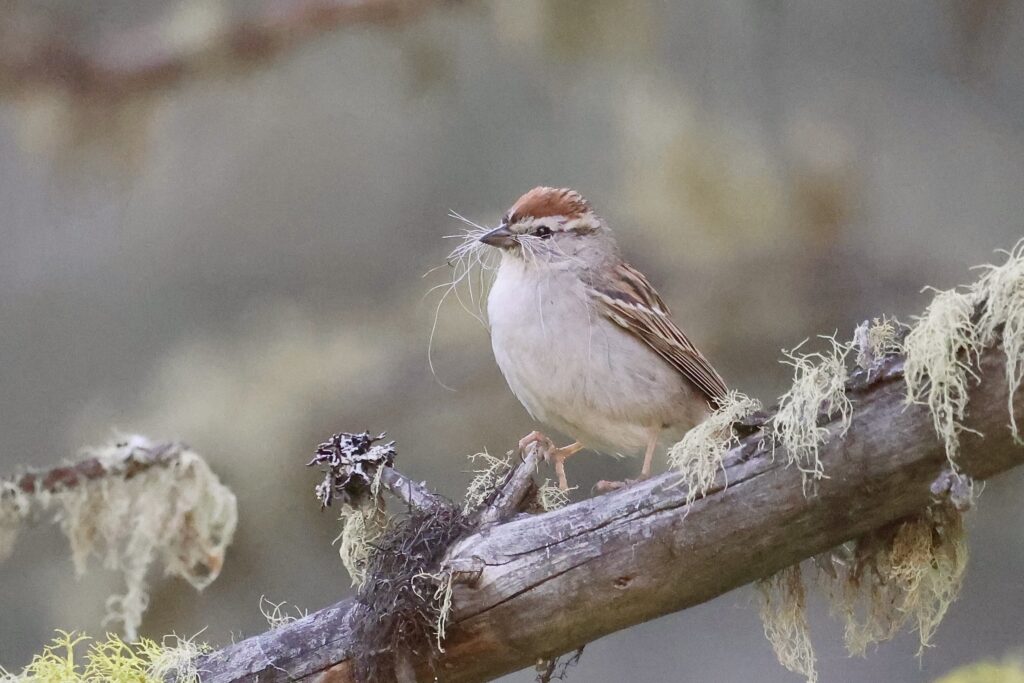
Chipping Sparrow
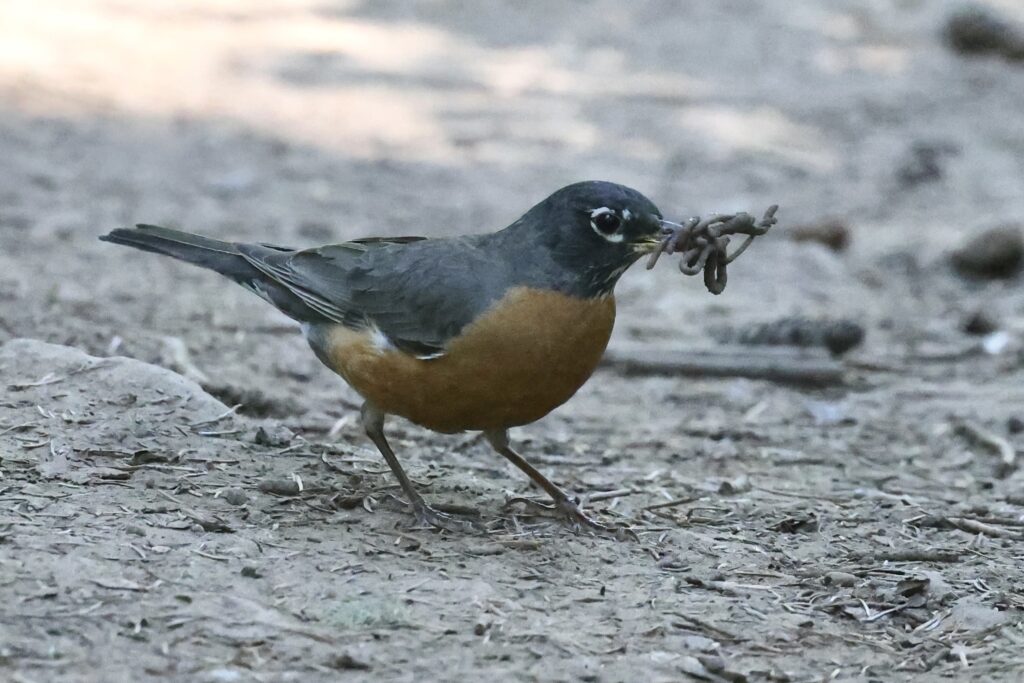
American Robin
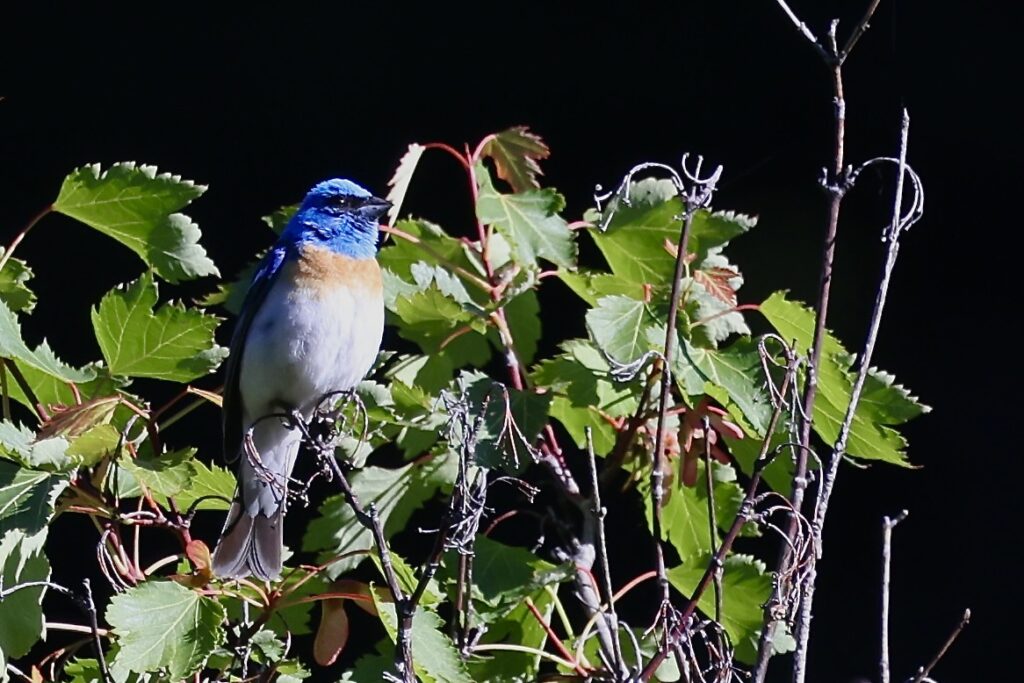
Lazuli Bunting
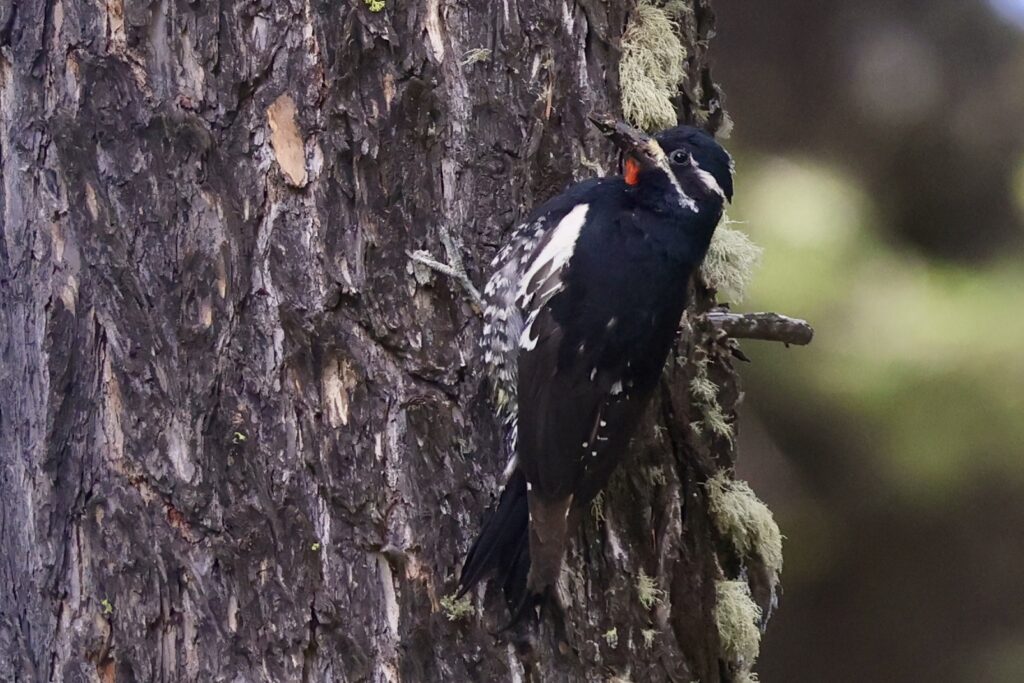
Williamson's Sapsucker
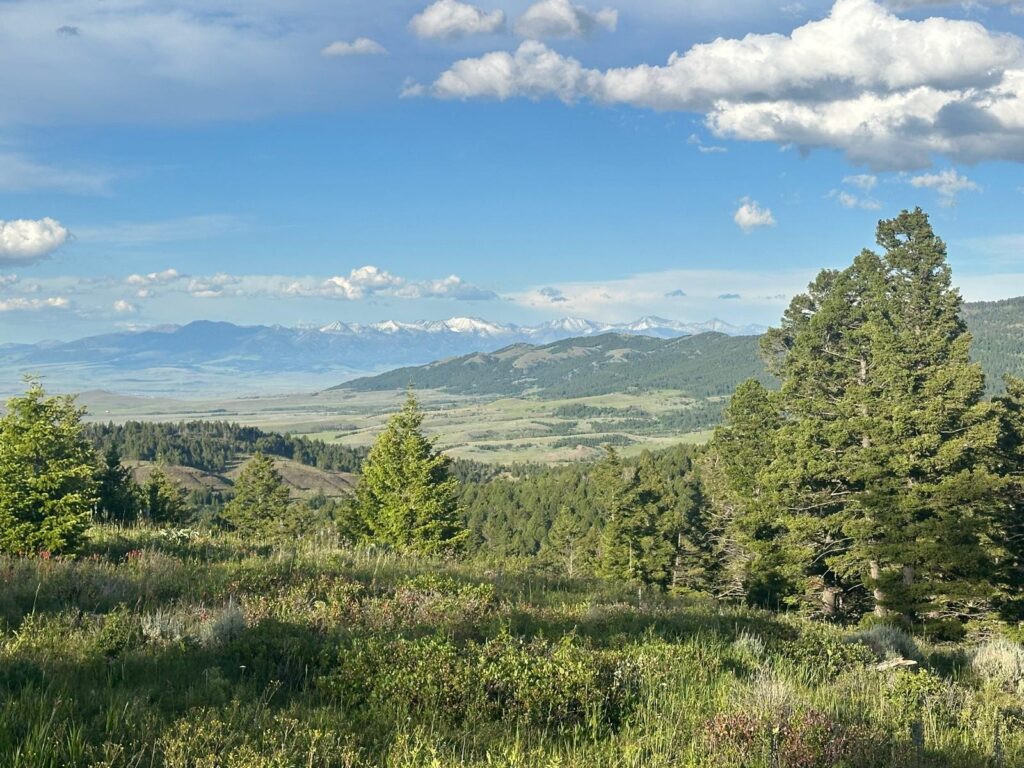
Montana Big Sky
Evening Grosbeak
Birding America’s Grasslands – North Dakota
It was time to move on. We would be heading to the Baird’s Sparrow capital of the world, Slope County, North Dakota. We camped at the Little Missouri National Grasslands for two nights and went out both mornings on various gravel roads that had recent sightings of Baird’s Sparrow.
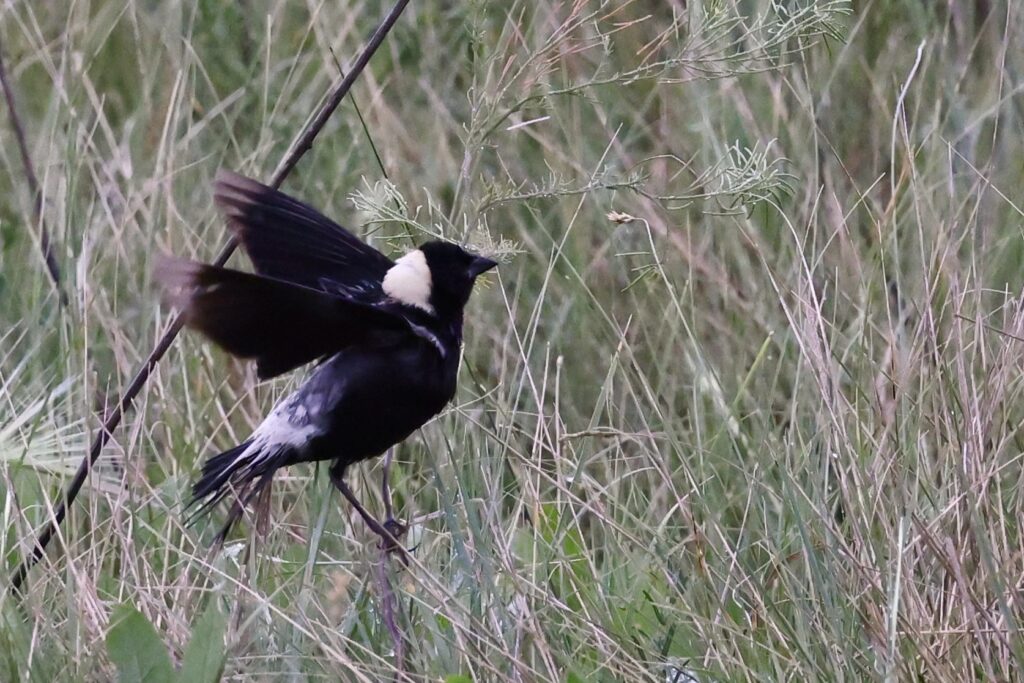
Male Bobolink
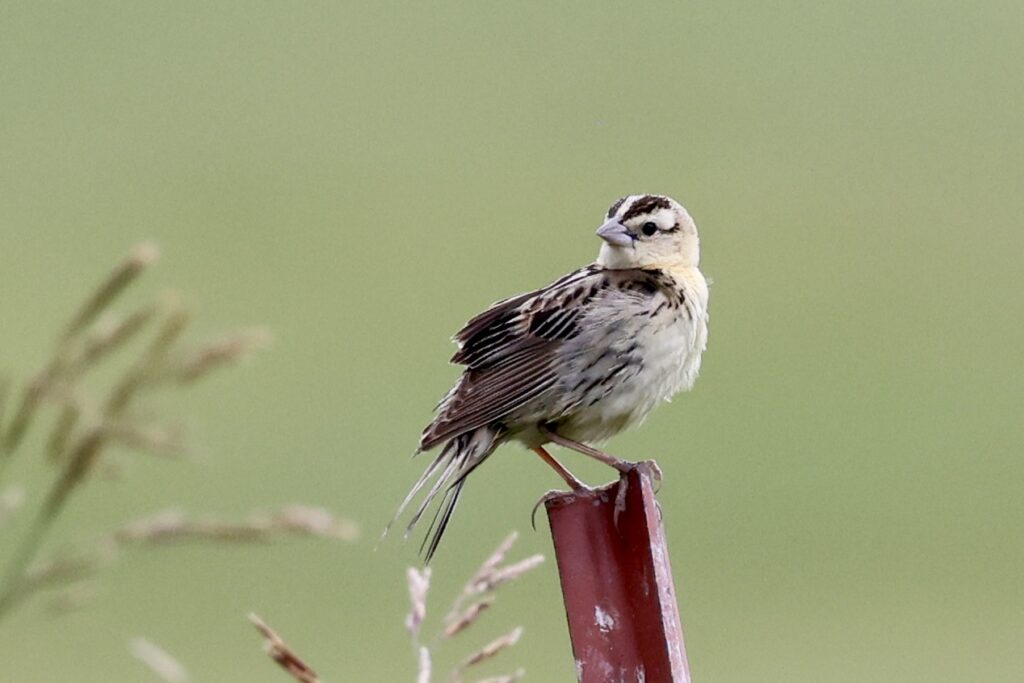
Female Bobolink
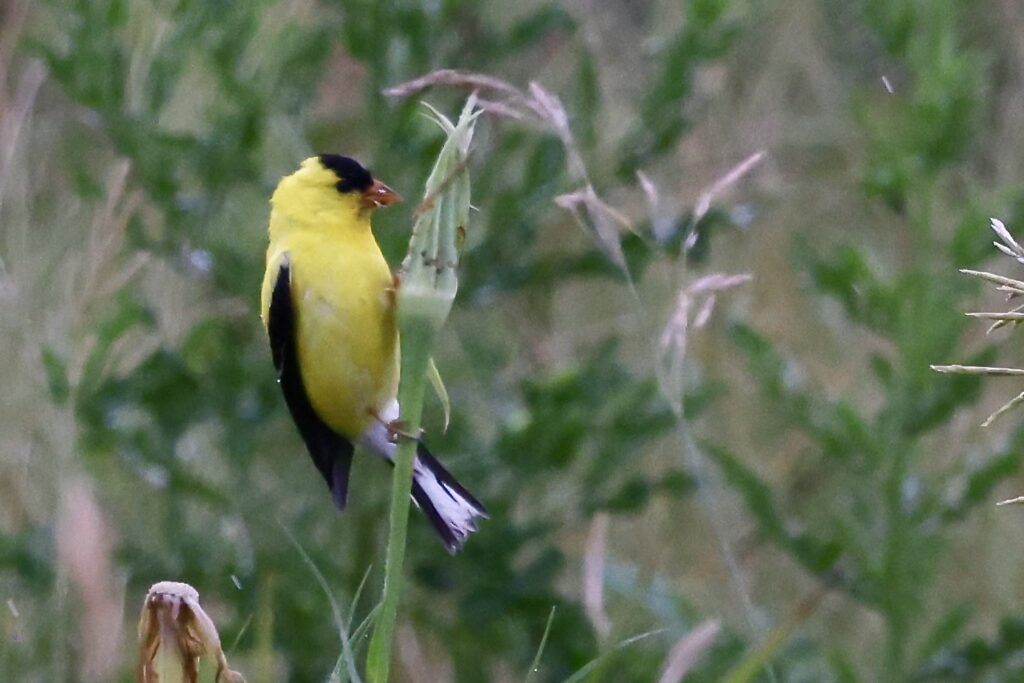
American Goldfinch
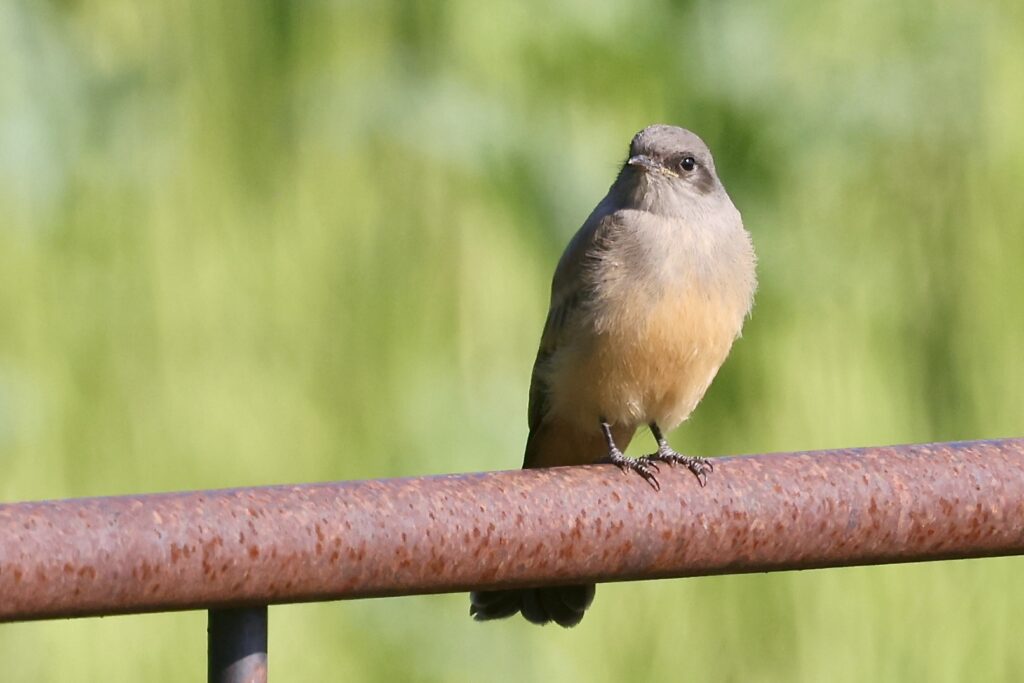
Say's Phoebe
We had no problem hearing the Baird’s Sparrow. It was calling in many spots that we stopped and listened. We attempted to bring this bird to the barbed wire just like in the movie “Listers”, but it never happened. I maybe got a distant shot of the bird on a clump of grass that seemed to be moving his beak in sync with the proper call, but the photo was so far and poor that “who knows”.
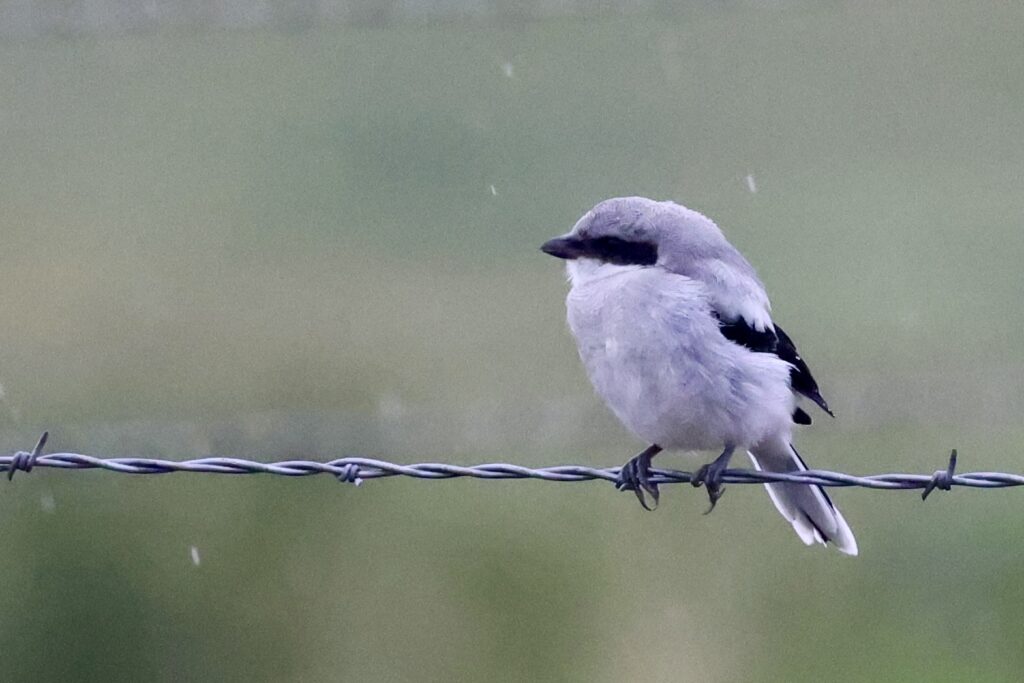
Loggerhead Shrike
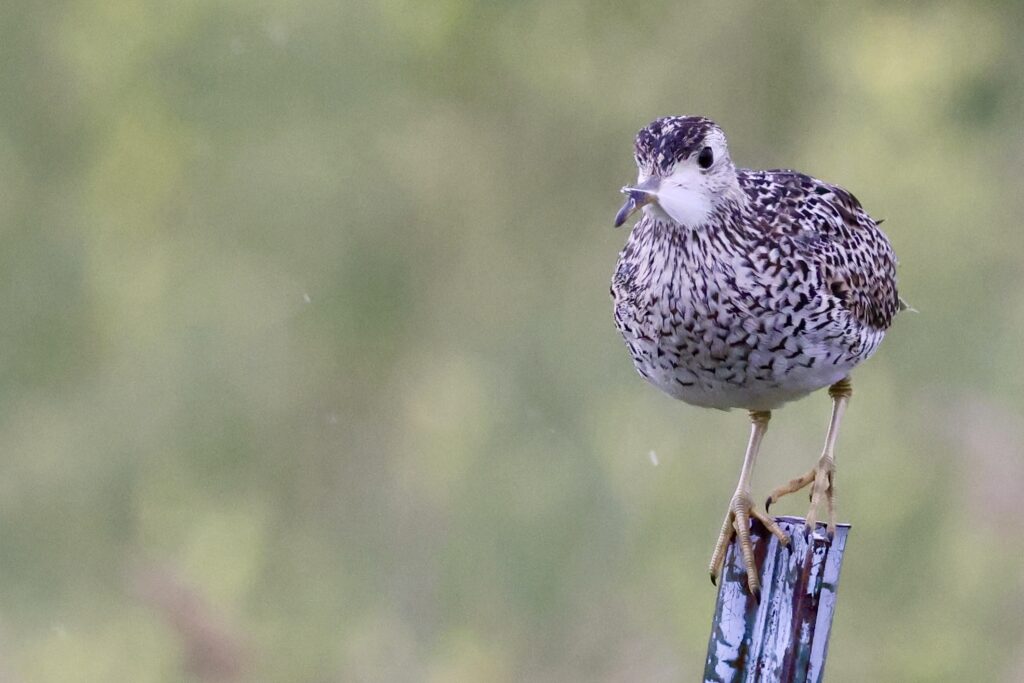
Upland Sandpiper
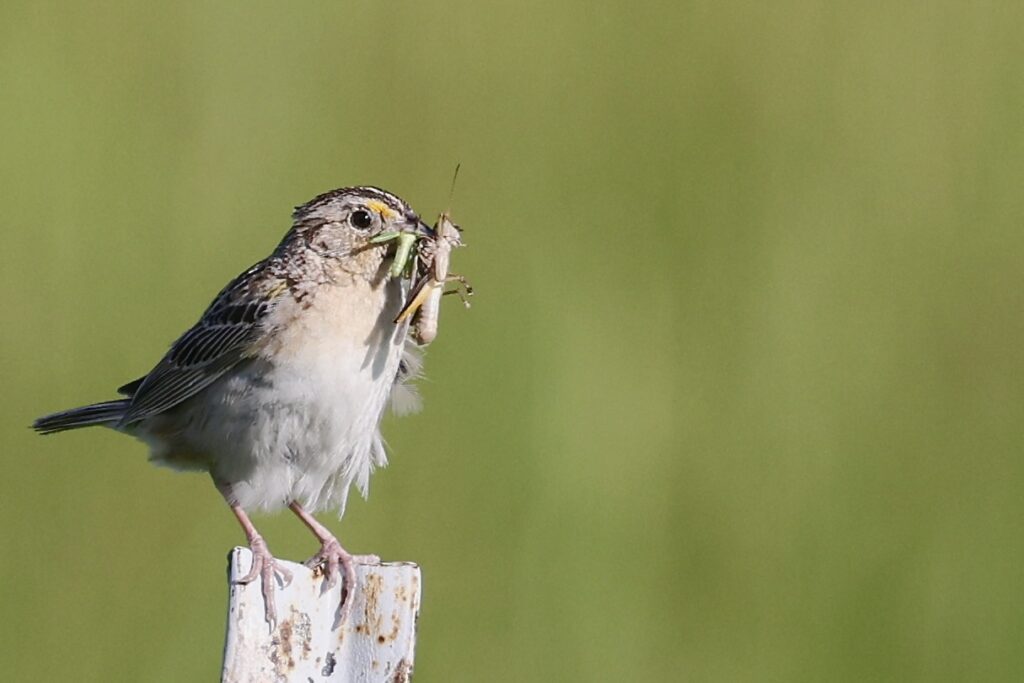
Grasshopper Sparrow
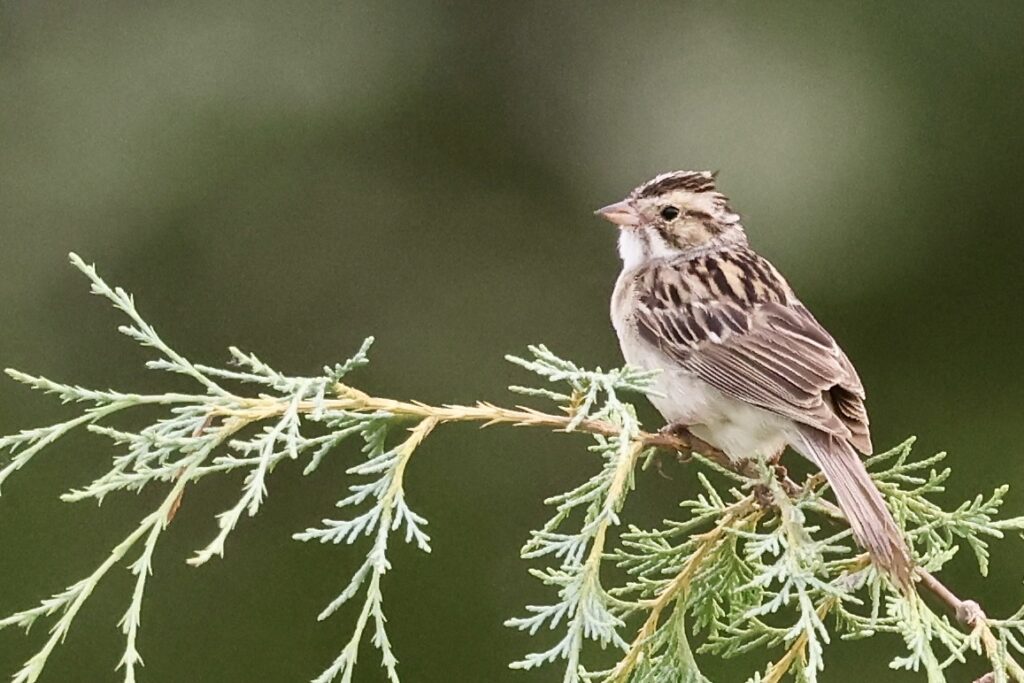
Clay-colored Sparrow
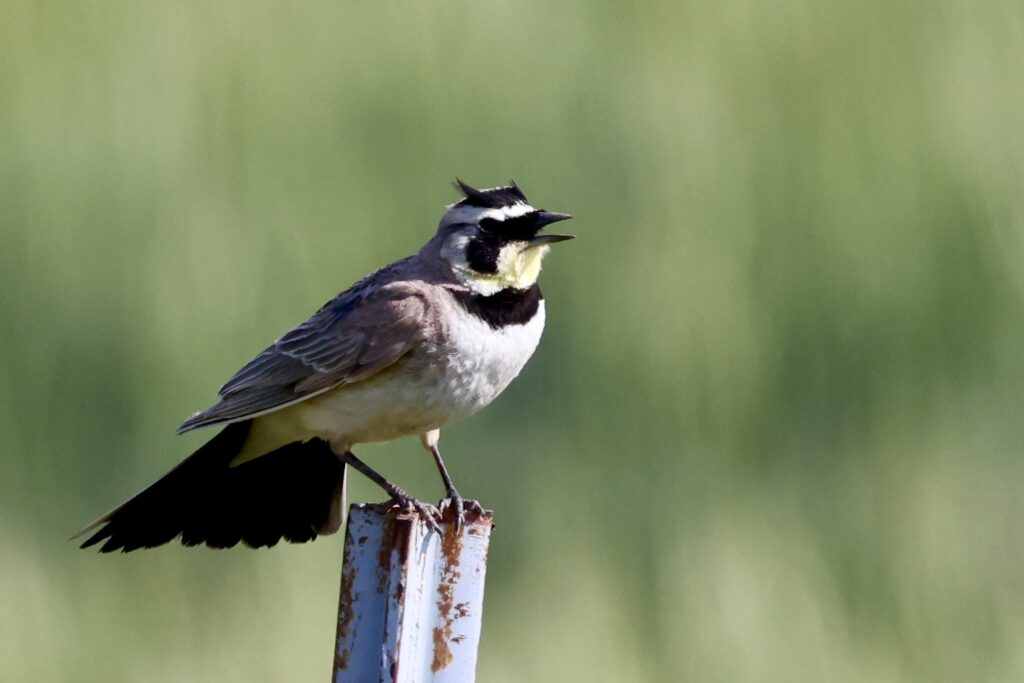
Horned Lark
Chestnut-collared Longspur
The other bird I had on my target list was the Nelson’s Sparrow. We looked hard for this bird but our extensive time near Bozeman affected our ability to hit the best spots for this bird. Something to look forward to.
Who is from Strasburg, North Dakota? Lawrence Welk. You gotta be pretty old to know who that is. Look it up. I always think of my paternal grandparents when I hear his name. We did not have time to tour his childhood home where he lived with his seven older siblings and parents, but maybe next time.
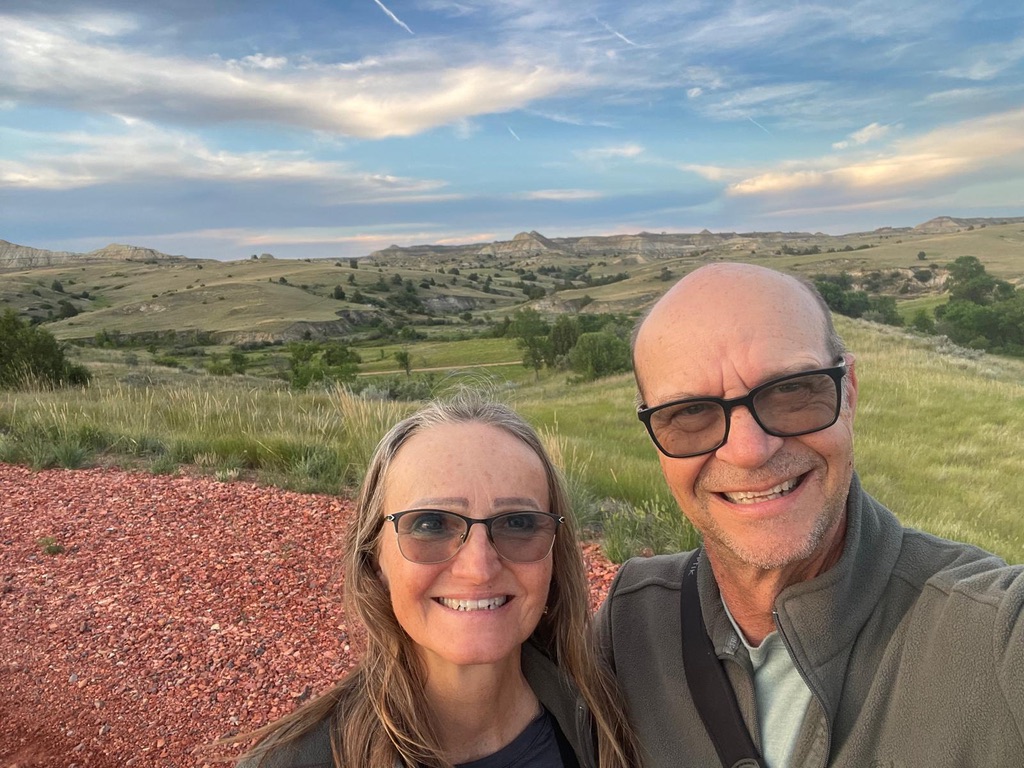
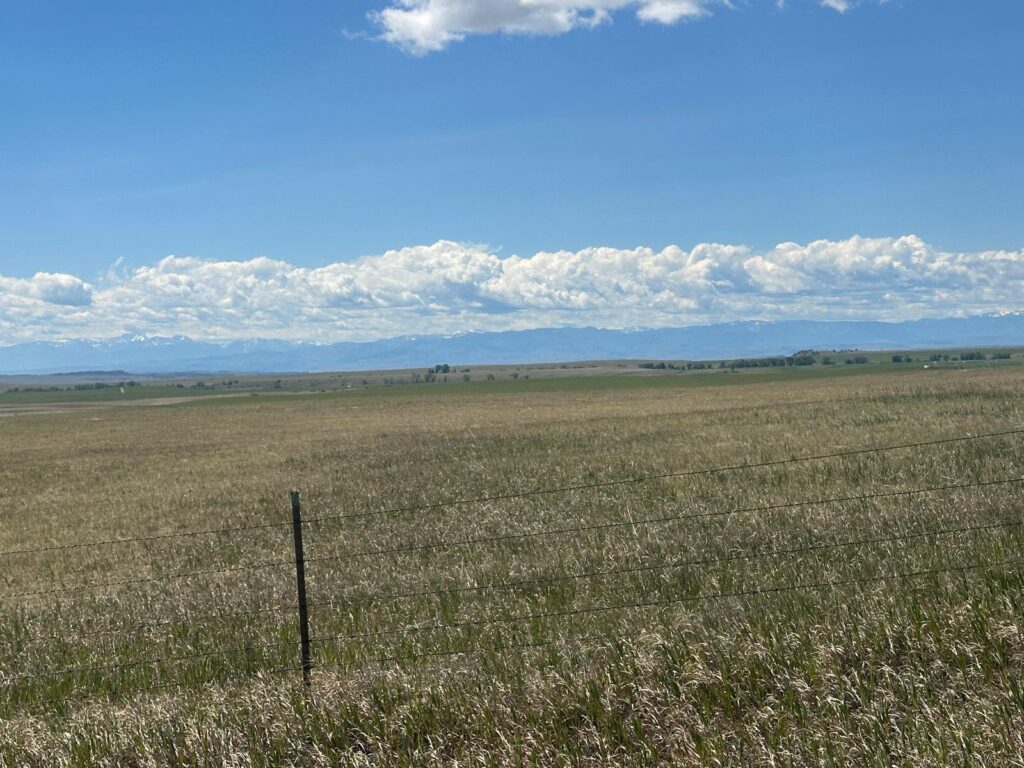
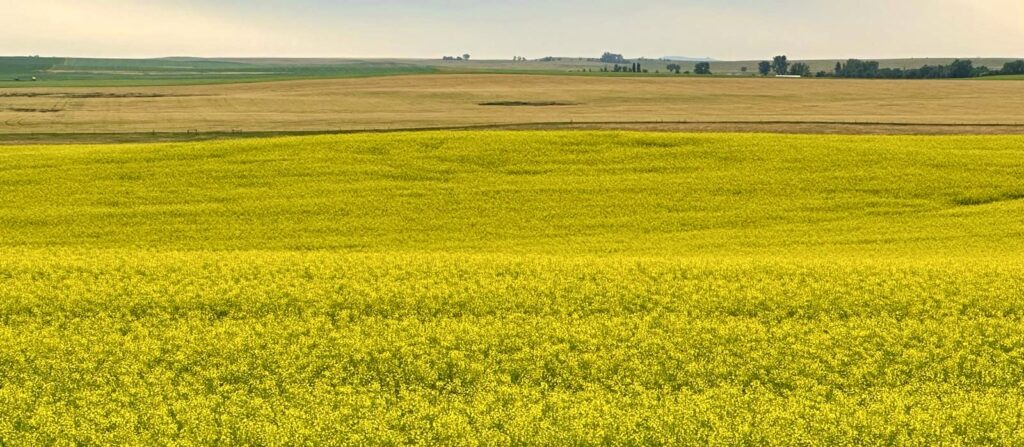
The Little Missouri National Grasslands have a certain beauty that is hard to explain. Think of the song America the Beautiful and replace “Amber waves of grain” with “Amber waves of rolling native grass prairie.” Now you have a picture in your head.
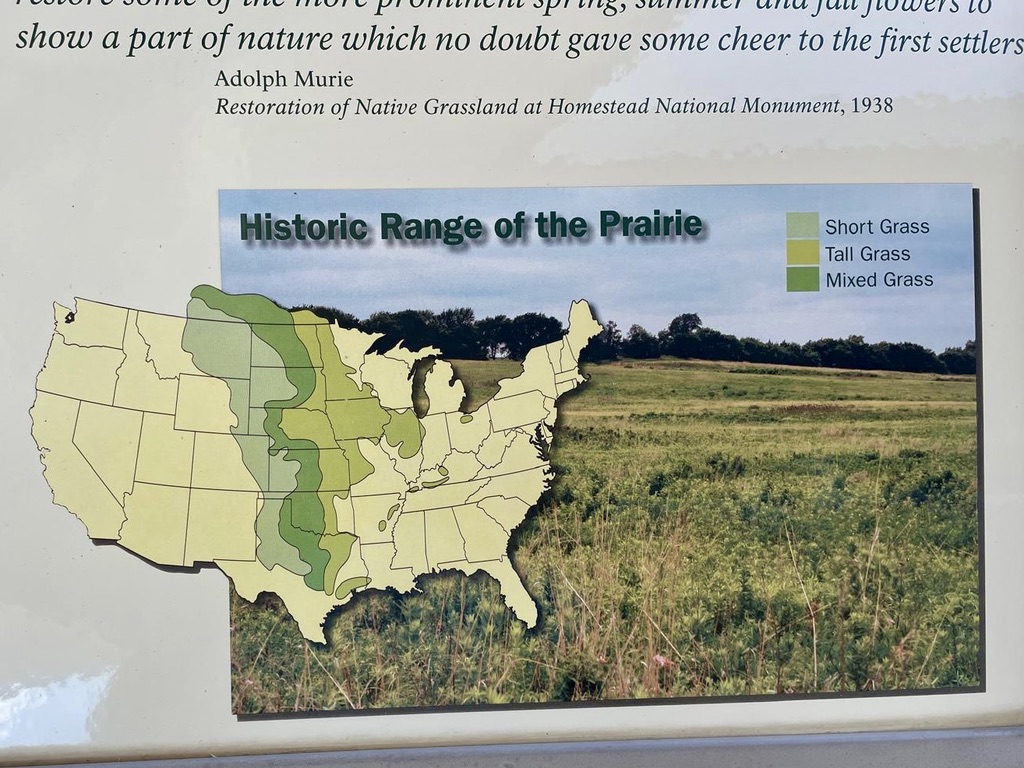
Sadly, native grasslands have been 95+% depleted in the middle states of America. It is the biggest loss of native habitat in North America. Thankfully, what remains is under protection of the U.S. Forest Service and the government incentivizes private owners to place their suitable land into permanent conservation easements and then restore the native grasses to the property.
Barely Hanging On
Amber Waves of Native Grass
More American History
For the remainder of the trip we worked our way south starting with South Dakota where we easily found the needed 50 bird species and drove through Laura Ingalls Wilder hometown of De Smet but did not stop. Of course, she is the author of the books that Little House on the Prairie is based.
We went into Minnesota to Pipestone National Monument. It is a most interesting site. There is a vein of fine-grained metamorphosed mudstone only a few inches thick called argillite or pipestone which is high in iron content giving it a deep red color. Native Americans have known about the vein for centuries and have mined it. The vein is 8 to 20 feet below a hard quartzite cap, so it is no easy feat to excavate through it to reach the sacred pipestone. As the name implies, they use the pipestone to make ceremonial pipes for smoking. It is said that when warring tribes made their pilgrimage to mine the stone, they called a truce and worked together to reach the vein.
There is a whole folklore story about how the stone got red and you guessed it, it has to do with the blood of their ancestors who all were killed in a great flood, not unlike the biblical flood, hmm.
The site became a National Monument to protect access to the pipestone which is still mined today. Only federally recognized tribe members from tribes that historically mined are given permission and it must be mined only with hand tools.
Homesteading in the Great Plains
Our last stop of interest along the way home was Homestead National Historical Park. This site preserves the first homestead settled in North America under the Homestead Act. While nothing remains of the original homestead the land is preserved and there is plenty to learn about homesteading in the very nice visitor’s center.
The entire concept of homesteading was first discussed by Thomas Jefferson after the Louisianna Purchase. The question was “What are we going to do with all this land?, and, Shouldn’t we just give it away to help reduce congestion in our overcrowded cities?” Jefferson never saw this come to fruition, but in 1862 the Homestead Act was passed with affect January 1, 1863 (yes, that was Abraham Lincoln). The last free land given away under the Homestead Act was in Alaska in 1988. Ten percent of the land in the United States was given away under the Act.
Under the Act, to gain full title to your 160 acres homestead you must occupy it for five years, build a house and make other improvements like clearing and cultivating crops.
In balance, it is a fair statement to say that the Louisianna Purchase was never France’s to sell and that we bought land from a third party without any consent of the people who had been occupying the land for thousands of years. It is a fair perspective.
The Return to Home
After leaving Nebraska, we blew through Kansas and into Oklahoma spending one night in Kay County before driving home.
Rarely did we know where we would be staying more than a few hours in advance. This is an interesting way to travel. We used up every day we had before needing to get back home for other commitments. Oh, and the camper performed great.
7 thoughts on “Birding America’s Grasslands”
Clyde Stephens
Joel and Mirka,
Another great report. I hitched-hiked through those same areas on my way back from California to Florida in 1958. I remember those vast plains and prairies. At least in Minnesota, probably other areas too, most of the true prairie ecosystems were plowed under long ago. Now there are serious efforts to restore the original fauna and flora back to where it can be called a true prairie.
Up front, are those solar panels on your camper?
I wonder how hunters can blow up creatures like pheasants. Call it what you want. It is a reversion to our need to hunt and kill to eat. Others call it other kinds of names. I have my own opinions.
This is awesome, I’m really amazed with you and Mirka Mr Joel, the way of writing is very entertaining and the pictures are awesome.
I really feel happy every time I see your amazing birding pictures and feel the adventure through your letters.
Keep it up and enjoy your time.
Mirka and Joel,
What an education! I love reading about your travels and the photography is fabulous. I know its time intensive creating a blog, thank you for sharing with us!
I love the mental image of a Mountain Plover high five. Any chance your Greeley, CO stop was at Weldwerks for a Juicy Bits? If not, then next time. (I’ve accompanied Chris there a couple times. Chris says Wiley Roots is also good, but we didn’t get to any others.) Nice Evening Grosbeak and trip report.

Joel and Mirka,
Another great report. I hitched-hiked through those same areas on my way back from California to Florida in 1958. I remember those vast plains and prairies. At least in Minnesota, probably other areas too, most of the true prairie ecosystems were plowed under long ago. Now there are serious efforts to restore the original fauna and flora back to where it can be called a true prairie.
Up front, are those solar panels on your camper?
I wonder how hunters can blow up creatures like pheasants. Call it what you want. It is a reversion to our need to hunt and kill to eat. Others call it other kinds of names. I have my own opinions.
Thanks for another great blog. Clyde
Yes, Clyde, those are panels on the front angle. More on top. The camper has more battery than my house in Bocas.
This is awesome, I’m really amazed with you and Mirka Mr Joel, the way of writing is very entertaining and the pictures are awesome.
I really feel happy every time I see your amazing birding pictures and feel the adventure through your letters.
Keep it up and enjoy your time.
Mirka and Joel,
What an education! I love reading about your travels and the photography is fabulous. I know its time intensive creating a blog, thank you for sharing with us!
I love the mental image of a Mountain Plover high five. Any chance your Greeley, CO stop was at Weldwerks for a Juicy Bits? If not, then next time. (I’ve accompanied Chris there a couple times. Chris says Wiley Roots is also good, but we didn’t get to any others.) Nice Evening Grosbeak and trip report.
Too funny, Mary. That is exactly where we went and that is the exact beer I had! Small world!
Thanks for another interesting blog! I’ll admit I had to look up “scope creep.” I’ve been there done that.