Sri Lanka was not really on my radar when I started planning the wedding/birding trip to India. While very much in the past, I still have memories of civil unrest/war being shown on the news and was not sure if visiting this country was a good idea.
I checked the travel advisories from the US State Department and found that it would be the same threat level as Panama where we are regulars. Looking at YouTube travel vloggers I realized that there are plenty of adventurous travelers visiting this country. Not only were there adventure travelers but there were plenty of birders going to see the numerous endemics that the island nation has to offer.
That settled it. A trip to go birding Sri Lanka made it on to the itinerary. I started planning for about 4 days and realized that 8 days was a better choice. It’s great to be retired and flexible!
Merry Christmas from Sri Lanka
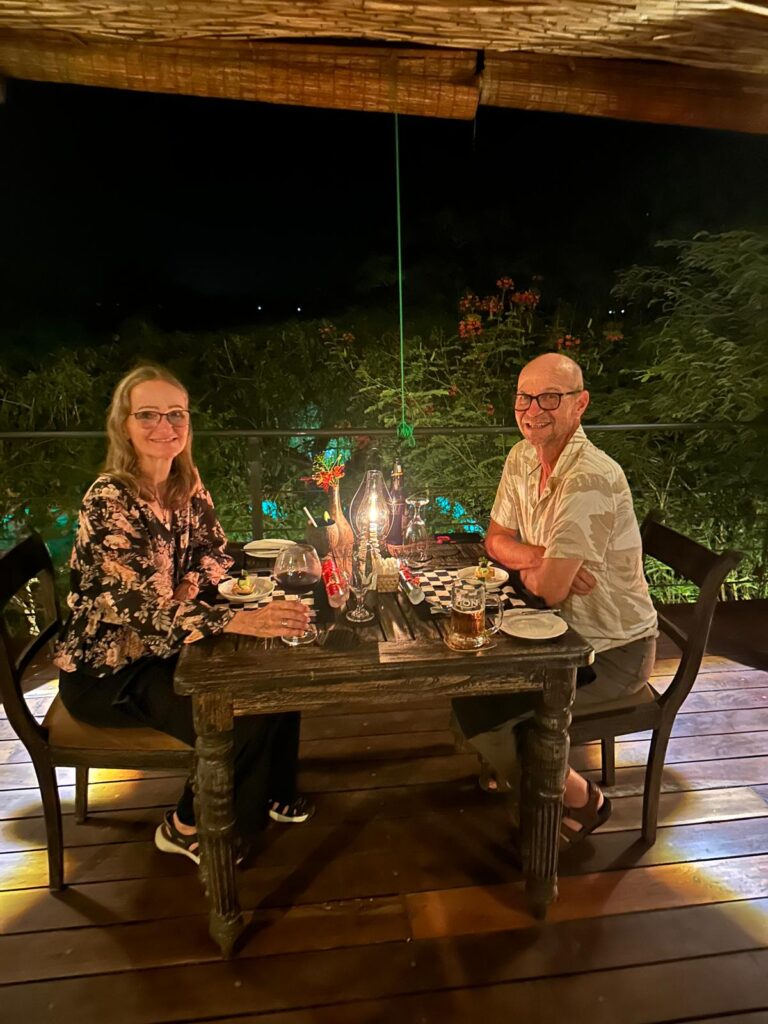
Since Christmas would be spent in Sri Lanka, I did not want to be in our usual cost-effective homestay/Airbnb type accommodation where boiled eggs and canned meats dominated the breakfast and lunch menu. The Red-backed Flameback Eco-Lodge in Wirawila located between Yala and Bundala National Parks along the south coast would be the perfect place to begin birding Sri Lanka. The manager even reached out before our arrival and offered a low-cost upgrade to the honeymoon suite. Who could resist?
Now we had to get there…safely. It was a long drive (6 hours) from the Colombo Bandaranaike International Airport through the city of Colombo to the Flameback Eco-Lodge. I would have to drive our rental car in some pretty hairy traffic at night and find a place somewhere south of Colombo to overnight.
Rental Car Fun
I opted for a “budget” car rental agency (more like a person than an agency). The price was right, as long as I got my cash deposit back. He only delt in US$ cash due to the high inflation Sri Lanka is currently experiencing. The car was a fairly banged up sedan with good tires (unlike in Goa), which I was happy for as I did not have to worry adding a little ding to the collage of chips, dents and dings already on this vehicle.
While not really a scam, more of a hidden fee, he provides that car on empty. When he told me its empty, he meant it. He told me exactly which gas station to go to and that I have maybe five kilometers before running out of gas. That station was two kilometers in the opposite direction, so we agreed on a station that was three kilometers in the direction we were going. It was night, the roads were hectic, and we couldn’t find the station. Cursing under my breath, we managed to pull into a gas station after about seven kilometers. That was such a relief to see that gas being delivered to the fuel tank.
I believe he takes returned cars, siphons the fuel out, puts it all into his wife’s car except for one liter that he puts back into the rental. On return, I let him know that this little policy is not good for repeat business, to which he shrugged. Who will risk returning a car with one liter left in the tank? Enough of me regurgitating my annoyance at that. It turned out to be a good reliable car.
Let’s get to the birds.
Finally Birding Sri Lanka
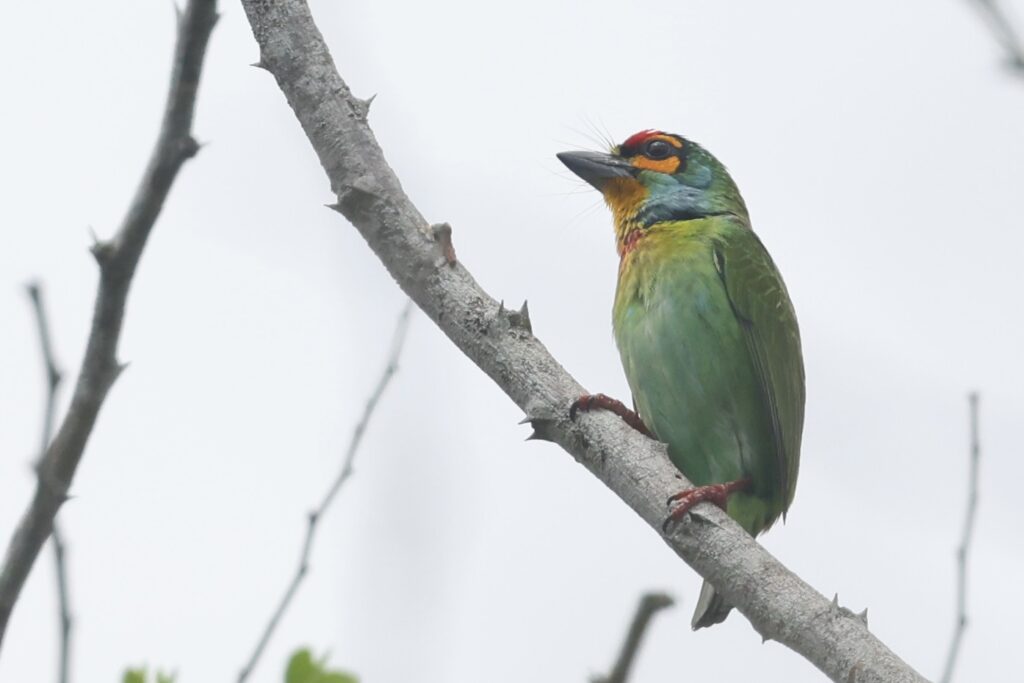
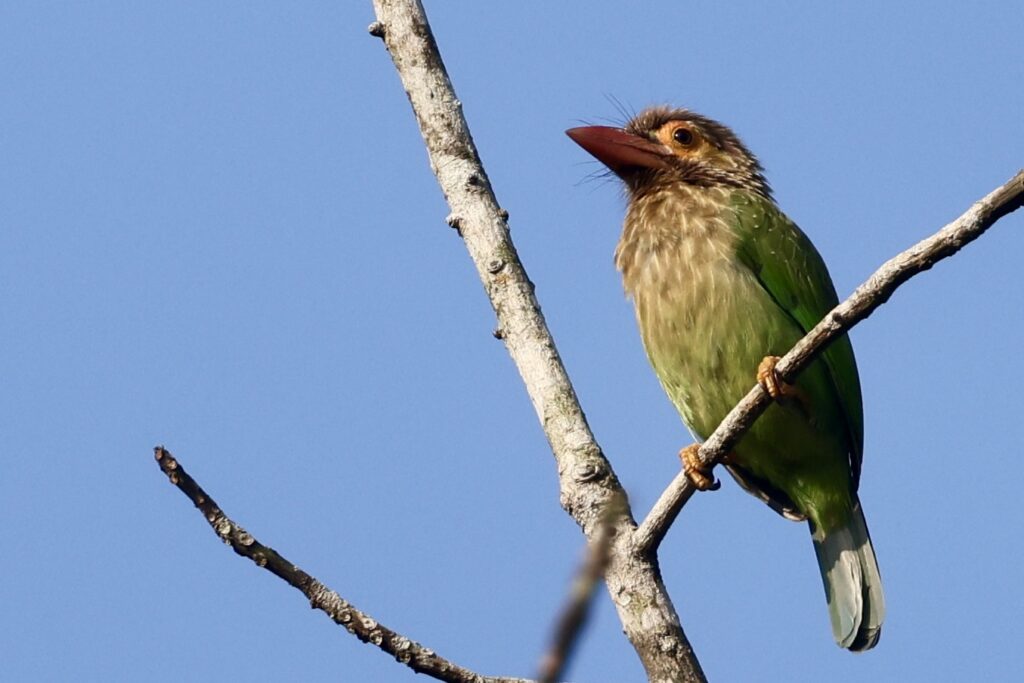
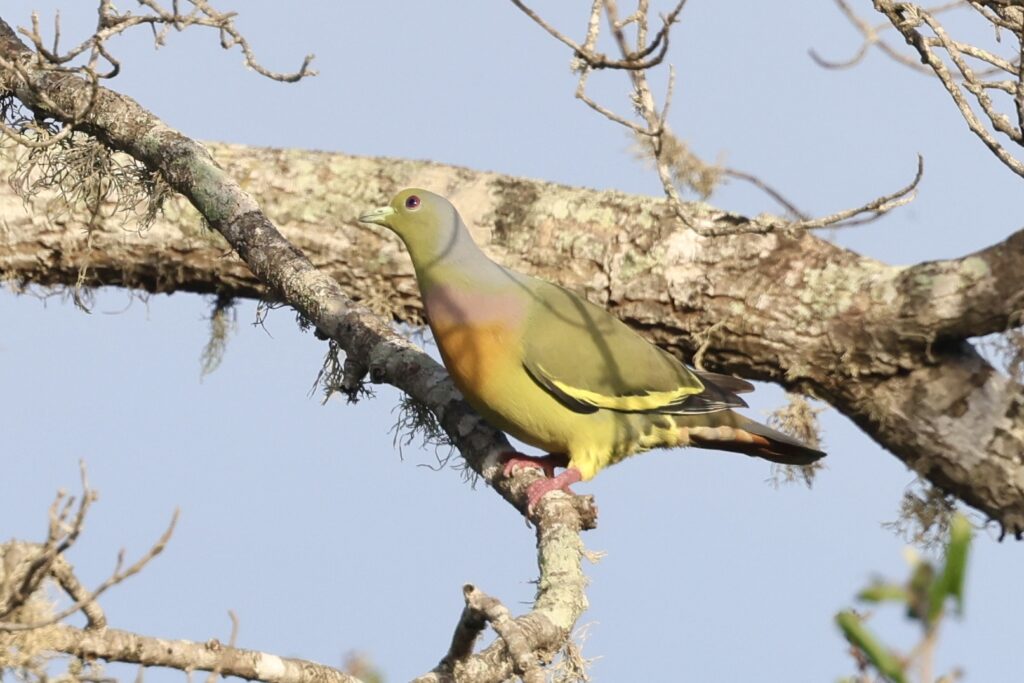
We overnighted along the way at a cheap hotel that looked like it had some nature surrounding it. I arose early and immediately headed into the forested area adjacent to the hotel. It was really nice birding. There were five new lifers in about one hour. This included both of the more common barbets, brown-headed and crimson-fronted as well as the Orange-breasted Green-Pigeon.
Crimson-fronted Barbet
Brown-headed Barbet
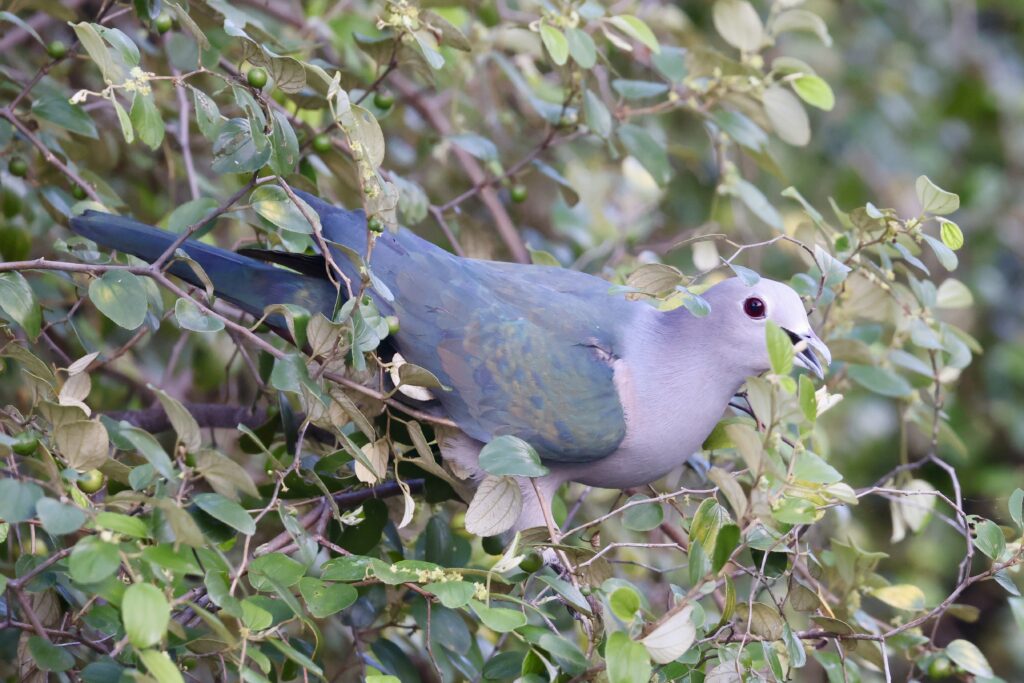
Green Imperial-Pigeon
Orange-breasted Green-Pigeon
We headed out on the road, a wonderful 4-lane highway as nice as any interstate road in the USA and planned to arrive at the Red=backed Flameback Lodge shortly after check-in time. That meant we would need a stop for a couple of hours. For what? For birding Sri Lanka, of course.
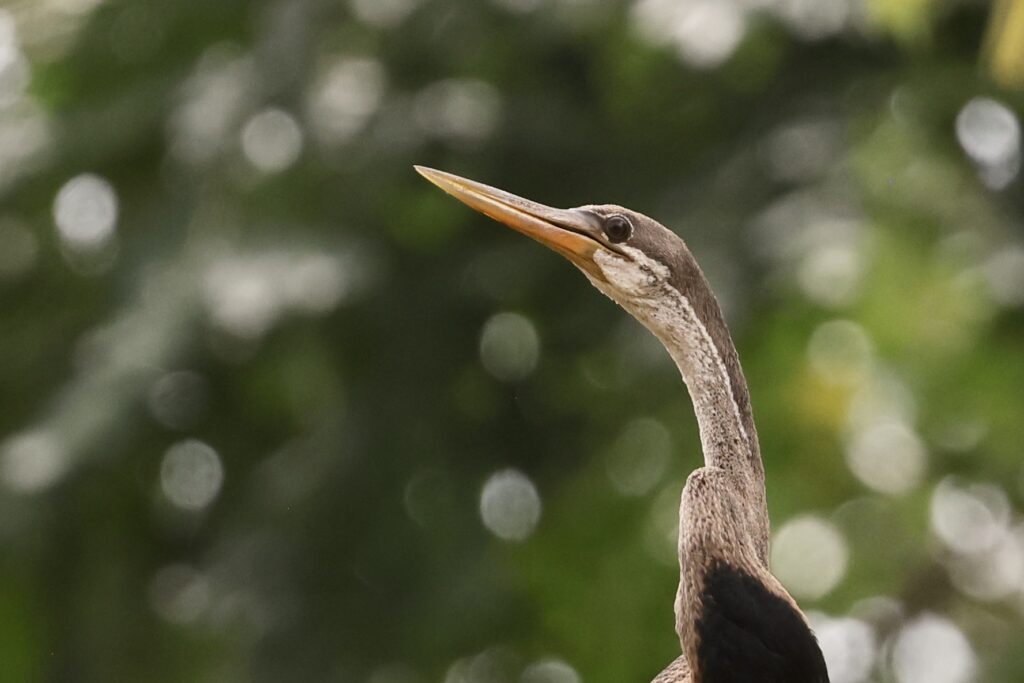
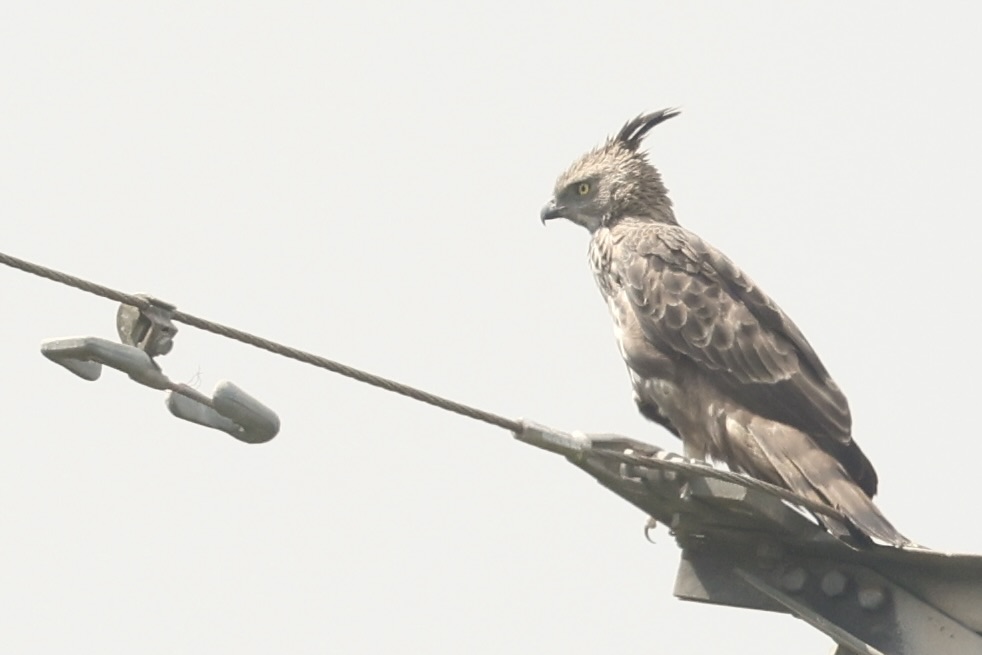
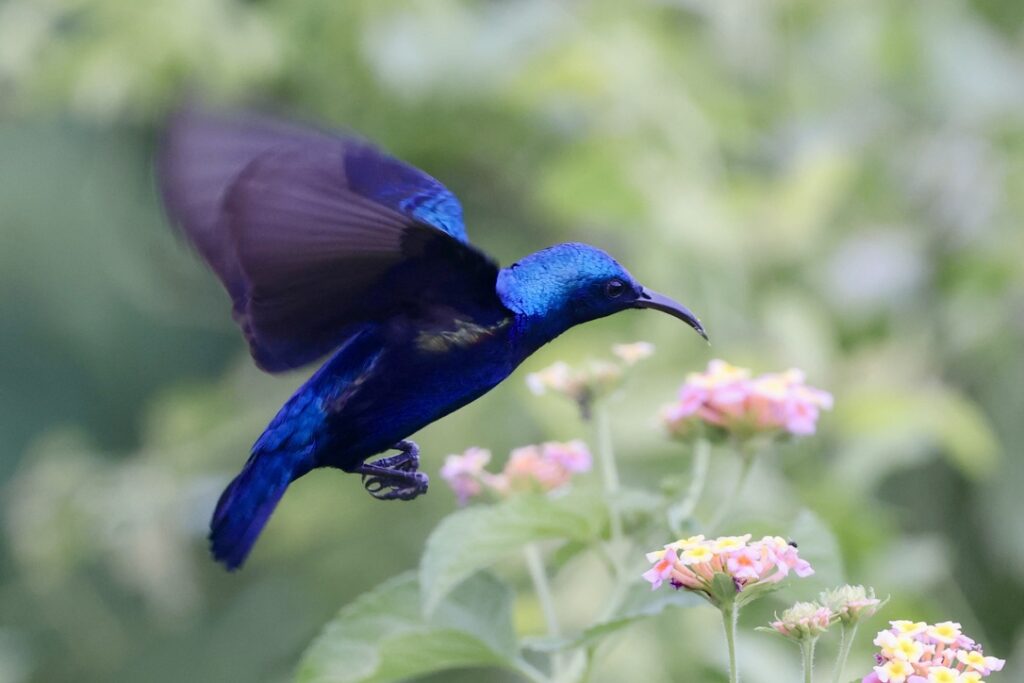
The Kirala Kele Sanctuary near Matara looked to be a good spot for a variety of birds. It did not disappoint. It was a drivable dirt road along a natural waterway that was adapted for irrigation. The Changeable Hawk-Eagle looked like a gargoyle on the power line tower. The Oriental Darter (the region’s equivalent to Anhinga) was a very good poser. We saw all three of the local sunbirds, Loten’s, Purple and Purple-rumped and a lifer Gray-headed Fish-Eagle.
Oriental Darter
Crested Hawk-Eagle
Purple Sunbird
Common Iora
A Luxury Safari Lodge
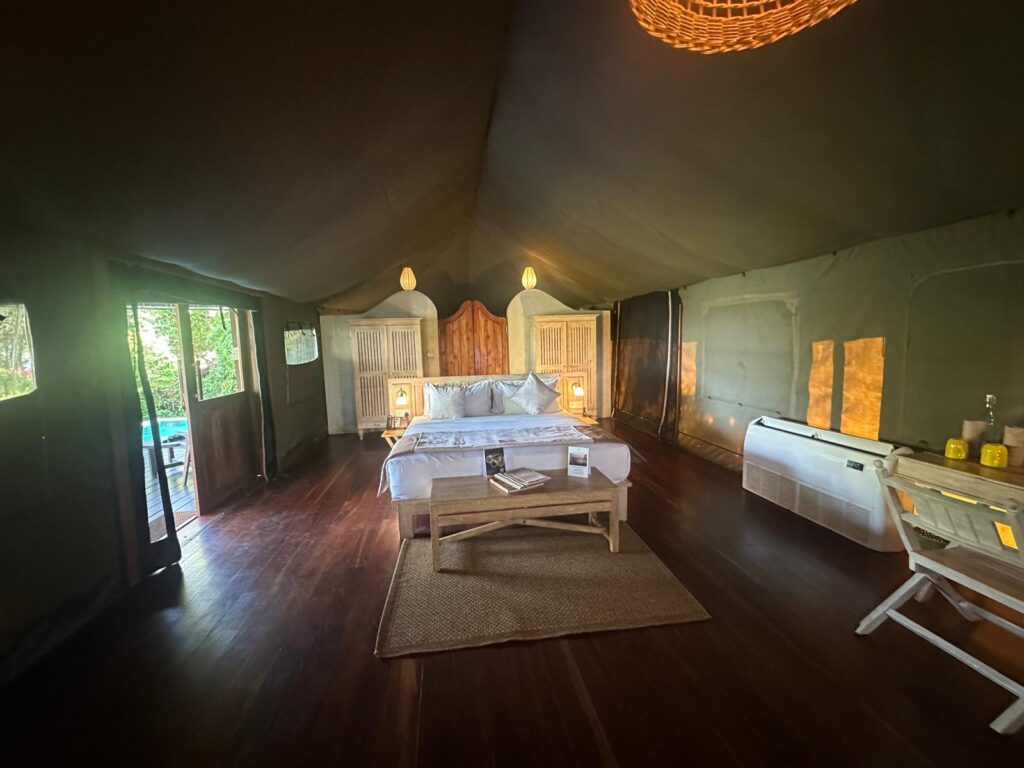
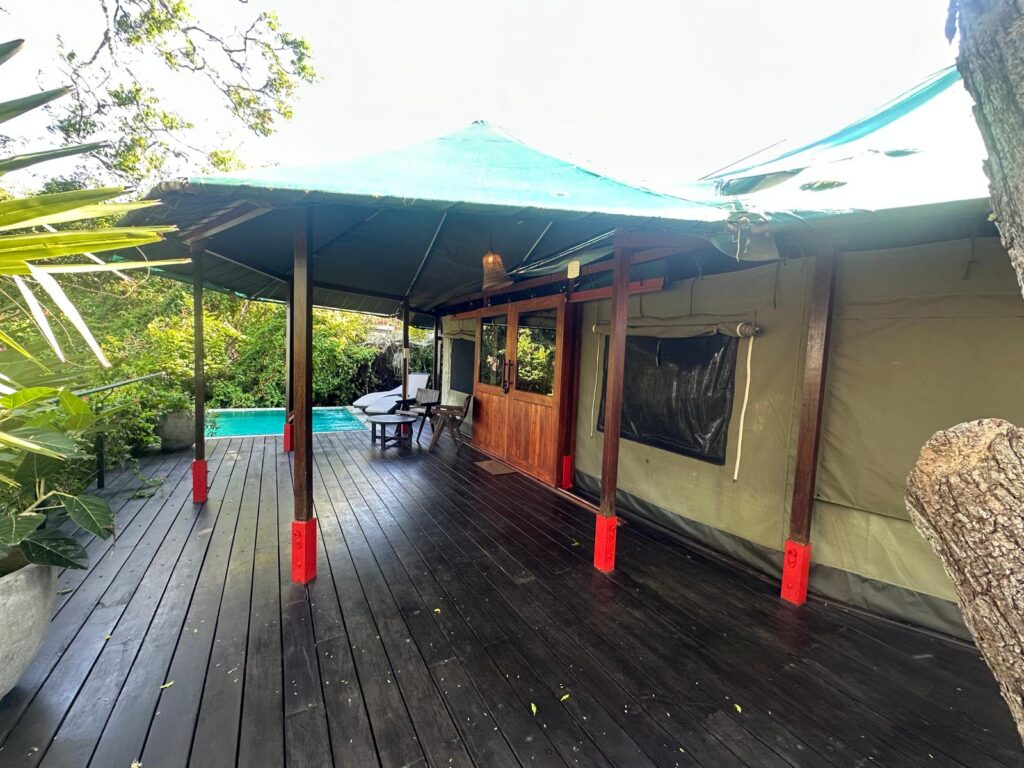
We arrived at the Red-backed Flameback Eco-Lodge shortly after check-in and were escorted to our honeymoon suite. Actually, the lodge is composed of about a dozen luxury tents with AC and in-suite bathrooms. Ours was substantially larger than the others and isolated for more privacy. We also had a king-size bed, a plunge pool and an amazing view over the lake.
One of those “hindsight is 20/20” moments, was during check-in. We had to be transported in a golf cart from the welcoming area to our accommodation. On that 150 meter drive a lifer Blue-faced Malkoha popped up on a bush 20 meters in front of us. I could have said “Stop!” and quickly managed a photo and enjoyed the view…but…I figured it was a locally common bird and I would have plenty of opportunity. It is the only sighting of Blue-face Malkoha I have ever had.
Yala National Park
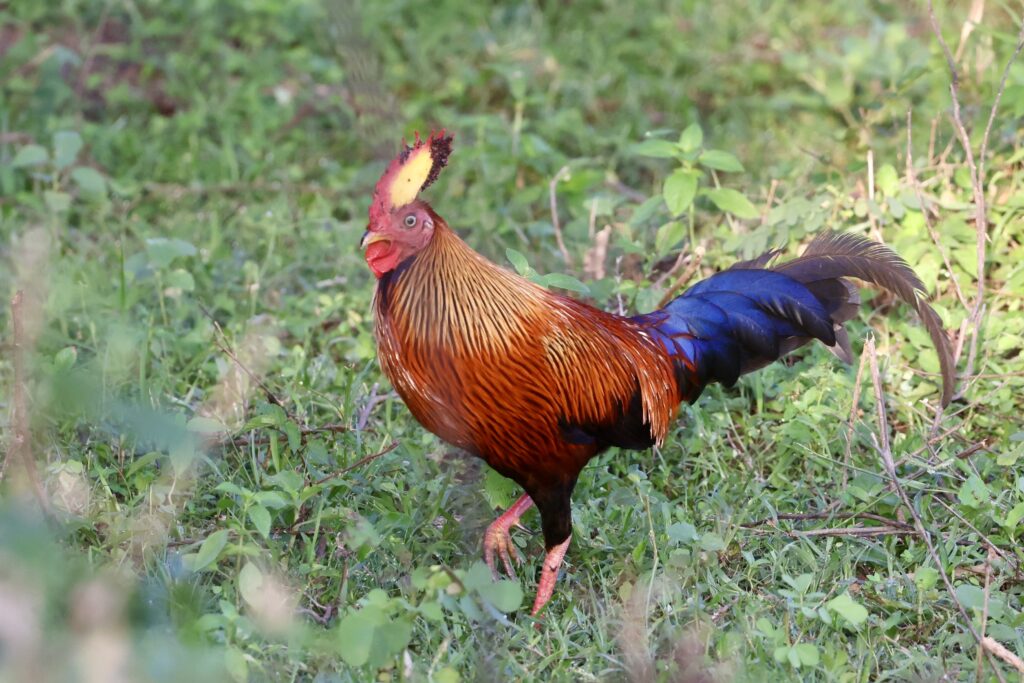
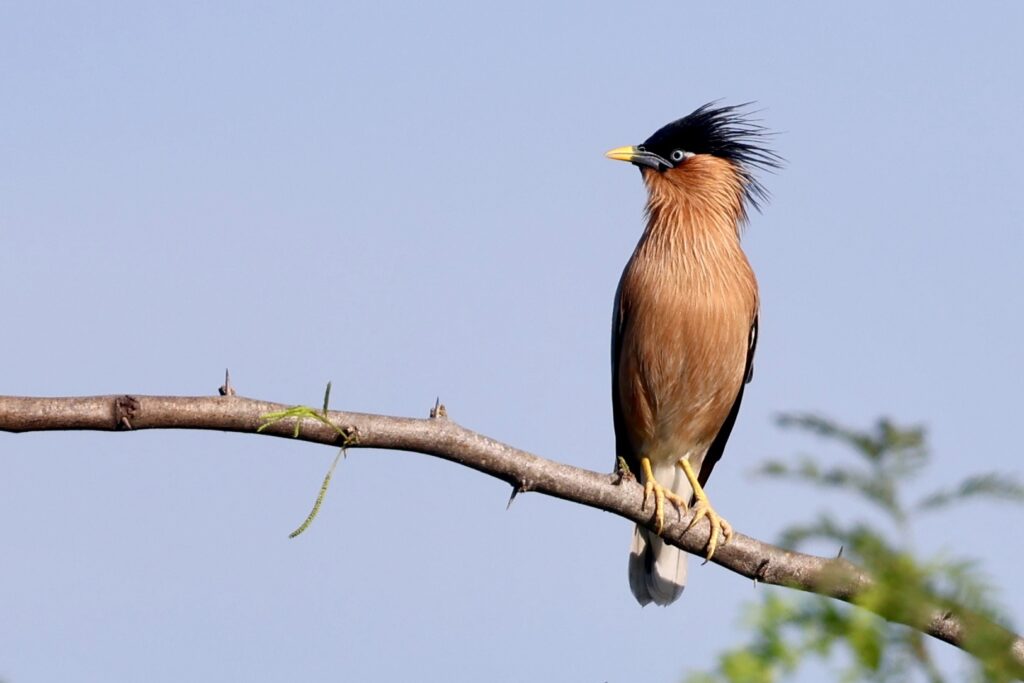
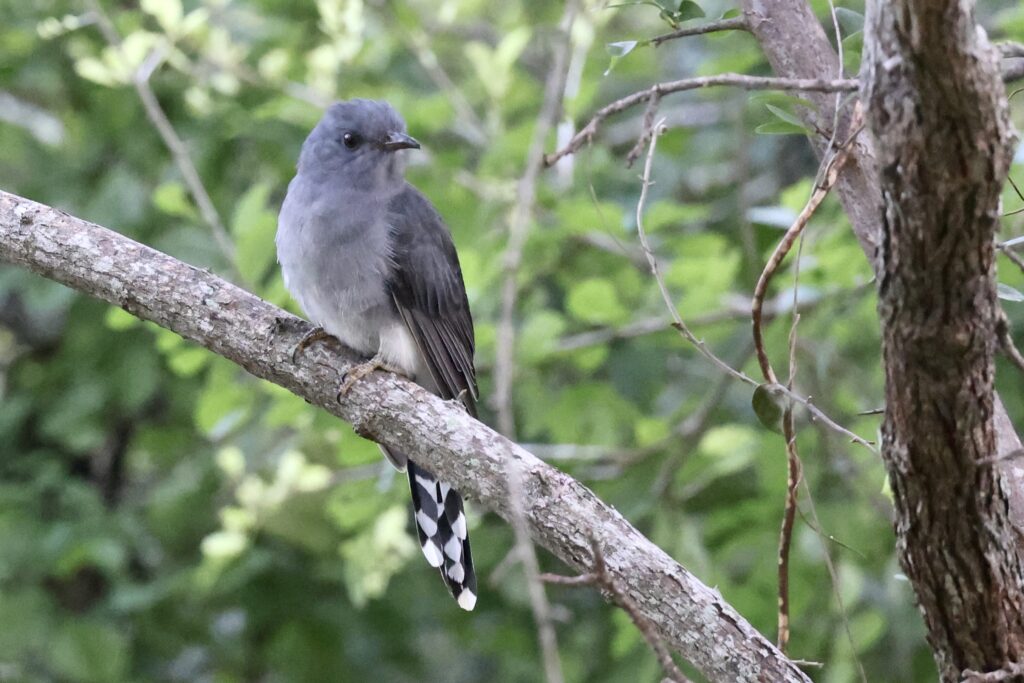
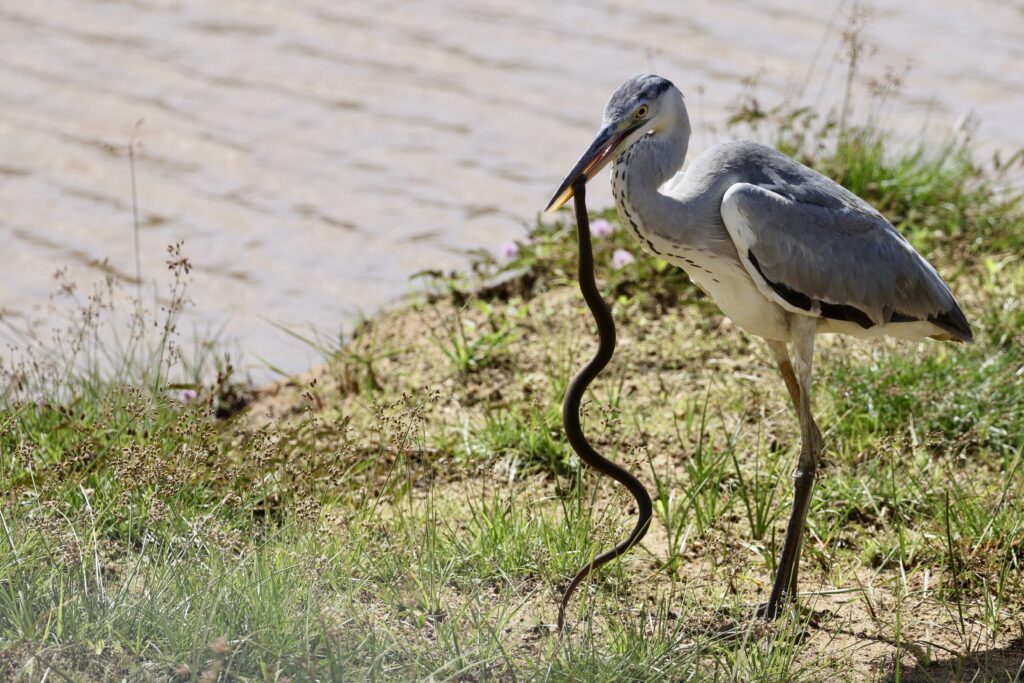
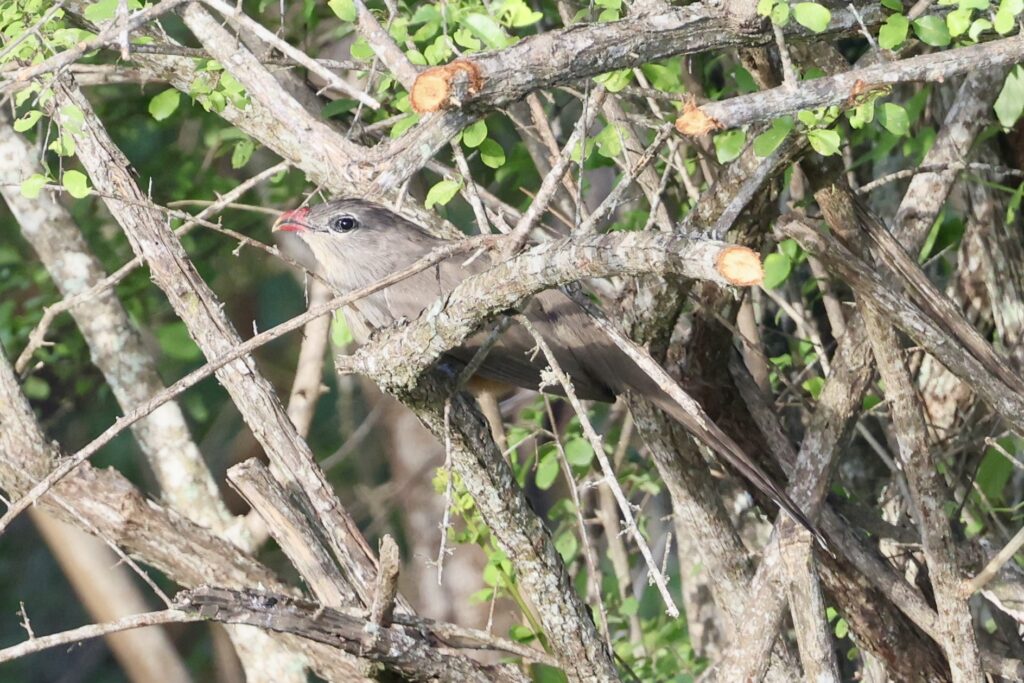
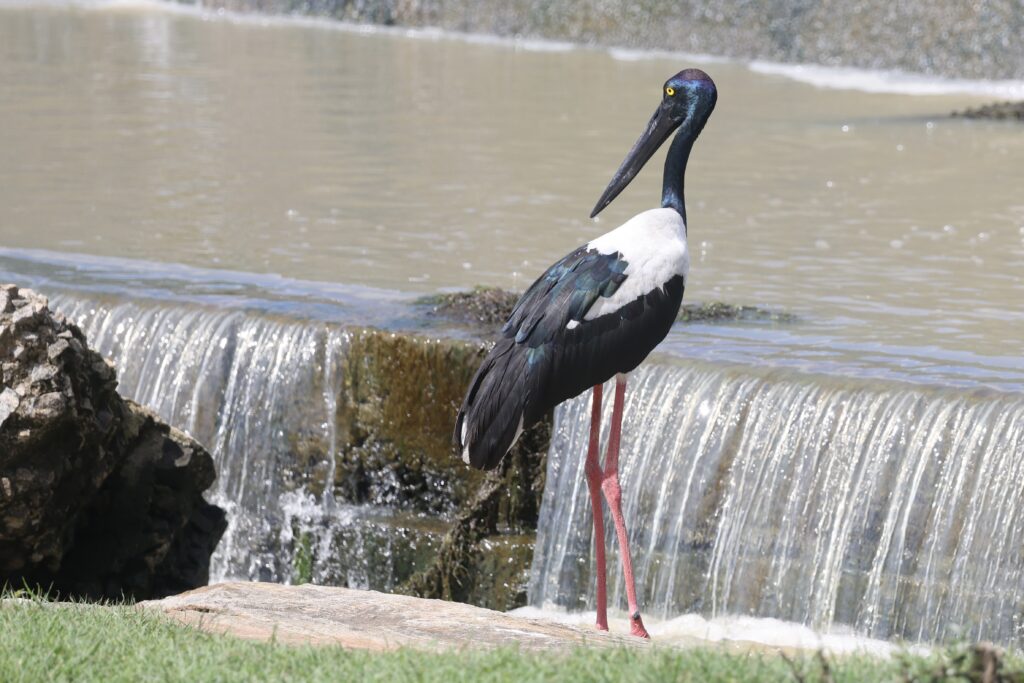
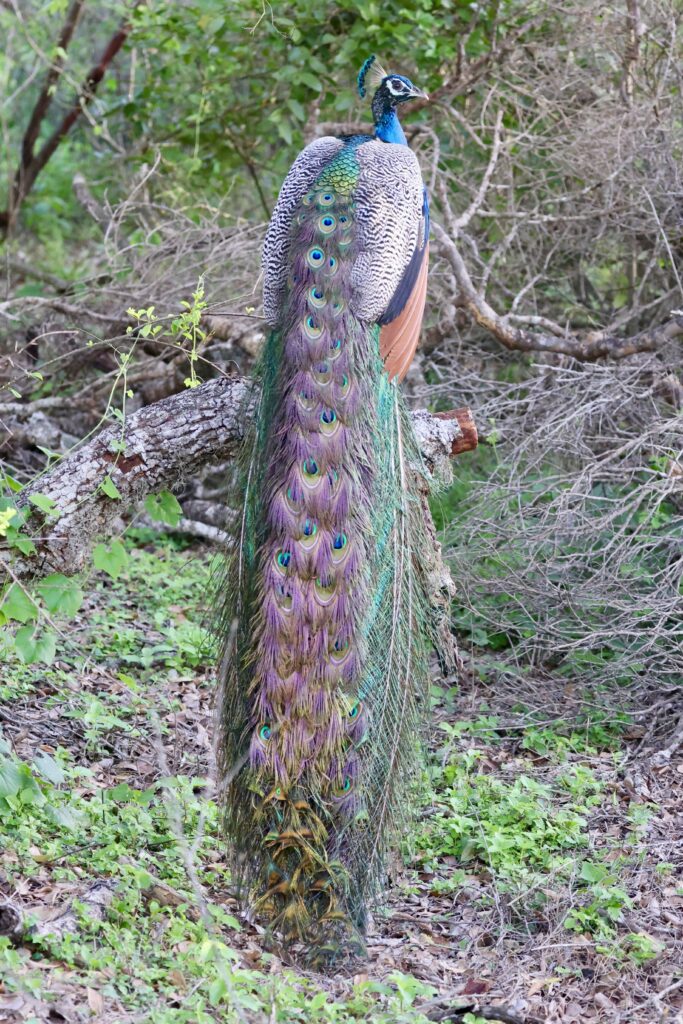
The package was for three nights, three safaris with breakfast and lunch included. On our safaris we chose one day to Yala National Park where we saw elephants, a leopard and other large mammals not to mention plenty of birds. Yala was a terrific experience. Our bird list had 67 species. The list included the Gray-bellied Cuckoo, my 2000th life bird. Other highlights included the endangered, Black-necked Stork and Sirkeer Malkoha, close looks at Sri Lanka Junglefowl and a Gray Heron eating a 5’ snake who was desperately trying to escape. There was also a solid population of Indian Peafowl, that’s Peacock to most of you.
Sri Lanka Junglefowl
Brahminy Starling
Gray-bellied Cuckoo
Gray Heron
Sirkeer Malkoha
Black-necked Stork
Indian Peafowl
Bundala National Park
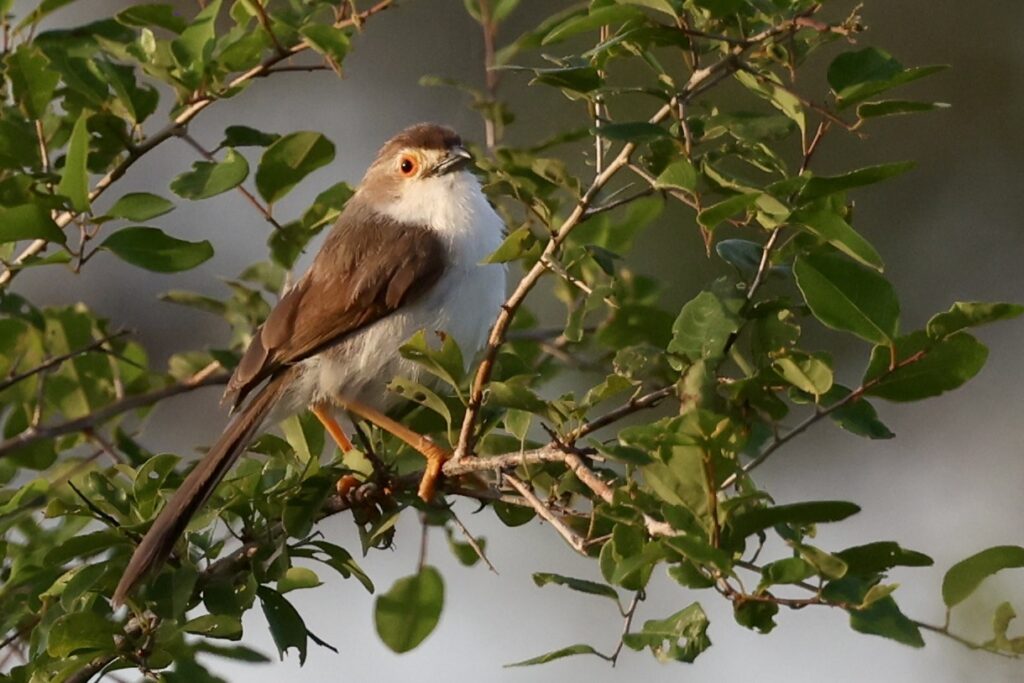
The other two mornings we went to Bundala National Park where large mammals are less common, but the bird life was more amazing. The two mornings had lists of 83 and 91 birds. Some of the highlights were a Chestnut-winged Cuckoo fly by, great looks at a Yellow-eyed Babbler and the rather drab but uncommon Jungle Prinia. One bird I was expecting in Bundala was the Terek Sandpiper, but unfortunately, this relatively common shorebird did not make an appearance. The misses of this bird continue to mount.
Yellow-eyed Babbler
Sri Lanka Woodshrike
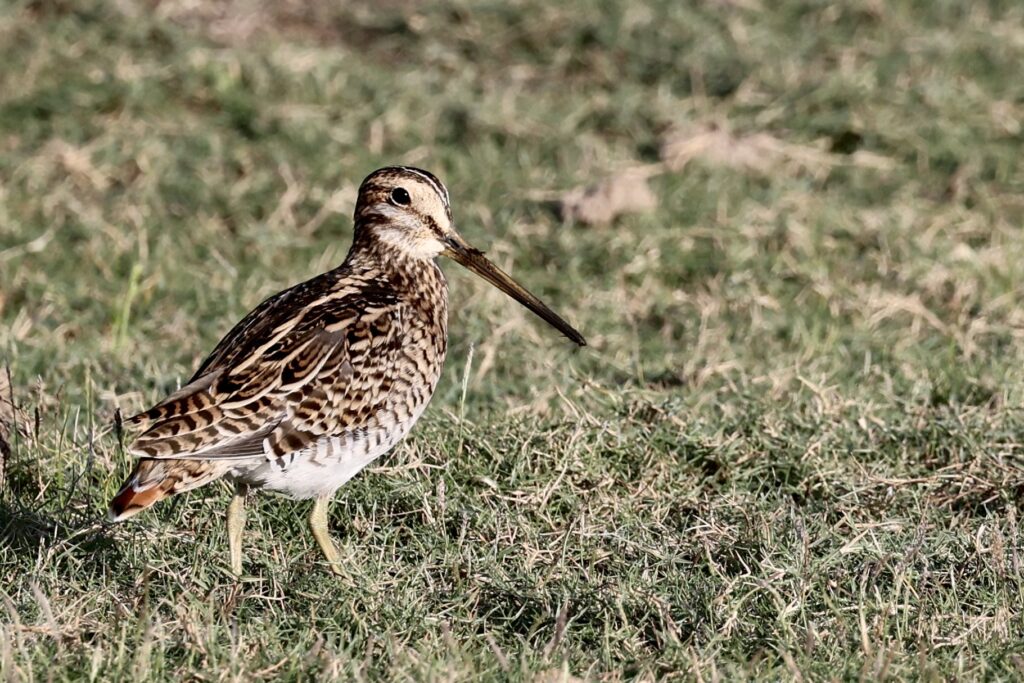
Pin-tailed Snipe
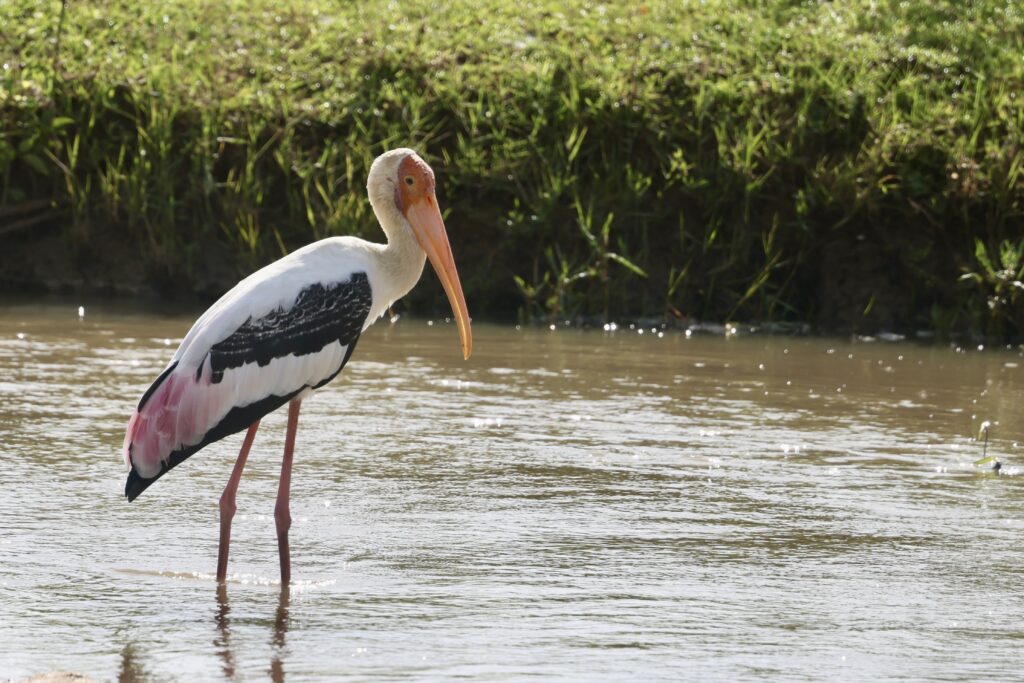
Painted Stork
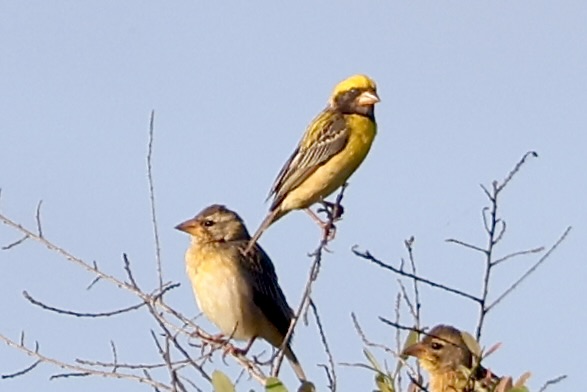
Baya Weaver
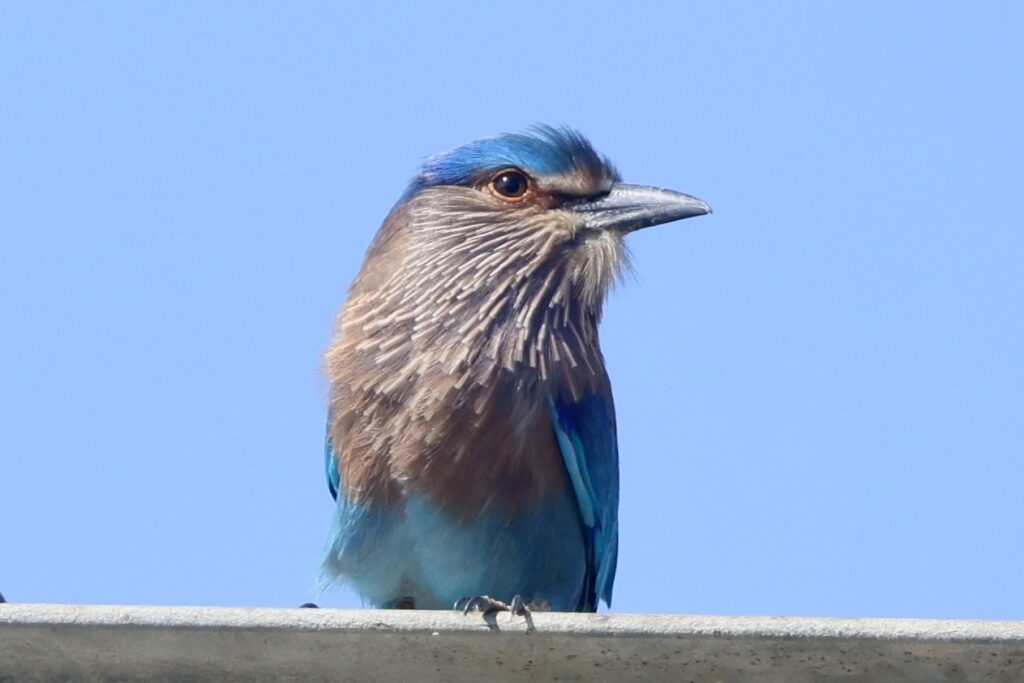
Indian Roller
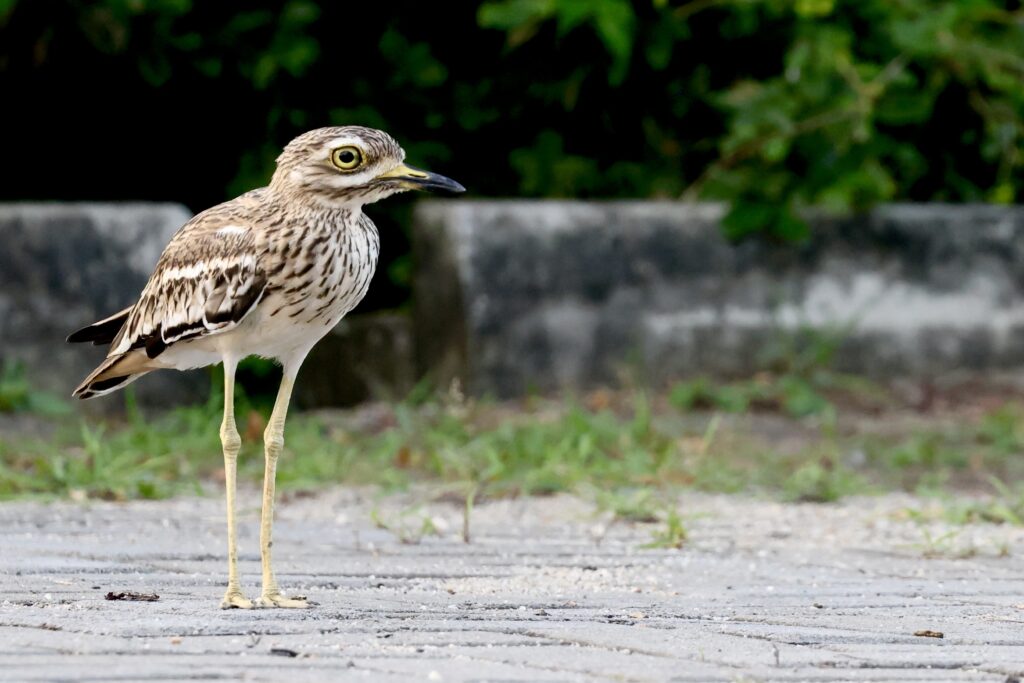
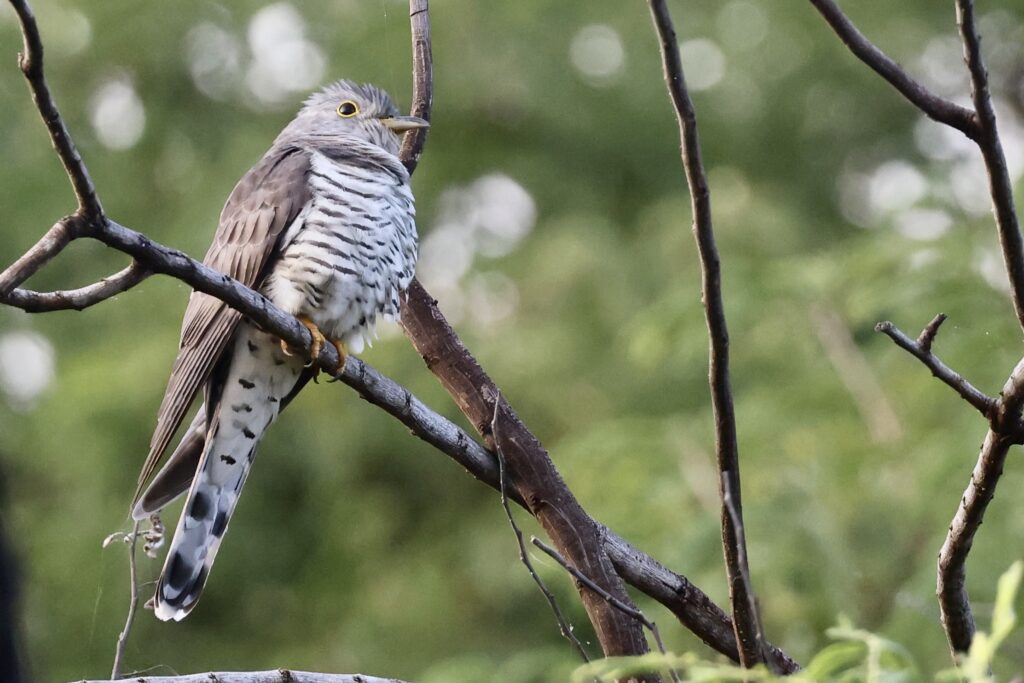
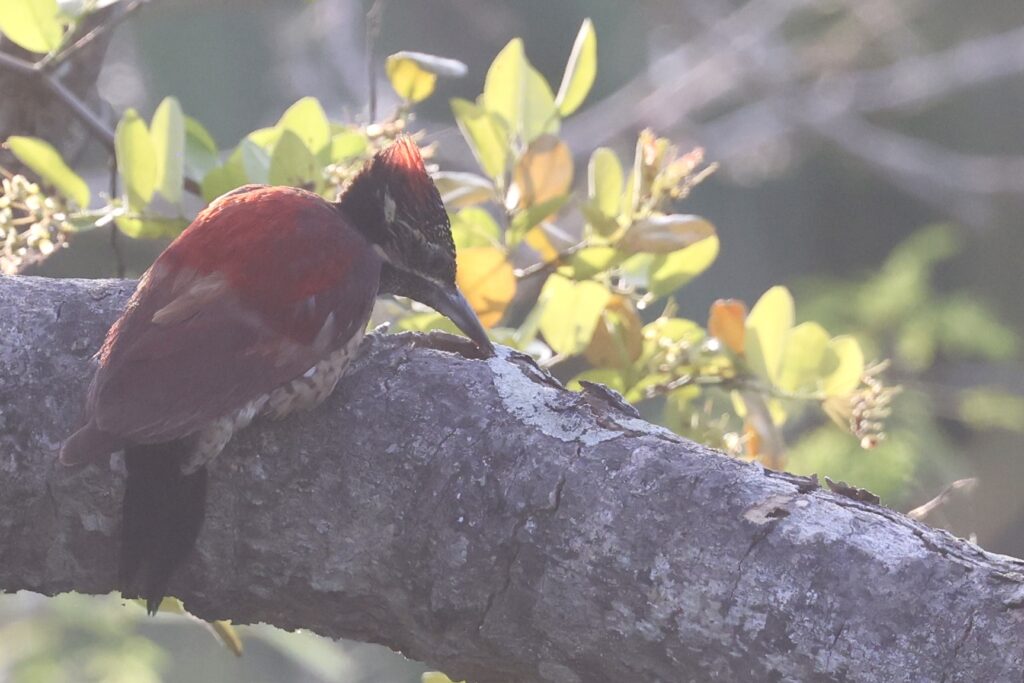
Even birding around the lodge turned out to be productive. Such fine birds as Sri Lanka Woodshrike, Tawny-bellied Babbler, a resident Eastern Barn Owl, Indian Thick-knee, and the first reported Indian Cuckoo of the year on their property were found. But what about the lodge’s name-sake Red-backed Flameback? Could it be around? Actually, yes, but only on the last day. As much as we enjoyed living the luxury safari lodge life, it was time to put a wrap on birding Sri Lanka in the lowlands and move on.
Indian Thick-knee
Indian Cuckoo
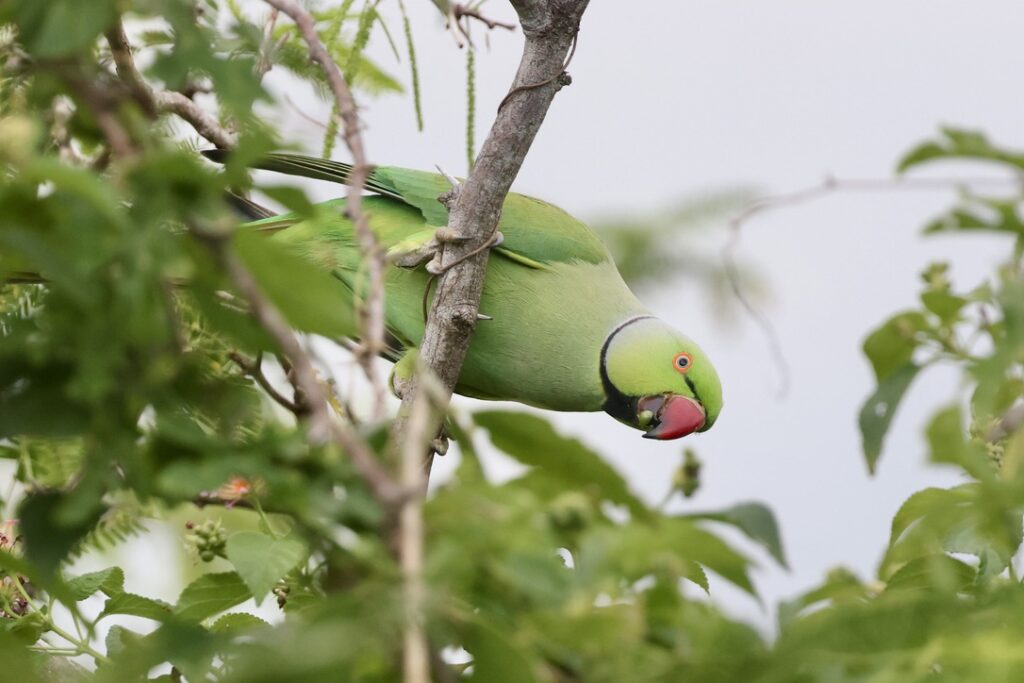
Rose-ringed Parakeet
Red-backed Flameback
Sri Lanka in the News for all the Wrong Reasons
Before we get to the next place in the birding adventure, I think it is important to have a little history lesson. There are two major populations in Sri Lanka, the Sinhalese majority and the Tamil minority. The Tamils are Hindu and Christian and concentrated in the north and east. The Sinhalese are Buddhist and were in political control after independence in 1948.
The Sinhalese dominated government shaped policies that were exclusionary to the Tamils. For example, making Sinhala the sole official language of the government which excluded most Tamils, who were not fluent in the Sinhala language, from work opportunities in the government. Other policies were also viewed as discriminatory.
Over time, peaceful efforts to improve Tamil equivalency in society failed to move the needle. This led to the rise of the militant and armed Liberation Tigers of Tamil Eelam (LTTE). The Tamils wanted independence and were increasingly willing to fight and die for it.
In 1983, an all-out civil war began. Assassinations and suicide bombings perpetuated by the Tamils led to heavy civilian casualties. The national army responded with force increasing the body count substantially. Neither side was fighting a conventional war. It was an ugly time with unimaginable suffering on both sides.
In 2009 the LTTE was militarily defeated and the war over. Disparities have lessened but still exist. We did not speak to any Tamils as we were in the south but I did discuss this with some Sinhalese people. Naturally, they have their side and their compelling arguments, but that is for another blog, or not.
Plans Change in Birding Sri Lanka
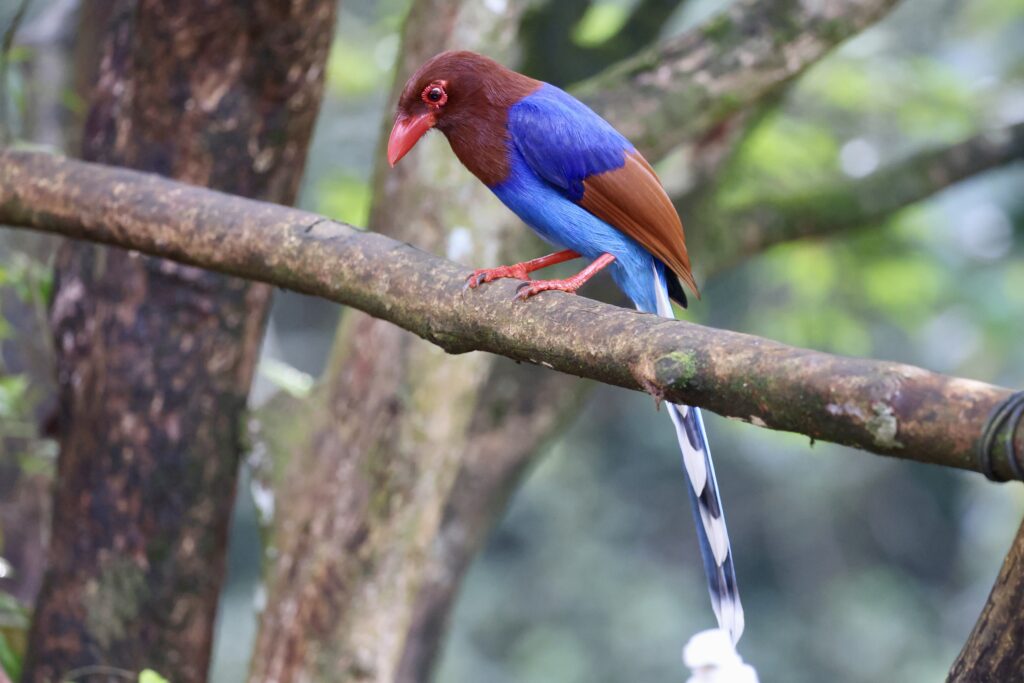
The original plan was to head to the high plateaus, specifically Horton Plains National Park, but remember the floods? We did some investigation and determined that the roads around Horton Plains were open but quite damaged. We made the last-minute decision to make our second stop at a forest reserve not affected by the awful flooding in the weeks before our arrival in Sri Lanka. Sinharaja Forest Reserve is a well-known birding hotspot most famous for Sri Lanka Blue-Magpie.
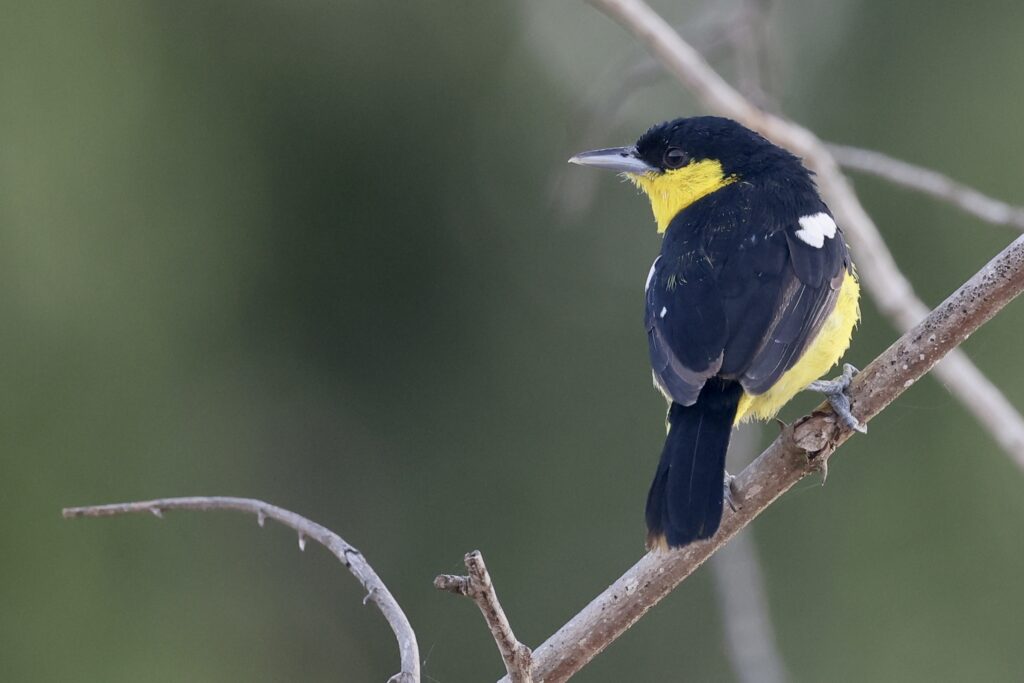
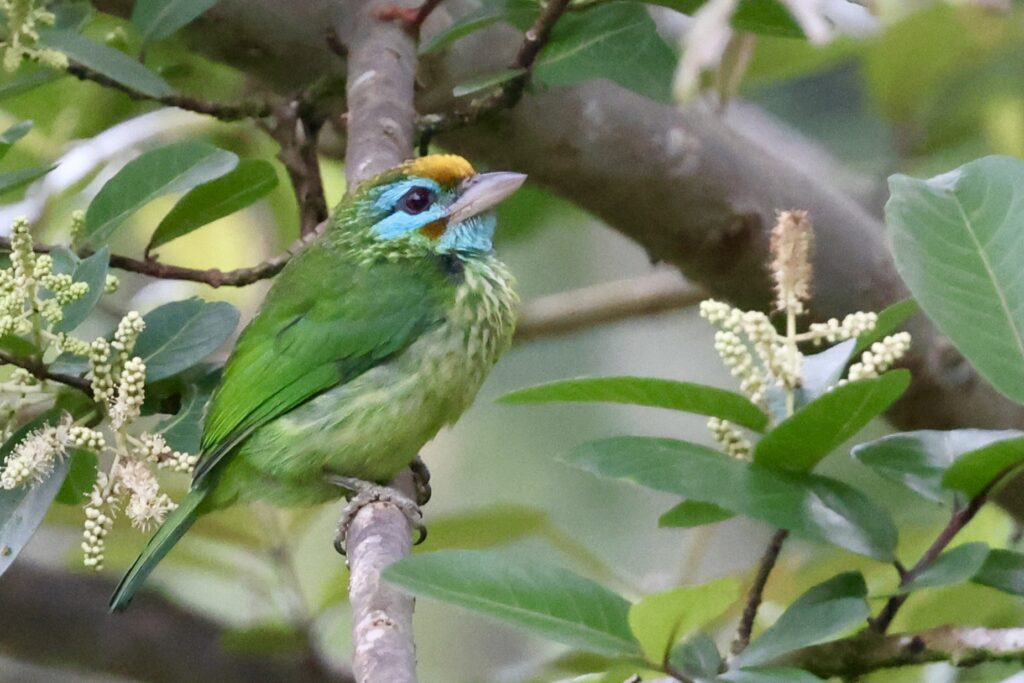
Yellow-fronted Barbet
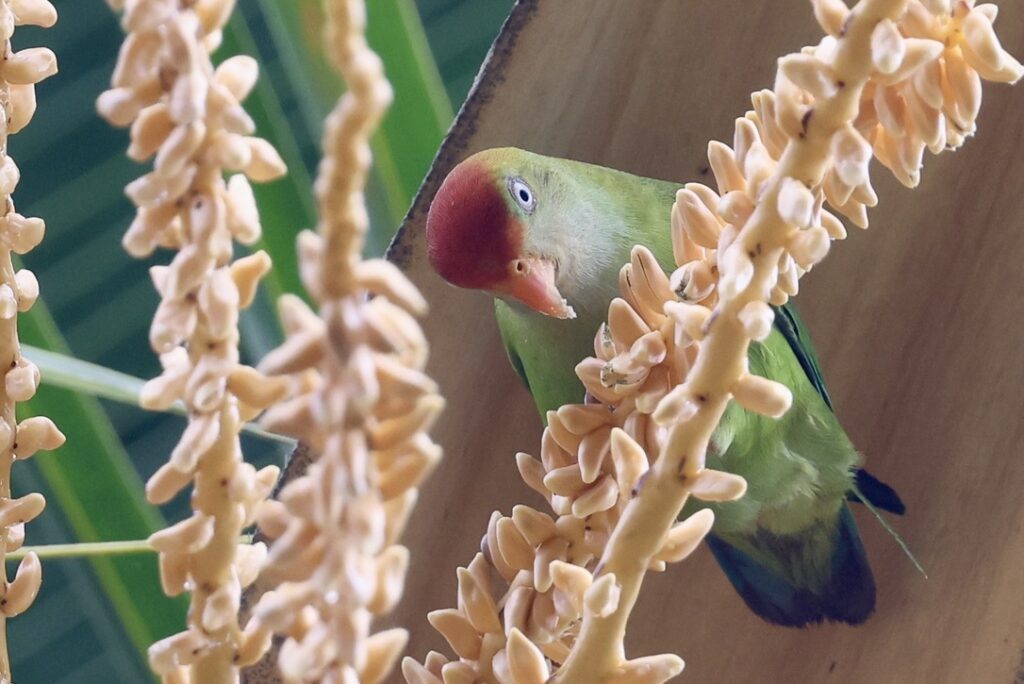
Sri Lanka Hanging-Parrot
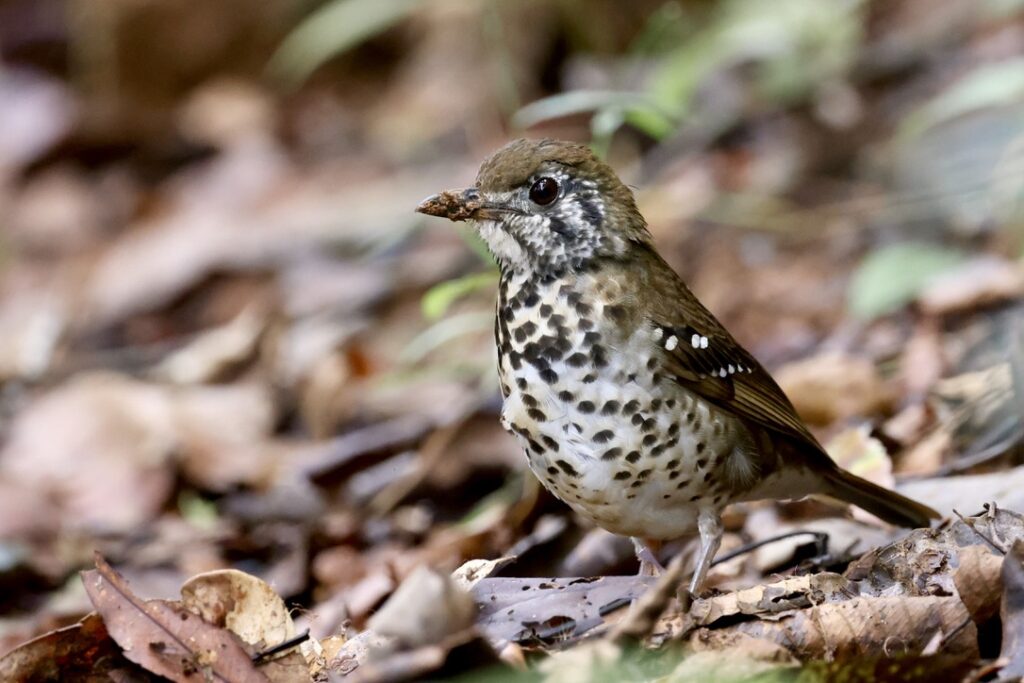
Spot-winged Thrush
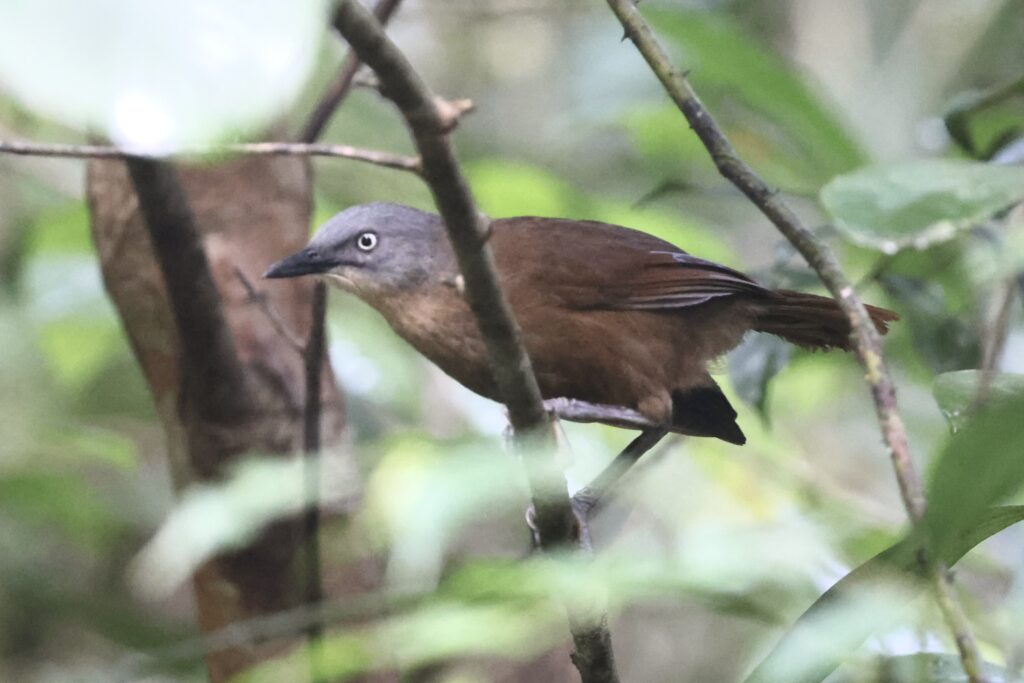
Ashy-headed Laughingthrush
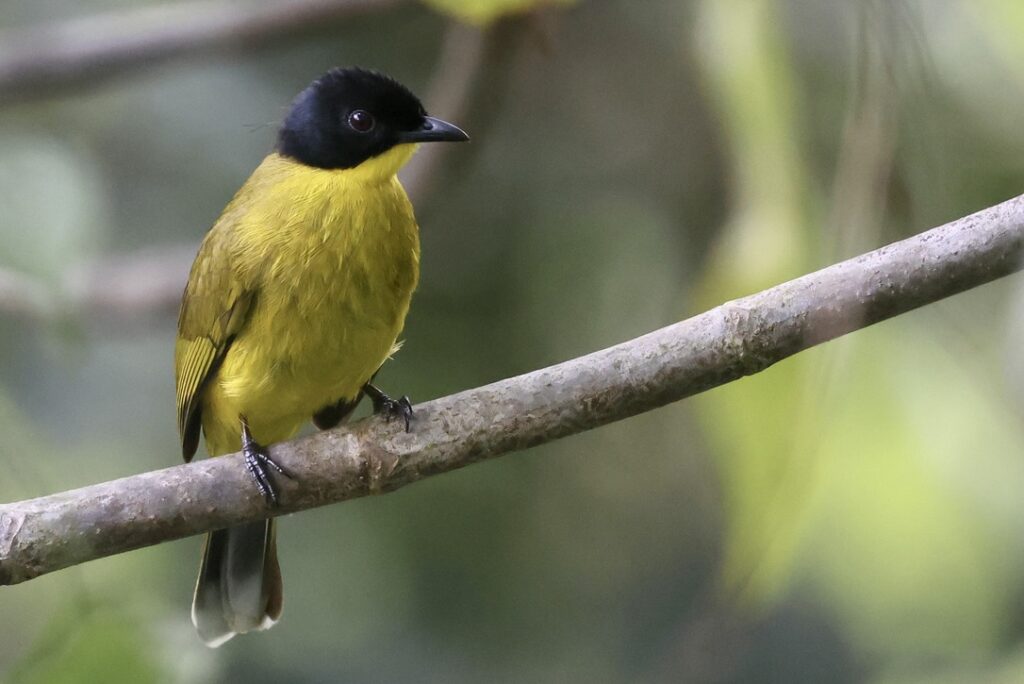
Black-capped Bulbul
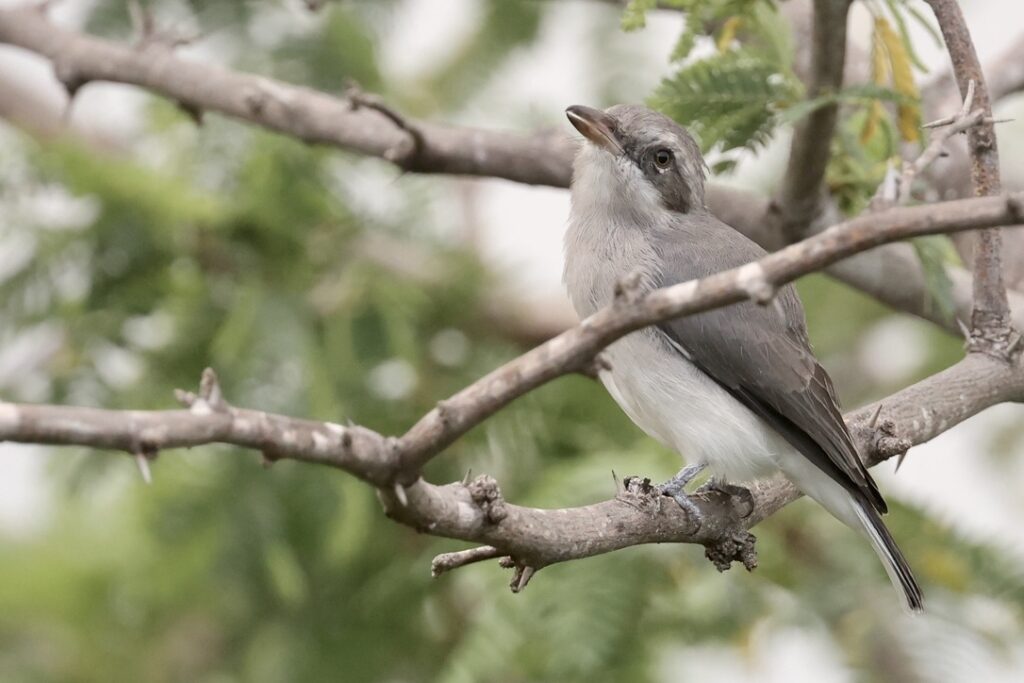
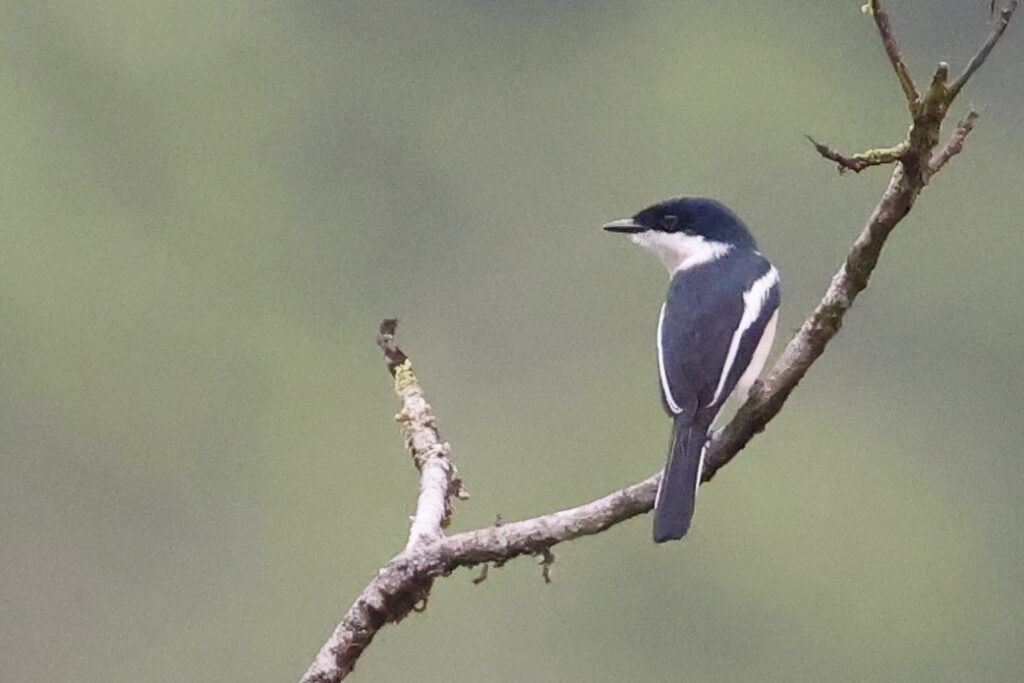
Bar-winged Flycatcher-shrike
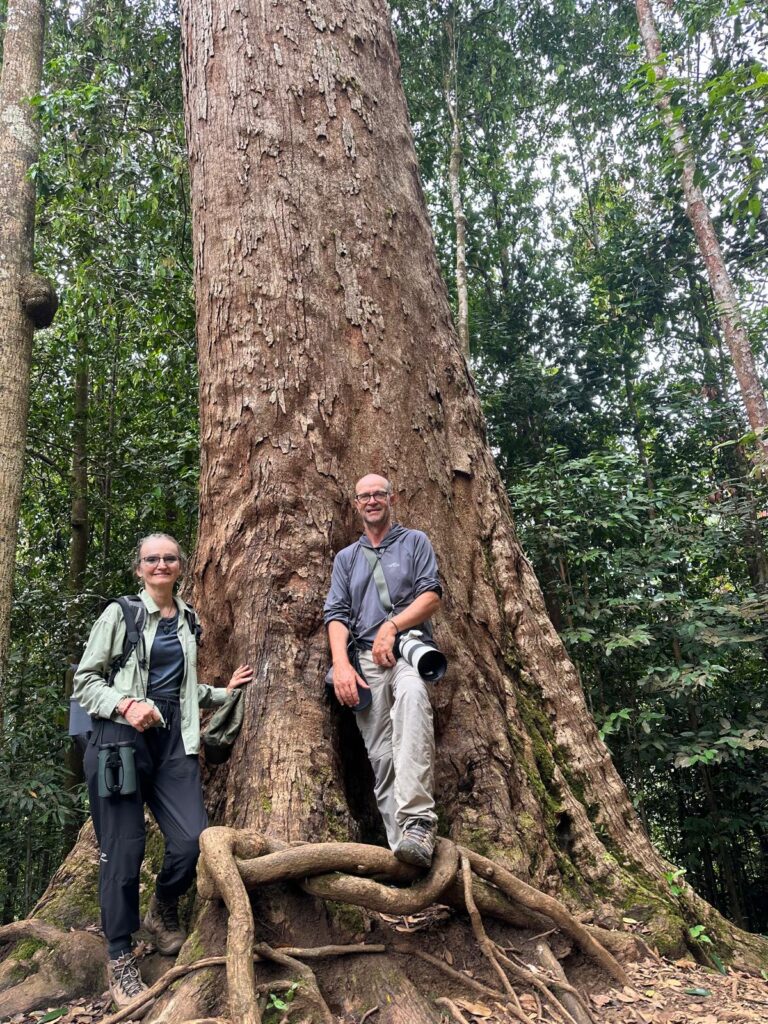
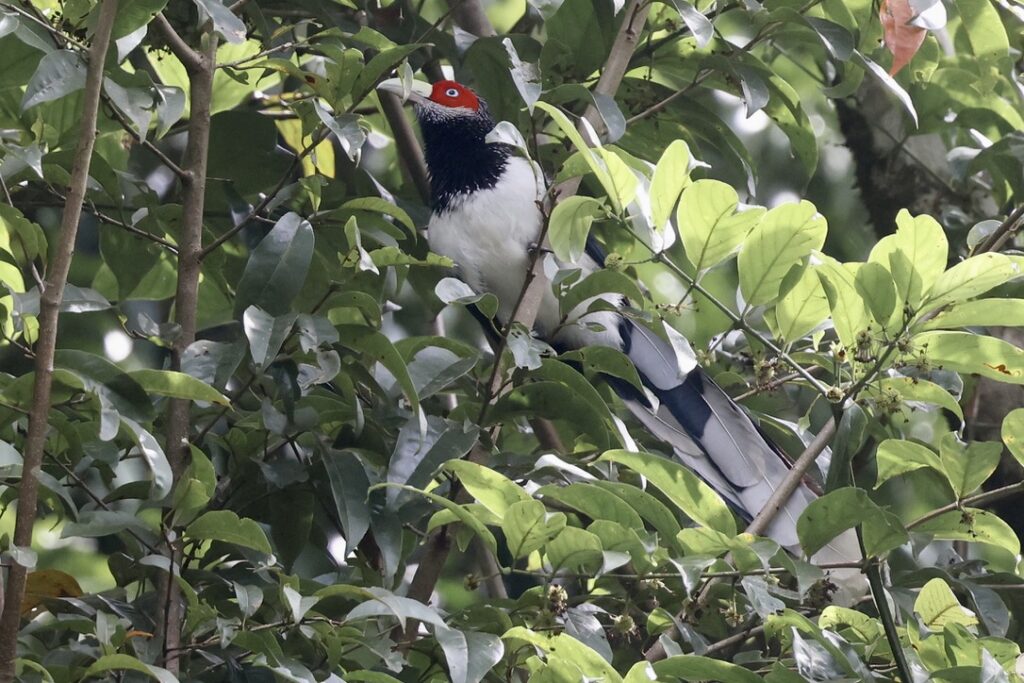
We found a location near the entrance aptly name the Blue-Magpie Lodge. At the forest reserve, you pay a small entrance fee and are provided with a guide knowledgeable in the wildlife. The reserve proved to be a treasure trove of lifers. Twenty-two in total, mostly Sri Lanka endemics. And yes, there were great looks at the Sri Lanka Blue-Magpies and many other lovely birds.
Sri Lanka Blue-Magpie
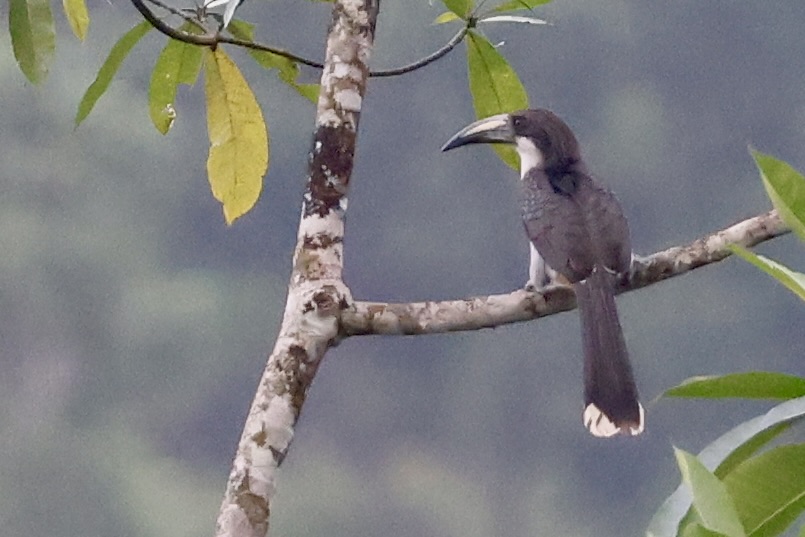
Sri Lanka Gray Hornbill
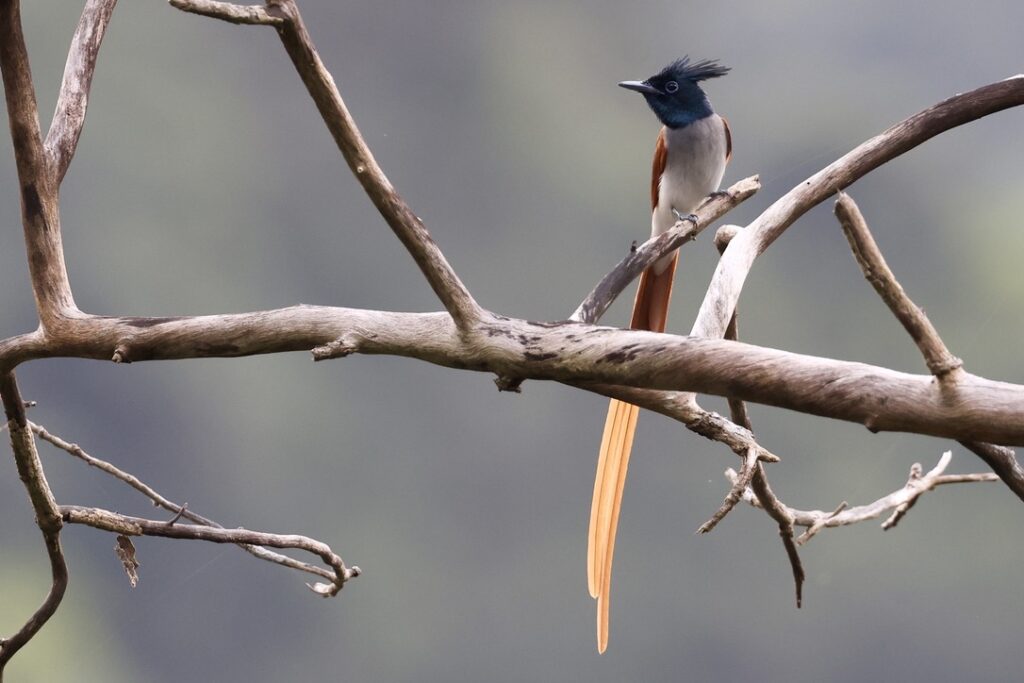
Indian Paradise-Flycatcher
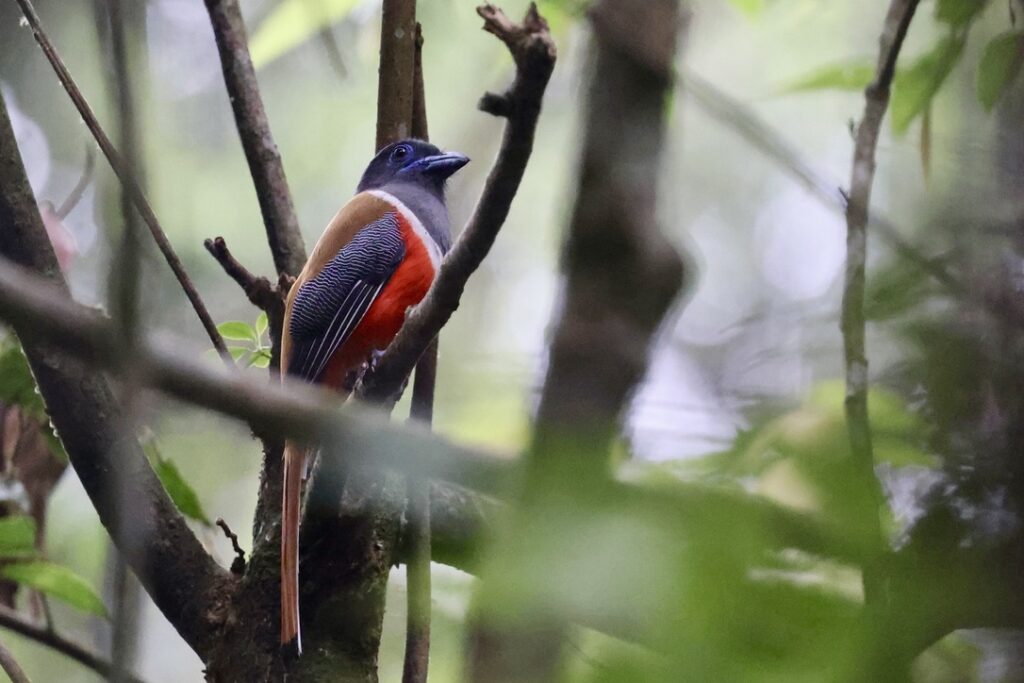
Malabar Trogon
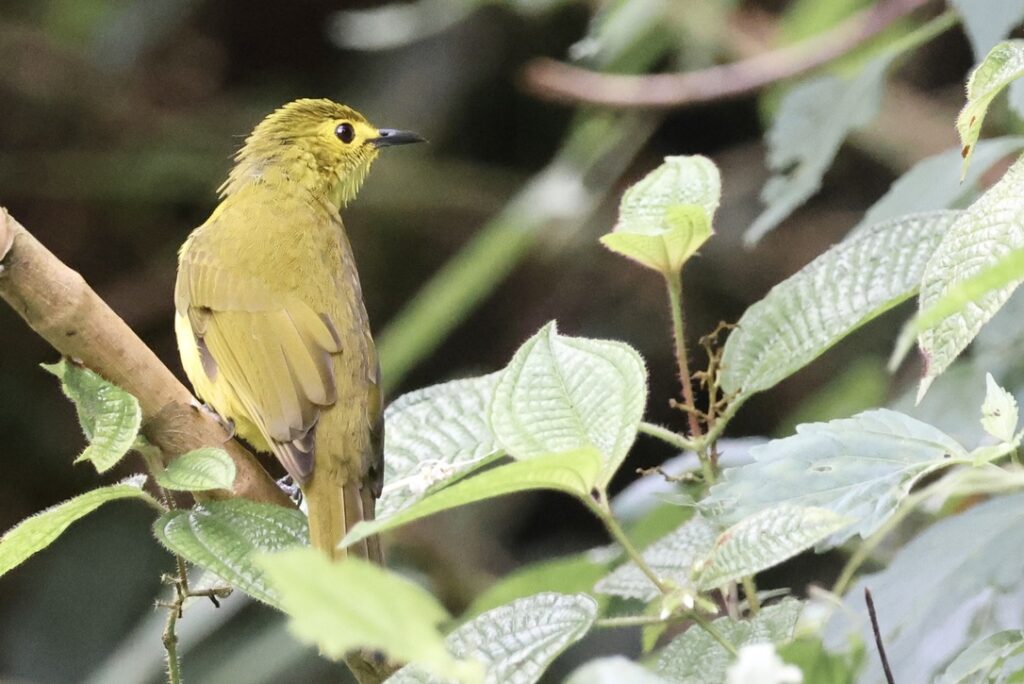
Yellow-browed Bulbul
Red-faced Malkoha
The last morning, we gave up our opportunity to have a sure thing 5:30am Sri Lanka Spurfowl at a feeding hide and decided to sleep a bit. We ate breakfast and took a morning walk down the one-lane blacktop for a couple of miles. Our final day of birding Sri Lanka was a beautiful, relaxed stroll down a county road with plenty of birding action and great company. Goodbye Sri Lanka…until next time.
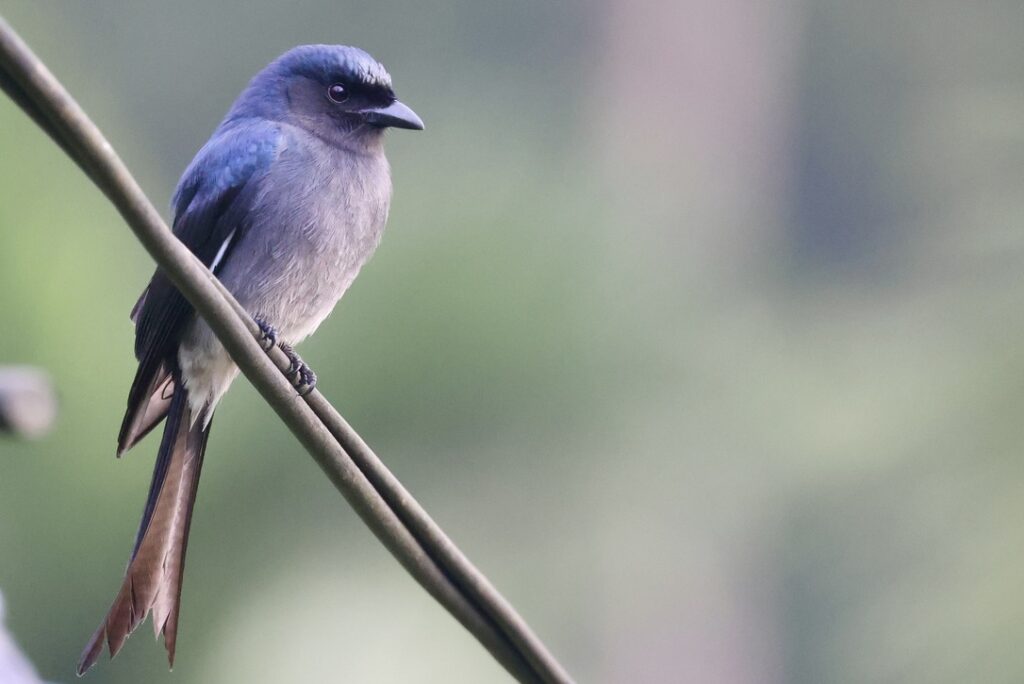
White-bellied Drongo
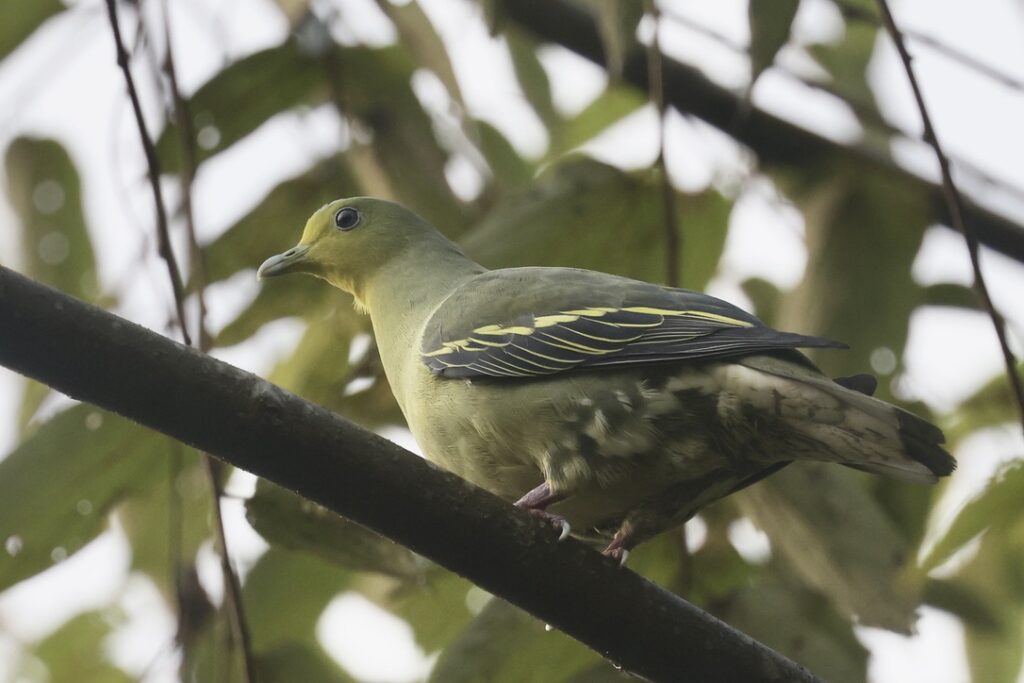
Sri Lanka Green-Pigeon
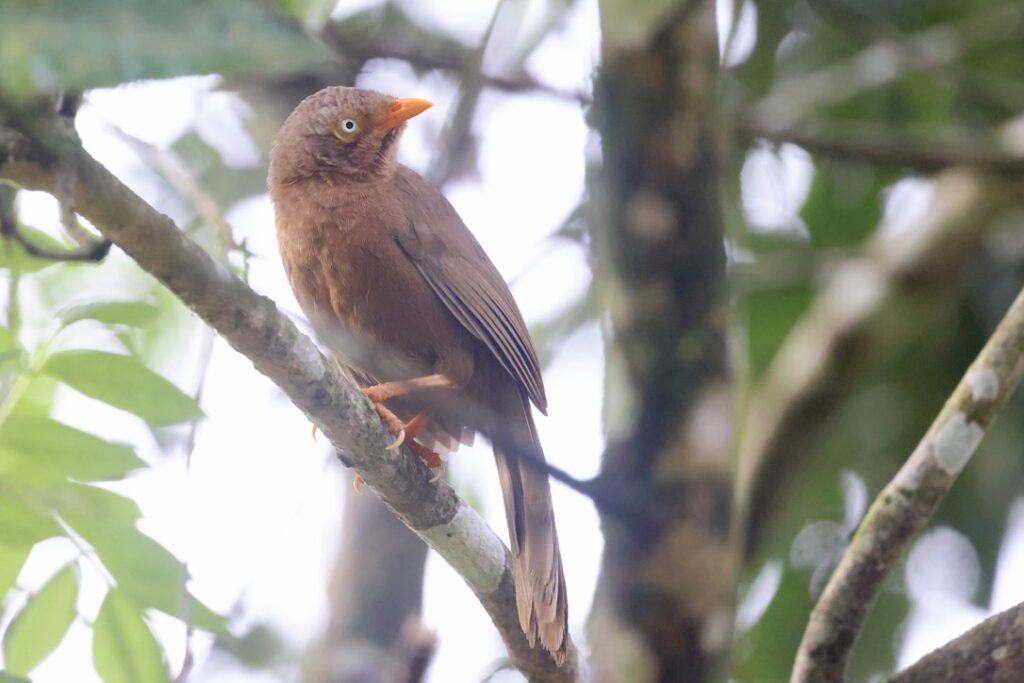
Orange-billed Babbler
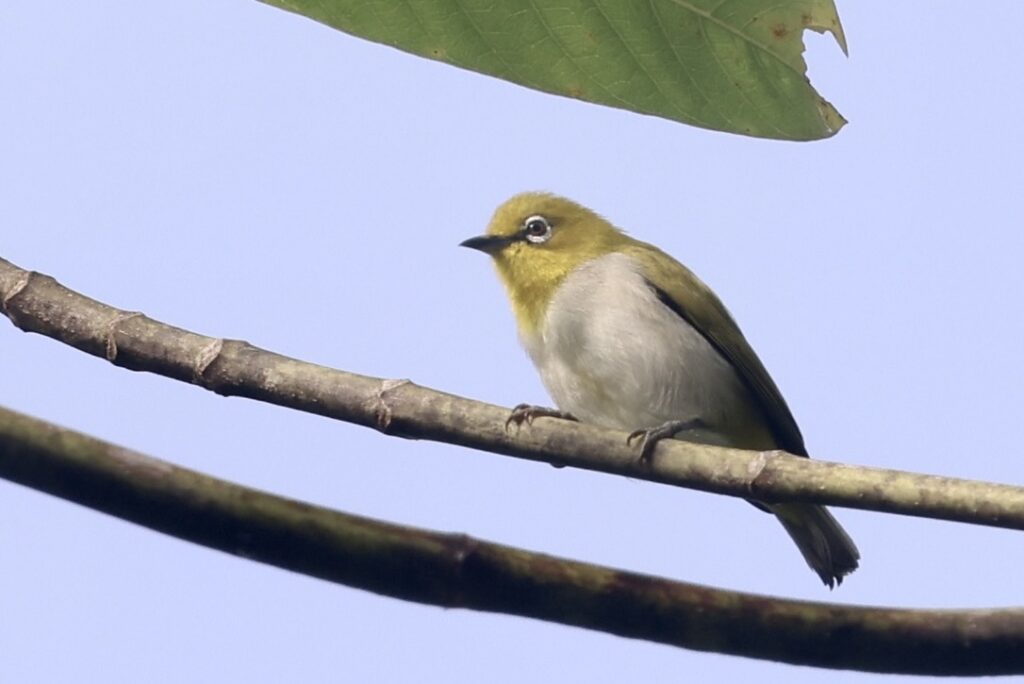
Sri Lanka White-eye
4 thoughts on “Birding Sri Lanka – Floods be Damned”

Lots of disco chickens! Great read. Thanks !
Beautiful pictures Joel!
Beautiful pictures even though I hurried by the snake one.
Joel and Mirka, it would be hard to select the 10 most beautiful birds; too many choices! Great report, as usual. Clyde